How does a tank level indicator work
Whether you are managing a municipal water supply, overseeing chemical processes, or tracking your home heating oil, knowing exactly how much liquid is inside a storage vessel is crucial. But how does a tank level indicator work? At its core, a tank level indicator is an essential device designed to detect the volume of a fluid within an enclosed space and communicate that data to a user or control system.
While a basic water tank level indicator might rely on a simple visual float, modern industrial operations require advanced electronic devices to ensure accuracy, safety, and efficiency. In this guide, we will explore the underlying physics, the variety of measurement technologies available, and how modern smart sensors gather and transmit vital fluid data.
Understanding the Basics: Measurement Types
Before diving into specific mechanisms, it is essential to understand the difference between point level and continuous sensors. This distinction dictates how data is collected and used within a fluid management system.
Point Level Measurement: These indicators are designed to detect when a liquid reaches a predefined physical threshold. They are typically deployed as safety mechanisms for high-level alarms to prevent overflows or low-level alarms to prevent industrial pumps from running dry.
Continuous Level Measurement: These advanced systems measure the fluid level across the entire vertical span of the tank, providing an uninterrupted stream of real-time data regarding the exact remaining volume.
When comparing a float switch vs continuous level monitoring, the optimal choice depends entirely on your operational needs. A float switch is a mechanical point-level device that turns a control circuit on or off when rising or falling liquid physically moves it. Conversely, continuous monitoring utilizes an advanced tank level sensor to give operators precise percentage or volumetric measurements 24/7.
Common Tank Level Technologies and How They Work
The question of "How does a tank level indicator work?" has multiple answers because different liquids and environments demand unique technological approaches. Below is a detailed breakdown of the primary measurement methods.
Hydrostatic Pressure Sensors
One of the most robust methods for measuring liquid levels relies on the hydrostatic pressure sensor principle. This concept is grounded in physics: the downward pressure exerted by a static column of liquid is directly proportional to the height of that liquid and its specific gravity. By placing a sensor at the bottom of the tank, the device measures the physical weight of the fluid pressing down on its diaphragm. This raw pressure reading is then converted into a standardized electrical signal corresponding to the liquid level. A highly practical example is the deployment of a submersible pressure transducer for deep wells. This rugged device sits at the bottom of a borehole, accurately measuring the water column above it to provide municipalities with continuous groundwater levels.
Ultrasonic Sensors
For applications where operators want to avoid touching the stored fluid, non-contact liquid level measurement technologies are ideal. Ultrasonic sensors are typically mounted at the top interior of the tank and emit short bursts of high-frequency sound waves. These sound waves travel downward, bounce off the surface of the liquid, and return to the sensor. The device calculates the exact time it took for the echo to return to determine the spatial distance to the fluid.
Following a comprehensive ultrasonic tank level sensor installation guide is critical for success. The sensor must be mounted completely perpendicular to the liquid surface. Additionally, it must be installed free from internal tank obstructions like ladders or agitators that could reflect the sound waves and cause false readings.
Capacitance Sensors
The capacitance level sensor working mechanism is a fascinating application of electrical engineering. It treats the tank wall and the inserted sensor probe as two separate conductive plates of a capacitor, with the liquid acting as the dielectric medium between them. Because liquids typically have a higher dielectric constant than air, the overall capacitance changes dynamically as the fluid level rises and displaces the air. The sensor measures this shift and converts it into a highly accurate continuous level reading.
Radar Level Transmitters
Functioning similarly to ultrasonic devices, radar sensors utilize the time-of-flight principle, but use high-frequency microwave pulses instead of sound waves. Guided wave radar level transmitter applications are incredibly versatile across heavy industries. These devices utilize a physical metal cable or rod to directly guide the microwave pulse down to the liquid surface and back. This targeted delivery method makes them highly immune to airborne dust, chemical vapor, surface foam, and temperature fluctuations, providing pinpoint accuracy in turbulent environments.
Magnetic Level Gauges
A robust and effective mechanical-visual approach is the magnetic level gauge. This system features an internal float containing a permanent magnet that rides up and down an external bypass chamber attached to the outside of the main tank. As the internal float moves, its magnetic field flips bi-colored magnetic flags mounted on the exterior, providing a highly visible indication of the liquid level without requiring external power. Incorporating proven magnetic level gauge maintenance tips-such as periodically flushing the external chamber to remove accumulated sludge and visually inspecting the primary float for demagnetization-will ensure this mechanical system reliably lasts for many years.
Optical Sensors
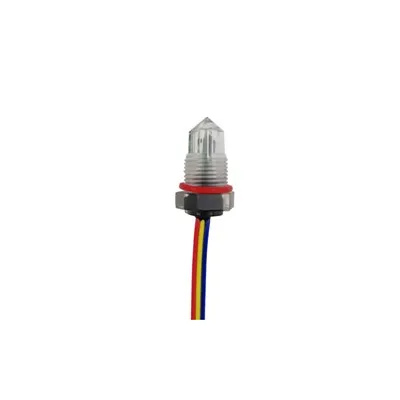
While less common for large-scale continuous measurement, optical sensors are highly effective for point-level detection. These devices use an infrared light-emitting diode (LED) and a light receiver housed within a clear prism. When the prism is surrounded by air, the light bounces back to the receiver. When the liquid level rises and touches the prism, the light refracts out into the fluid, breaking the optical circuit and triggering an alarm. This technology is incredibly fast and possesses no moving parts, making it an excellent, low-maintenance alternative to a traditional mechanical float switch in smaller tanks.
Specialized Applications in Level Measurement
Different commercial environments present unique challenges that dictate how a tank level indicator works in practice.
Harsh and Corrosive Environments
When accurately measuring corrosive liquids in chemical storage, operational safety is the top priority. Harsh chemicals like concentrated sulfuric acid will rapidly degrade standard exposed metal probes. In these scenarios, facilities rely heavily on non-contact liquid level measurement technologies housed in chemical-resistant plastic enclosures. Alternatively, they actively use guided wave radar probes coated in protective, inert materials like PTFE to thoroughly prevent direct chemical attacks on the sensor.
Remote and Smart Monitoring Innovations
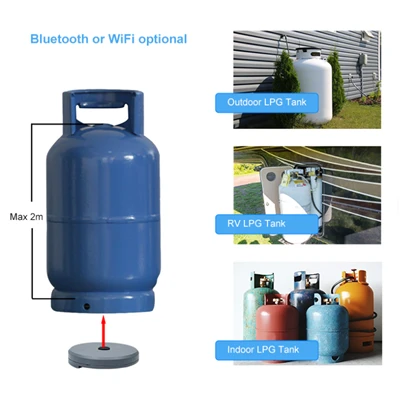
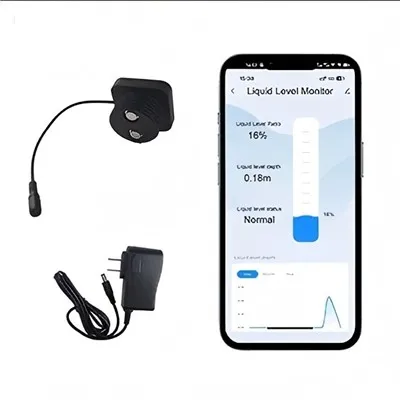
The rapid expansion of the Internet of Things (IoT) has revolutionized fluid management systems. Today, a smart water tank level indicator benefits end users immensely by autonomously sending real-time, accurate operational data directly to smartphones or cloud-based software dashboards. This connectivity allows facility managers to monitor water usage, predict future refill times, and receive critical leak alerts without ever visiting the tank locati0n.
Similarly, logistics companies rely on remote fuel tank monitoring systems. These networks utilize cellular or satellite communication hardware to actively track valuable diesel levels across geographically dispersed bulk tanks, optimizing delivery routes and preventing fuel theft. On a residential scale, homeowners can now easily install a wireless oil tank gauge for home use. These user-friendly plug-and-play devices measure basement heating oil levels and send automated Wi-Fi alerts to a mobile phone, ensuring families never run out of heat in the middle of winter.
Calibration and Active Troubleshooting
Even the highest-quality industrial sensors require proper initial setup and dedicated maintenance to continually perform optimally.
Essential Calibration Procedures
Knowing exactly how to calibrate a digital tank meter is a fundamental skill for system operators. Precise calibration guarantees the device's electrical output perfectly reflects the physical fill levels. This process involves:
Setting the "Zero" baseline point when the tank is completely empty.
Setting the "Span" or 100% point when the tank is filled to its maximum safe capacity.
Using the device's digital interface to input the physical tank dimensions, the specific gravity of the fluid, and any necessary sensor dead bands.
Proper calibration securely aligns the physical realities of the fluid with the digital readout displayed on the remote controller.
Troubleshooting Common Measurement Issues
If you ever find yourself troubleshooting inaccurate water level readings, a highly systematic approach is necessary to identify the root cause.
Check the Sensor Face: For standard ultrasonic and non-contact radar devices, built-up condensation or physical debris on the sensor face can actively scatter emitted signals.
Inspect for Physical Obstructions: Ensure no newly installed equipment, such as mixing agitators or pipes, has been inadvertently placed within the sensor's direct beam path.
Verify Fluid Density: If using a hydrostatic pressure sensor, remember that a change in the stored fluid's ambient temperature or chemical composition can significantly alter its specific gravity, actively skewing the complex pressure-to-level calculation.
Inspect Mechanical Moving Parts: For traditional float switches, carefully inspect all moving components for heavy mineral buildup or physical damage that might cause the float to stick in a false position.
Final Thoughts: Choosing the Right Solution
To definitively answer the question-how does a tank level indicator work?-we must look at the specific technology being deployed. Whether a system uses the buoyant force of a magnetic float, the hydrostatic weight of a deep liquid column, the shifting electrical capacitance of a stored fluid, or the travel speed of returning sound waves, the core goal remains the same: accurately translating physical fluid dynamics into highly reliable digital data.
Selecting the perfect tank level sensor requires a comprehensive understanding of your specific application. You must carefully consider the physical size of the storage tank, the exact chemical properties of the liquid being stored, and exactly how you intend to utilize the gathered data. By weighing the distinct benefits of point versus continuous monitoring, understanding contact versus non-contact technologies, and implementing robust maintenance and periodic calibration schedules, you can ensure safe and consistently accurate liquid level measurement across virtually any operational environment.