How does a water level sensor measuHow Does a Water Level Sensor Measure Fluid Level?re fluid level
A water level sensor measures fluid level by detecting a physical change that relates to how much liquid is in a tank, sump, reservoir, pipe, or vessel. Depending on the design, the sensor may measure buoyancy, pressure, distance, electrical properties, or contact with liquid. That measurement is then converted into a usable signal for a display, controller, pump, alarm, building automation system, or industrial control panel.
For homeowners, facility managers, farmers, manufacturers, and municipal operators, accurate level measurement helps prevent overflows, dry-running pumps, water waste, equipment damage, and unsafe operating conditions. The right liquid level sensor depends on the fluid, tank design, accuracy needs, environment, budget, and maintenance expectations.
The basic idea behind fluid level measurement
Every tank level sensor answers the same core question: how full is the vessel?
Some sensors provide a point level reading, meaning they detect whether liquid has reached a specific height. Others provide continuous level measurement, meaning they estimate the level across a range, such as 0% to 100% full.
Common outputs include:
Simple switch output, such as on or off
Analog output, such as a signal proportional to level
Digital output, often used with smart controllers or monitoring systems
Visual indication, such as a local gauge or display
In a basic sump pump application, a float switch may only need to tell the pump when to turn on and off. In a water storage tank, a continuous water level sensor may be used to show the exact tank percentage and trigger alarms before the tank runs empty or overfills.
Common types of water level sensors
Float sensors
Float sensors are among the simplest and most widely used level measurement devices. A buoyant float rises and falls with the liquid surface. As the float moves, it activates a mechanical switch, magnetic reed switch, or position sensor.
Float sensors are commonly used in:
Sump pits
Water storage tanks
Condensate pans
Cooling systems
Pump control applications
They are affordable and easy to understand, but they have moving parts. Debris, sludge, scale, or turbulence can interfere with movement, so they may not be ideal for dirty water or sticky liquids.
Hydrostatic pressure sensors
A hydrostatic pressure sensor measures the pressure created by the weight of the liquid above it. The deeper the liquid, the higher the pressure. The sensor converts that pressure into a level reading based on the tank height and fluid density.
This type of tank level sensor is common in:
Water wells
Irrigation tanks
Wastewater lift stations
Industrial process tanks
Municipal water systems
For vented tanks, a submersible pressure transducer can be lowered near the bottom of the tank. For closed or pressurized vessels, additional compensation may be needed because gas pressure above the liquid can affect the reading.
Hydrostatic sensors work well when foam, vapor, or tank shape makes top-mounted sensors difficult. However, they must be compatible with the liquid and protected from clogging, freezing, and physical damage.
Ultrasonic level sensors
An ultrasonic liquid level sensor uses sound waves to measure the distance from the sensor to the surface of the liquid. The sensor is typically mounted above the liquid. It emits an ultrasonic pulse, waits for the echo to return, and calculates the distance based on travel time.
Ultrasonic sensors are popular because they are non-contact. That means the sensor does not need to touch the water, which helps reduce contamination and wear.
Common uses include:
Rainwater harvesting tanks
Chemical storage tanks
Open reservoirs
Wastewater channels
Bulk storage vessels
Ultrasonic sensors may struggle with heavy foam, vapor, condensation, extreme turbulence, narrow tank openings, or internal obstructions. Correct mounting is important because the sensor needs a clear path to the liquid surface.
Radar level sensors
Radar sensors work similarly to ultrasonic sensors, but they use electromagnetic waves instead of sound. Radar is often more reliable in challenging environments because it is less affected by temperature changes, vapor, dust, and pressure.
Radar level measurement is often used in:
Industrial tanks
Chemical processing
Outdoor storage vessels
Wastewater applications
Large water reservoirs
Radar sensors typically cost more than basic float or ultrasonic sensors, but they can provide strong performance where reliability and low maintenance are priorities.
Capacitive level sensors
Capacitive sensors measure changes in capacitance caused by the presence of liquid. The liquid and sensor act as part of an electrical field. As the level changes, the sensor detects the change and converts it into a level signal.
Capacitive sensors can be used for point level or continuous level measurement. They work with many liquids, but performance depends on the fluid's electrical properties, tank material, buildup, and calibration.
They are often used in:
Plastic tanks
Small reservoirs
Food and beverage systems
Chemical containers
OEM equipment
Conductive level sensors
Conductive sensors use electrodes to detect whether a conductive liquid, such as water, has reached a certain point. When the liquid touches the electrodes, it completes an electrical path.
These sensors are simple and useful for point level detection, but they require a liquid that conducts electricity. They are not suitable for non-conductive fluids such as certain oils or purified liquids with very low conductivity.
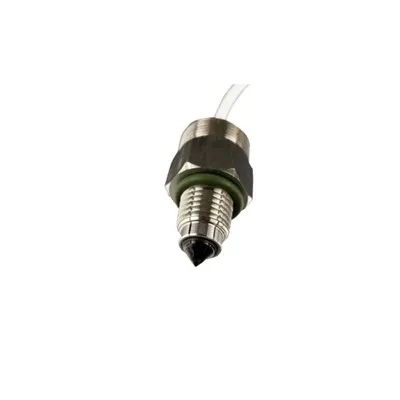
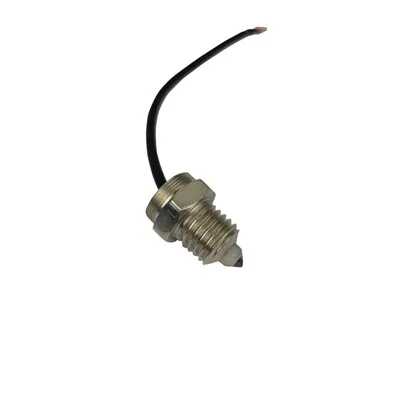
Optical level sensors
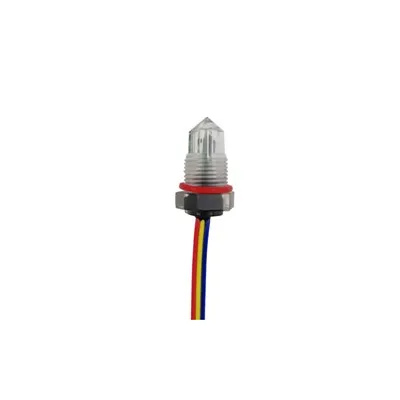
Optical sensors use light to detect the presence or absence of liquid at a specific point. When the sensor tip is dry, light behaves one way. When covered by liquid, the light refracts differently, changing the output.
Optical sensors are compact and have no moving parts, making them useful for small tanks, appliances, lab equipment, and leak detection. However, coatings, bubbles, or dirty liquids can affect performance.
Practical examples of how sensors are used
A homeowner may use a float-style water level sensor in a sump pit to activate a pump before water rises too high. In this case, simplicity and reliability matter more than exact measurement.
A farm may use a pressure-based liquid level sensor in a water storage tank to monitor available water for irrigation. The sensor can send a signal to a controller that starts a refill pump when the level drops below a set point.
A commercial building may use an ultrasonic tank level sensor in a rainwater harvesting system. Because the sensor is mounted above the liquid, it avoids direct contact with water and reduces maintenance.
A wastewater facility may choose radar or pressure measurement because foam, vapor, debris, and changing environmental conditions can make basic sensors less dependable.
An RV or marine freshwater tank may use capacitive or pressure-based sensing to provide a compact level reading where tank shape and space are limited.
How to choose the right liquid level sensor
Start by defining what you need the sensor to do. A low-level alarm has different requirements than continuous inventory monitoring.
Important selection criteria include:
Point level or continuous level: Decide whether you need a simple high or low alarm or a full measurement range.
Fluid type: Consider whether the liquid is clean water, wastewater, chemical solution, oil, food-grade liquid, or corrosive fluid.
Tank material and shape: Plastic, metal, fiberglass, underground, open-top, and pressurized tanks may require different technologies.
Measurement range: Make sure the sensor can measure the full tank height.
Accuracy requirements: A pump protection alarm may not need high precision, while process control may require tighter accuracy.
Environmental conditions: Temperature, humidity, condensation, sunlight, freezing risk, and vibration can all affect performance.
Contact vs. non-contact: Non-contact sensors reduce exposure to the fluid, while contact sensors may be better in foamy or obstructed tanks.
Maintenance access: Choose a sensor that can be cleaned, inspected, or replaced without major downtime.
Output signal: Match the sensor output to your controller, display, pump panel, or monitoring system.
Power availability: Battery-powered, low-voltage, and line-powered options may all be available depending on the application.
Regulatory needs: For potable water, food, hazardous locations, or industrial processes, verify that materials and approvals are appropriate for the use case.
Installation notes for reliable measurement
Even a high-quality tank level sensor can give poor readings if installed incorrectly. Before installation, review the manufacturer's instructions and confirm the sensor is suitable for the tank and fluid.
Helpful installation practices include:
Mount the sensor where it can measure a stable representative level.
Avoid placing sensors directly above fill streams, agitators, ladders, baffles, or internal pipes.
For ultrasonic and radar sensors, provide a clear path to the liquid surface.
For pressure sensors, place the sensing element low enough to measure the usable range, but protect it from sediment and impact.
Use compatible seals, gaskets, and fittings.
Provide strain relief for cables and protect wiring from moisture, abrasion, and rodents.
Keep sensor electronics within their rated temperature and enclosure limits.
Calibrate the sensor after installation if the application requires precise measurement.
Test alarm points before relying on the system.
In outdoor U.S. installations, also consider freeze protection, lightning exposure, sun damage, and enclosure ratings. For potable water or code-regulated applications, follow local requirements and consult qualified professionals when needed.
Common problems and troubleshooting tips
If a water level sensor gives unstable or incorrect readings, the cause is often related to the environment or installation rather than the sensing technology itself.
Common issues include:
Foam or turbulence: May affect ultrasonic readings and some contact sensors.
Sediment buildup: Can clog or coat pressure, optical, and conductive sensors.
Condensation: May interfere with top-mounted electronics or ultrasonic signals.
Improper calibration: Can cause inaccurate full, empty, or percentage readings.
Wrong material compatibility: Corrosive or chemically treated liquids may damage wetted parts.
Electrical noise: Motors, pumps, and long cable runs can interfere with signals.
Tank obstructions: Internal structures can reflect signals or block floats.
Routine inspection, cleaning, and functional testing can significantly improve reliability, especially in wastewater, agricultural, and industrial environments.
FAQs
What is the difference between a water level sensor and a liquid level sensor?
A water level sensor is designed specifically for water or water-based applications. A liquid level sensor is a broader term that includes sensors for water, oils, chemicals, food-grade liquids, wastewater, and other fluids.
Which sensor is best for a water tank?
For clean water tanks, float, pressure, ultrasonic, radar, and capacitive sensors can all work. The best choice depends on whether you need a simple alarm or continuous measurement, whether the tank is open or closed, and how much maintenance access you have.
Can one sensor measure any fluid?
No. Sensor compatibility depends on the liquid's temperature, pressure, density, conductivity, corrosiveness, cleanliness, and tendency to foam or coat surfaces. Always verify compatibility before installation.
Do ultrasonic sensors touch the water?
No. Ultrasonic sensors are typically mounted above the liquid and measure distance using sound waves. This makes them useful when contact with the fluid should be avoided.
Why does tank shape matter?
A sensor may measure liquid height, but tank volume may not increase evenly with height in irregularly shaped tanks. If you need gallons or percentage full, the controller may need tank geometry settings or a calibration curve.
How often should a tank level sensor be maintained?
Maintenance depends on the application. Clean water systems may need only periodic inspection, while wastewater or chemical systems may require more frequent cleaning and testing. Any sensor used for alarms or pump protection should be tested on a regular schedule.
Key takeaway
A water level sensor measures fluid level by translating a physical condition, such as float position, pressure, distance, capacitance, conductivity, or light refraction, into an electrical or mechanical signal. For the best results, choose a liquid level sensor that matches the fluid, tank design, environment, accuracy needs, and control system. With proper selection and installation, the right tank level sensor can improve safety, reduce downtime, prevent overflows, and make fluid management much more reliable.