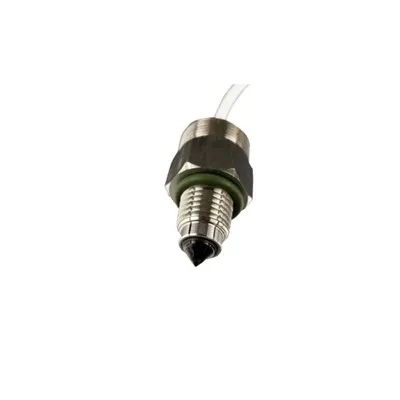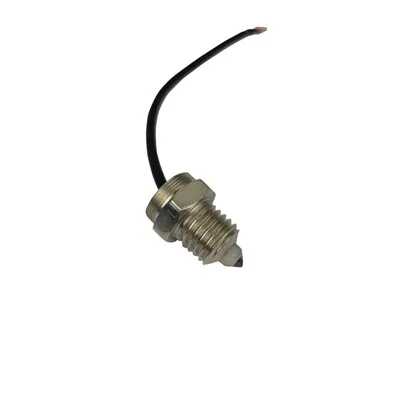
working principle of water level sensor
Water level sensors are used to detect, measure, and report the height of water or another liquid in a tank, reservoir, pipe, sump, boiler, cooling system, or open channel. At the simplest level, they answer one important question: how much liquid is present right now?
In practical applications, that answer may be used to turn a pump on, prevent overflow, protect equipment from running dry, trigger an alarm, or send data to a water level monitoring system. Because different environments require different measurement methods, understanding the main water level sensor principles helps you choose the right technology for the job.
What a Water Level Sensor Does
A water level sensor converts the physical position or height of liquid into a usable signal. That signal may be:
A simple on/off output, such as "tank full" or "tank empty"
A continuous analog signal, such as 4–20 mA or 0–10 V
A digital signal sent to a controller, display, or monitoring platform
A relay output used to control pumps, valves, or alarms
Some sensors only detect whether water has reached a specific point. Others measure the exact level across a range. This distinction is important because point-level detection and continuous-level measurement use different designs and are suited to different tasks.
Basic Measurement Principle
Most liquid level sensors work by detecting a change in a physical property caused by the presence or height of water. Depending on the sensor type, that property may be:
Mechanical movement
Electrical conductivity
Capacitance
Pressure
Distance
Light reflection or refraction
Sound wave travel time
Radar signal reflection
Once the sensor detects this change, internal electronics convert it into a readable output. In a water level monitoring system, that output is often connected to a controller, PLC, data logger, display, or cloud-based monitoring device.
Point Level vs. Continuous Level Measurement
Before looking at specific technologies, it helps to separate water level sensors into two broad categories.
Point Level Sensors
Point level sensors detect whether liquid has reached a certain height. They are commonly used for:
High-level alarms
Low-level alarms
Pump start or stop control
Overflow prevention
Dry-run protection
For example, a float switch in a sump pit may activate a pump when water rises to a set point and stop it when the level drops.
Continuous Level Sensors
Continuous level sensors measure the liquid height across a full range. They are used when operators need to know the actual level, volume, or trend over time. Common uses include:
Tank inventory monitoring
Reservoir level tracking
Industrial process control
Wastewater management
Remote water level monitoring
Continuous sensors are usually preferred when accuracy, automation, and real-time visibility are important.
Common Water Level Sensor Principles
Different sensor types operate in different ways. The best choice depends on the liquid, tank design, required accuracy, environmental conditions, and maintenance expectations.
Float Level Sensors
Float sensors use a buoyant float that rises and falls with the water surface. The float may move a mechanical switch, magnet, reed switch, or potentiometer.
When the water level rises, the float moves upward. When the water level drops, it moves downward. This movement is converted into either a switching signal or a continuous measurement, depending on the design.
Float sensors are widely used because they are simple, reliable, and cost-effective. They are common in water tanks, sump pumps, cooling systems, and small reservoirs.
However, they include moving parts, which may be affected by debris, scaling, turbulence, or sticky liquids. For clean water applications, they are often a practical and dependable option.
Conductive Water Level Sensors
Conductive sensors use the electrical conductivity of water to detect level. They usually have one or more metal probes installed at different heights. When water touches a probe, it completes an electrical circuit.
This principle works because water, especially non-pure water containing minerals or dissolved substances, can conduct electricity. The system detects the completed circuit and sends a level signal.
Conductive liquid level sensors are often used for point-level detection in tanks, wells, boilers, and water treatment systems. They are simple and have no moving parts, but they require the liquid to be conductive. They are not suitable for oils, fuels, or very pure deionized water unless specially designed.
Capacitive Level Sensors
Capacitive sensors measure changes in capacitance caused by the presence of liquid. A sensor probe and the tank wall, or two elements inside the sensor, act like the plates of a capacitor. As water rises around the probe, the dielectric properties around the sensor change, altering capacitance.
The sensor electronics interpret this change and convert it into a level reading.
Capacitive sensors can be used for point or continuous measurement. They are useful for many liquids and can sometimes detect level through non-metallic tank walls. This makes them attractive where avoiding direct contact with the liquid is beneficial.
Their performance depends on the dielectric constant of the liquid and may require calibration. Foam, coating, buildup, and changes in liquid composition can also affect accuracy.
Ultrasonic Level Sensors
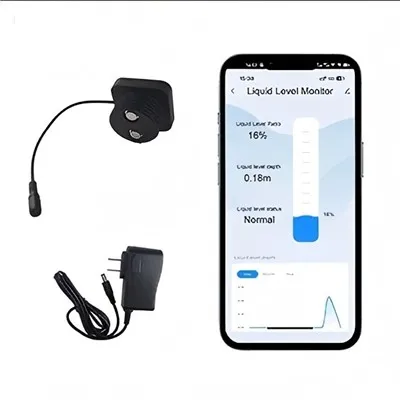
Ultrasonic sensors measure the distance between the sensor and the water surface using sound waves. The sensor emits a high-frequency sound pulse. The pulse travels to the liquid surface, reflects back, and returns to the sensor.
The sensor calculates level based on the time it takes for the echo to return. If the tank height is known, the system can convert distance-to-surface into actual liquid level.
Ultrasonic sensors are popular for non-contact water level monitoring because they do not need to touch the liquid. They are often used in tanks, lift stations, wastewater systems, rivers, and reservoirs.
They work best when there is a clear path between the sensor and the water surface. Heavy foam, vapor, turbulence, condensation, narrow tanks, or internal obstructions can interfere with measurement.
Hydrostatic Pressure Level Sensors
Hydrostatic sensors measure the pressure created by the height of liquid above the sensor. The deeper the sensor is below the water surface, the greater the pressure.
The basic principle is that liquid pressure increases with depth. A pressure transducer installed at the bottom of a tank or submerged in water converts this pressure into a level reading.
Hydrostatic sensors are widely used for wells, reservoirs, storage tanks, wastewater basins, and boreholes. They are effective for continuous measurement and can work in deep or enclosed vessels.
Because the reading depends on liquid density, applications with changing density may require compensation. The sensor must also be compatible with the liquid and protected from clogging, sediment, or chemical exposure.
Radar Level Sensors
Radar level sensors use electromagnetic waves instead of sound waves. The sensor sends a radar signal toward the water surface, receives the reflected signal, and calculates the distance based on travel time or frequency shift.
Radar sensors are also non-contact and are often more reliable than ultrasonic sensors in difficult conditions. They can perform well in vapor, dust, temperature changes, and some turbulent environments.
These sensors are commonly used in industrial tanks, water treatment plants, chemical storage, and applications where higher accuracy or rugged performance is needed.
Radar sensors typically cost more than basic float or conductive sensors, but they are a strong choice for demanding continuous water level monitoring.
Optical Level Sensors
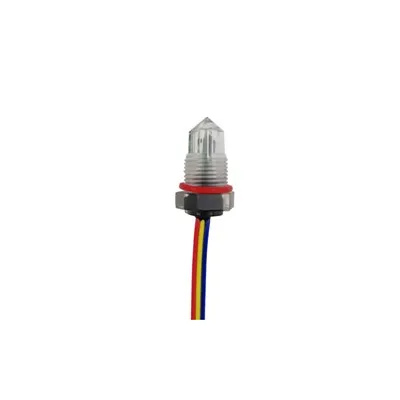
Optical sensors use light to detect whether liquid is present at a certain point. A typical optical level sensor contains an infrared LED and a receiver. When the sensor tip is in air, light reflects internally in a predictable way. When water covers the tip, the light behavior changes.
The sensor detects that change and switches output state.
Optical sensors are compact, fast, and have no moving parts. They are often used in small tanks, appliances, medical equipment, and leak detection systems. However, they are generally best for point detection rather than full-range measurement. Dirt, bubbles, coating, or residue on the sensing tip can affect performance.
Bubbler Level Measurement
A bubbler system measures level by releasing air through a tube submerged in the liquid. The pressure required to push bubbles out of the tube corresponds to the depth of water above the tube outlet.
This method keeps sensitive electronics away from the liquid, which can be useful in corrosive, dirty, or hazardous environments. It is often used in wastewater and open-channel applications.
Bubbler systems require an air supply and regular maintenance to prevent tubing blockage, so they are not always the simplest option.
How the Sensor Signal Is Used
After the sensor detects water level, the output is sent to another device. In a basic system, the signal may directly operate a pump or alarm. In a more advanced system, it may feed into a controller that makes automated decisions.
A complete water level monitoring setup may include:
The level sensor
Signal cable or wireless transmitter
Controller or PLC
Display or HMI
Alarm device
Pump or valve control
Data logging or cloud monitoring software
This allows users to track levels, identify trends, receive alerts, and reduce manual inspection.
Choosing the Right Water Level Sensor
To select the right sensor, consider the application rather than only the sensor price. Important factors include:
Whether you need point detection or continuous measurement
Tank size, shape, and material
Water cleanliness and presence of sediment or debris
Temperature and pressure conditions
Foam, vapor, turbulence, or condensation
Required accuracy and response time
Maintenance access
Electrical output requirements
Indoor, outdoor, or submersible installation
Compatibility with monitoring or control systems
For a simple high-level alarm in a clean tank, a float or conductive sensor may be enough. For remote reservoir monitoring, a hydrostatic, ultrasonic, or radar sensor may be more appropriate. For industrial automation, output type, calibration, reliability, and integration are especially important.
Best Practices for Reliable Measurement
Even a good sensor can perform poorly if it is installed incorrectly. Follow these best practices whenever possible:
Install the sensor where turbulence is minimal
Avoid placing non-contact sensors directly above inlet streams
Keep sensing surfaces clean and free from buildup
Use stilling wells in turbulent tanks when needed
Match the sensor material to the liquid environment
Protect outdoor sensors from weather and electrical surges
Calibrate continuous sensors according to the application
Test alarms and pump controls regularly
Leave access space for inspection and maintenance
For critical systems, redundancy may be useful. For example, a continuous sensor can monitor normal operation while an independent high-level switch provides overflow protection.
Common Applications
Water level sensors are used across residential, commercial, municipal, and industrial settings. Typical applications include:
Overhead and underground water tanks
Sump pits and drainage systems
Wells and boreholes
Water treatment plants
Wastewater lift stations
Cooling towers
Irrigation systems
Boilers and condensate tanks
Rainwater harvesting systems
Rivers, canals, and reservoirs
Leak detection systems
In each case, the core purpose is the same: to provide dependable information about liquid level so people or automated systems can respond correctly.
Final Thoughts
Water level sensors may appear simple, but they rely on several different measurement principles. Some detect mechanical movement, while others measure pressure, capacitance, conductivity, sound, light, or radar reflection.
The best sensor depends on the environment, the type of measurement required, and how the data will be used. By understanding the main water level sensor principles, you can choose liquid level sensors that improve safety, reduce manual checks, prevent equipment damage, and support accurate water level monitoring.