Liquid Level Sensors for any Application
Understanding Liquid Level Measurement
Accurate liquid level measurement is essential in industries ranging from manufacturing and food processing to water treatment, chemical handling, agriculture, and equipment automation. Whether a system needs to prevent overflow, protect pumps from running dry, monitor tank inventory, or support automated controls, the right measurement device helps improve safety, efficiency, and reliability.
Liquid level sensors and liquid level gauges are designed to detect, monitor, or display the amount of fluid in a tank, vessel, sump, reservoir, or process line. While some applications require a simple visual indication, others need continuous electronic feedback for controllers, alarms, or remote monitoring systems.
What Are Liquid Level Sensors?
Liquid level sensors are devices that detect the presence or height of a liquid. Depending on the technology, they may provide a basic point-level signal or a continuous measurement across a defined range.
A point-level sensor is typically used to identify whether liquid has reached a specific high or low level. This is common for overflow prevention, low-level alarms, pump protection, and process interlocks.
A continuous level sensor measures the changing height of liquid in real time. These sensors are useful when operators need to track inventory, automate filling and draining, or maintain a precise process level.
Liquid Level Gauges vs. Sensors
Liquid level gauges provide a visible way to check fluid levels. They may be mechanical, magnetic, sight-glass, or integrated with electronic outputs. Gauges are often chosen when operators need a local, easy-to-read indication at the tank.
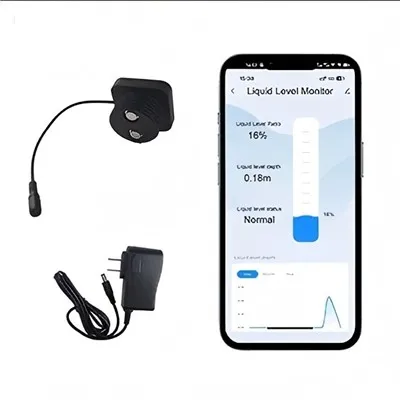
Liquid level sensors, by contrast, are commonly used when the system needs an electrical signal. This signal can be sent to a control panel, PLC, alarm, pump, valve, or monitoring platform.
In many applications, the best solution combines both: a gauge for local verification and a sensor for automated control.
Common Types of Liquid Level Sensors
There are several types of liquid level sensors, and each is suited to different operating conditions.
Float Sensors
Float sensors use a buoyant float that rises and falls with the liquid. They are simple, dependable, and widely used for high-level and low-level detection. Float-based options are often cost-effective for tanks, sumps, and reservoirs.
Capacitive Liquid Level Sensors
Capacitive liquid level sensors detect changes in capacitance caused by the presence or movement of liquid. They can be used for point-level or continuous measurement, depending on the design. Because they can often detect liquid through non-metallic tank walls, they are useful in applications where direct contact with the fluid is not preferred.
These sensors are commonly considered for clean liquids, certain chemicals, oils, and process fluids. Selection should account for the liquid's dielectric properties, tank material, buildup potential, and environmental conditions.
Ultrasonic Sensors
Ultrasonic sensors measure liquid level without contact by sending sound waves toward the liquid surface and measuring the return time. They are useful for many storage tanks and open vessels, especially when contact with the liquid should be avoided.
Pressure-Based Sensors
Pressure sensors estimate level based on the pressure created by the height of the liquid above the sensor. They are often used in wells, tanks, wastewater systems, and process vessels where continuous level measurement is required.
Optical Sensors
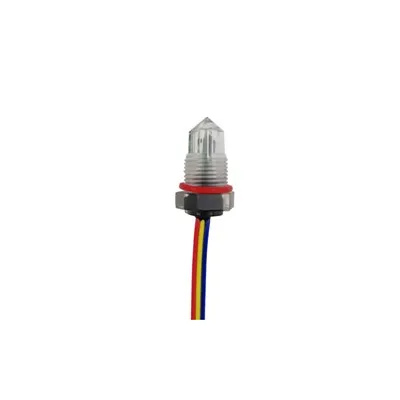
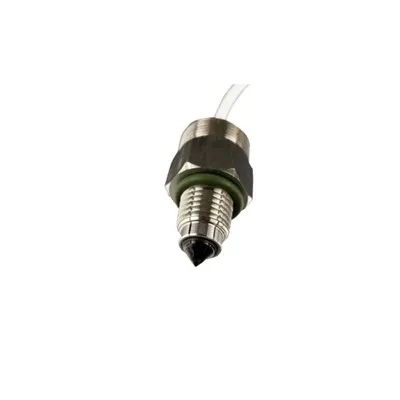
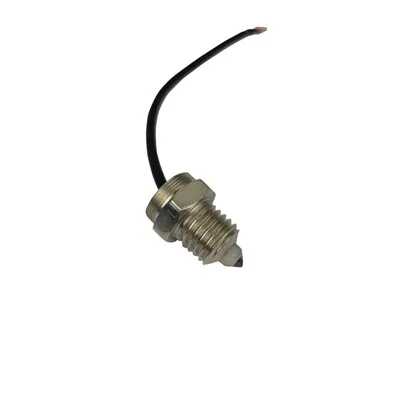
Optical sensors use light to detect whether liquid is present at a specific point. They are compact and responsive, making them useful for small tanks, medical equipment, laboratory systems, and OEM applications.
Key Factors When Choosing a Sensor
To select the right solution, consider the full operating environment rather than the tank level alone. Important factors include:
Liquid type, including water, oil, fuel, chemicals, wastewater, or food-grade fluids
Required measurement style, such as point-level detection or continuous monitoring
Tank material, size, shape, and mounting locati0n
Temperature, pressure, vibration, and exposure to contaminants
Whether the sensor must contact the liquid
Required output signal for alarms, controllers, pumps, or remote systems
Maintenance access and cleaning requirements
Compatibility with industry or safety requirements
Choosing the correct sensor helps reduce false readings, premature failure, and unnecessary maintenance.
Applications Across Industries
Liquid level sensors and gauges are used wherever fluid storage or movement must be monitored. Common applications include:
Water and wastewater tanks
Chemical storage and dosing systems
Hydraulic reservoirs
Fuel and oil tanks
Food and beverage processing
Agricultural sprayers and irrigation systems
Marine and vehicle tanks
Industrial automation equipment
HVAC and boiler systems
Medical and laboratory devices
Each application has unique needs. For example, a chemical tank may require material compatibility, while a food processing system may require sanitary design. A wastewater lift station may need rugged construction, while an OEM device may prioritize compact size and repeatability.
Building a Reliable Level Measurement System
The best level measurement system starts with understanding the liquid, the tank, and the control objective. A basic alarm application may only need a single point-level sensor. A production process may require continuous measurement, signal integration, and local liquid level gauges for operator confirmation.
By matching the technology to the application, liquid level sensors can improve process control, reduce downtime, protect equipment, and support safer operations. From simple visual gauges to advanced capacitive liquid level sensors, there is a practical solution for nearly any liquid monitoring challenge.