Liquid Level Sensors Selection Guide
Choosing the right sensor for a tank, reservoir, sump, process vessel, or water storage system starts with understanding how the liquid behaves and what the application needs to measure. Liquid level sensors are used to detect, monitor, or control the height of a fluid, helping prevent overflow, dry running, equipment damage, and inaccurate process conditions.
This guide explains the main sensor types, key selection factors, and practical considerations for choosing reliable water level sensors and other level measurement solutions.
What Are Liquid Level Sensors?
Liquid level sensors are devices that identify the level of a liquid inside a container or open environment. Depending on the technology, they may provide a simple point-level signal, such as "full" or "empty," or a continuous measurement showing the exact level over time.
They are commonly used in:
Water tanks and cisterns
Industrial process vessels
Chemical storage systems
Wastewater and sump monitoring
Food and beverage equipment
HVAC and boiler systems
Agricultural irrigation systems
Marine, automotive, and equipment applications
Point Level vs. Continuous Level Measurement
Before selecting a sensor, decide whether the application requires point detection or continuous monitoring.
Point Level Sensors
Point level sensors trigger when liquid reaches a specific height. They are often used for high-level alarms, low-level shutdowns, pump protection, and overflow prevention.
Common examples include float switches, optical sensors, conductive probes, and some capacitive sensors.
Continuous Level Sensors
Continuous sensors provide an ongoing measurement of the liquid level. These are useful when operators need to monitor volume, automate refilling, track consumption, or integrate level data into a control system.
Common technologies include ultrasonic, radar, pressure, and continuous capacitive sensing.
Common Types of Liquid Level Sensors
Float Sensors
Float sensors are one of the simplest and most widely used options. A buoyant float rises or falls with the liquid and activates a mechanical or magnetic switch.
They are cost-effective and easy to install, making them suitable for many water level sensors applications. However, moving parts can wear over time or become affected by buildup, debris, or sticky liquids.
Capacitive Liquid Level Sensors
Capacitive liquid level sensors detect changes in capacitance caused by the presence or height of a liquid. They can often sense through non-metallic tank walls, which makes them useful when direct contact with the liquid is undesirable.
They are commonly used for water, oils, coolants, chemicals, and some granular materials. When selecting capacitive sensors, consider the dielectric properties of the liquid, tank material, wall thickness, and whether foam or residue may affect readings.
Ultrasonic Sensors
Ultrasonic sensors measure level by sending sound waves toward the liquid surface and calculating distance based on the returning echo. They are non-contact sensors, which makes them useful for corrosive, dirty, or difficult liquids.
They work best when the liquid surface is relatively stable and free from excessive foam, vapor, turbulence, or obstructions.
Pressure Level Sensors
Pressure sensors estimate liquid level by measuring hydrostatic pressure at the bottom of a tank. As liquid height increases, pressure increases.
These sensors are effective for many tanks and reservoirs, especially where continuous measurement is needed. Proper selection depends on liquid density, tank height, pressure range, and whether the sensor must withstand submersion or harsh media.
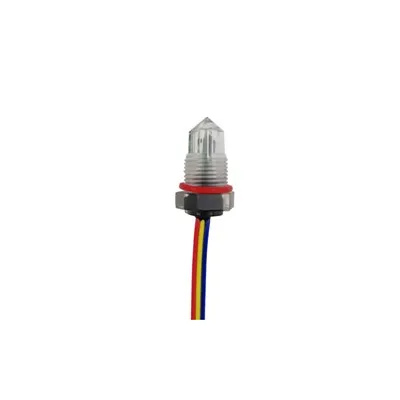
Optical Sensors
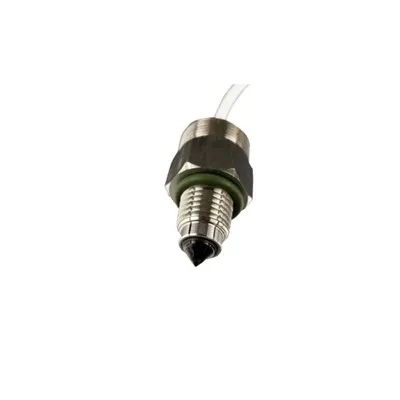
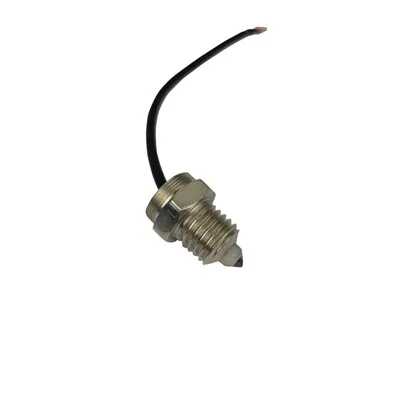
Optical level sensors use light to detect whether liquid is present at a specific point. They are compact, fast, and useful for small tanks or equipment where space is limited.
They may not be ideal for liquids that coat the sensor face, contain heavy solids, or leave residue.
Conductive Sensors
Conductive sensors detect level when a conductive liquid completes an electrical circuit between probes. They are often used with water-based liquids but are not suitable for non-conductive fluids such as oils or certain purified liquids.
Key Factors When Selecting a Sensor
To choose the right liquid level sensor, evaluate the application from both a measurement and environmental perspective.
Consider:
Liquid type: Water, oil, fuel, chemical, wastewater, food product, or coolant
Measurement goal: Point detection or continuous level output
Contact requirements: Contact, non-contact, or sensing through a tank wall
Tank material: Metal, plastic, fiberglass, glass, or open reservoir
Operating conditions: Temperature, pressure, humidity, vibration, and exposure
Liquid behavior: Foam, turbulence, vapor, coating, solids, or buildup
Output signal: Switch output, analog signal, digital communication, or controller compatibility
Installation method: Top-mounted, side-mounted, bottom-mounted, external, or submersible
Maintenance needs: Accessibility, cleaning frequency, calibration, and expected service life
Best Practices for Reliable Level Measurement
A sensor that works well in one tank may not perform reliably in another. For best results, match the technology to the liquid and installation environment.
Use these guidelines:
Define the required accuracy. Some applications only need a high or low alarm, while others need precise level tracking.
Check chemical compatibility. Wetted materials should withstand the liquid without corrosion, swelling, or degradation.
Account for environmental noise. Turbulence, foam, condensation, and vibration can affect certain sensing technologies.
Plan for maintenance. If the liquid leaves residue, choose a sensor that is easy to inspect or clean.
Verify output compatibility. Make sure the sensor integrates with pumps, alarms, PLCs, displays, or monitoring systems.
Consider fail-safe operation. Critical systems should be designed to respond safely if a sensor fails or loses power.
How to Choose the Best Option
For simple water storage or pump control, float switches or basic water level sensors may be sufficient. For non-contact measurement, ultrasonic or radar-style solutions may be preferred. For plastic tanks where external sensing is useful, capacitive liquid level sensors can be a strong choice. For deep tanks or reservoirs, pressure-based sensors may offer dependable continuous measurement.
The best selection depends on the liquid, tank design, control requirements, and operating environment. By comparing sensor types and application conditions early, you can reduce downtime, improve safety, and build a more reliable level monitoring system.