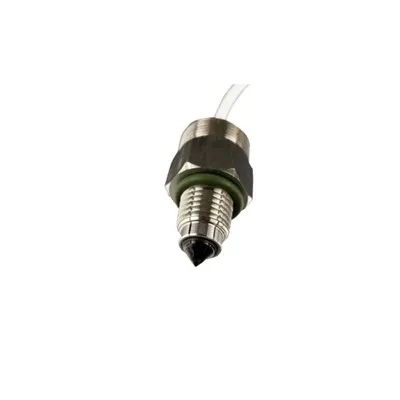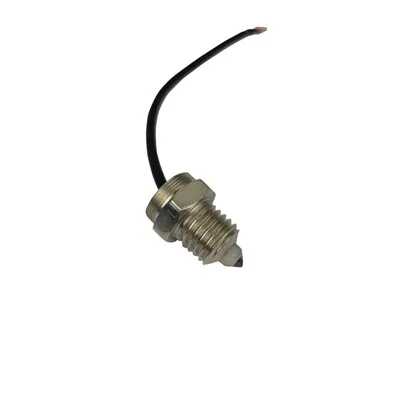
What to Know About Liquid Level Sensors for Chemicals
Understanding Chemical Level Measurement
In chemical processing, storage, water treatment, manufacturing, and laboratory environments, knowing how much liquid is in a tank or vessel is critical. Overfilling can create safety risks, while running a tank too low can interrupt production, damage pumps, or affect product quality. That is why liquid level sensors for chemicals are used to monitor, control, and automate liquid inventory across a wide range of applications.
Unlike general-purpose level measurement devices, chemical level sensors must be selected with compatibility, corrosion resistance, safety, and process conditions in mind. The right sensor depends on the chemical being measured, the tank material, temperature, pressure, required accuracy, and whether the application involves continuous monitoring or simple point-level detection.
What Liquid Level Sensors Do
Liquid level sensors detect the presence or height of liquid inside a container. In chemical applications, they may be used to:
Prevent overfills and spills
Trigger alarms at high or low levels
Protect pumps from running dry
Support automated dosing or batching
Monitor inventory in storage tanks
Improve process consistency
Reduce manual inspection requirements
There are two broad types of liquid level detection: point level and continuous level.
Point level detection indicates whether liquid has reached a specific level. It is often used for high-level alarms, low-level cutoffs, or overflow prevention.
Continuous level detection measures the liquid level across a range, providing ongoing level data. This is useful for inventory control, process automation, and real-time monitoring.
Common Types of Liquid Level Sensors for Chemicals
Different sensor technologies are suited to different chemical environments. Common options include:
Ultrasonic Level Sensors
Ultrasonic sensors measure level by sending sound waves toward the liquid surface and calculating the return time. They are non-contact, which makes them useful for corrosive or aggressive chemicals where direct contact should be avoided.
They work well in many storage tank applications, but foam, vapor, turbulence, or irregular tank geometry may affect performance.
Radar Level Sensors
Radar sensors use electromagnetic waves to measure liquid level. They are also non-contact and can perform well in challenging environments with vapors, temperature changes, or pressure variations. Radar is often chosen when accuracy and reliability are important in harsh chemical applications.
Float Level Sensors
Float sensors use a buoyant float that rises or falls with the liquid. They are simple, cost-effective, and commonly used for point-level detection. However, chemical compatibility is important because the float and stem materials must withstand the liquid being measured.
Capacitive Level Sensors
Capacitive sensors detect changes in capacitance caused by the presence or absence of liquid. They can be used for point or continuous measurement and may work through certain non-metallic tank walls. Chemical type, coating, buildup, and dielectric properties should be considered during selection.
Conductive Level Sensors
Conductive sensors rely on the liquid's ability to conduct electricity. They are often used with water-based conductive liquids but are not suitable for non-conductive chemicals. Material compatibility and electrode corrosion are key concerns.
Pressure-Based Level Sensors
Pressure sensors infer liquid level based on hydrostatic pressure. They can provide continuous measurement and are useful in many tanks. However, the sensor is in contact with the liquid, so wetted materials must be compatible with the chemical.
Key Selection Factors
Choosing the right sensor starts with understanding the application. Important considerations include:
Chemical compatibility: Sensor housings, seals, probes, floats, and wetted parts must resist corrosion or degradation.
Contact vs. non-contact measurement: Non-contact sensors are often preferred for aggressive, sticky, or hazardous chemicals.
Tank material and shape: Plastic, fiberglass, and metal tanks can influence which technology is practical.
Temperature and pressure: Process conditions can limit sensor options.
Foam, vapor, or agitation: These factors may interfere with some measurement methods.
Accuracy requirements: Inventory monitoring may require more precision than a simple high-level alarm.
Output signal: Sensors may provide relay, analog, digital, or communication-based outputs depending on the control system.
Installation locati0n: Top-mounted, side-mounted, and external configurations each have different requirements.
Why Chemical Compatibility Matters
Chemical applications can involve acids, caustics, solvents, oils, additives, and other aggressive fluids. A sensor that works well in water may fail quickly in a corrosive chemical tank. Materials such as stainless steel, PVDF, PTFE, polypropylene, or other engineered plastics may be selected depending on the chemical and operating conditions.
Before choosing liquid level sensors for chemicals, review the chemical concentration, temperature, exposure time, and any cleaning procedures. When in doubt, consult compatibility charts or the sensor manufacturer.
Best Practices for Reliable Liquid Level Detection
To improve performance and service life:
Match the sensor technology to the chemical and tank environment.
Avoid placing sensors where splashing, turbulence, or obstructions may cause false readings.
Use non-contact sensing when chemical exposure is a concern.
Confirm that seals, cables, and fittings are compatible with the liquid.
Plan for calibration, cleaning, and maintenance access.
Consider redundant sensors for critical high-level or safety applications.
Final Thoughts
Chemical level sensors play an important role in safety, efficiency, and process control. The best choice depends on more than just tank size or liquid volume. Chemical compatibility, measurement type, environmental conditions, and integration needs all influence sensor performance.
By understanding the main technologies and selection factors, you can choose a liquid level detection solution that supports safer operations, reduces downtime, and provides more dependable chemical monitoring.