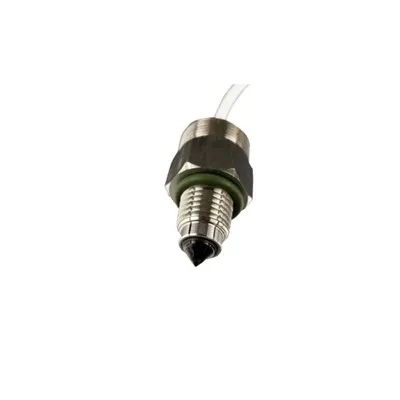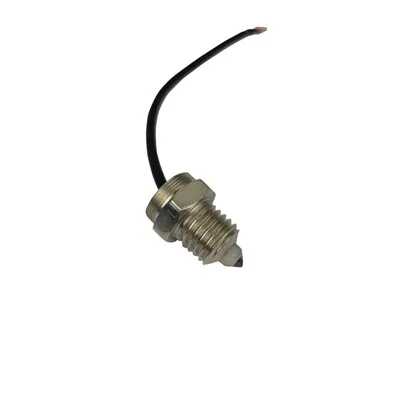
Mutual Inductance Level Sensor for Use in Liquid Metals
Industrial operators working with molten metals and other conductive liquids are placing renewed attention on mutual inductance level sensor designs as demand grows for more reliable measurement in extreme process environments. The technology is gaining interest across metal processing, casting, nuclear research, energy storage, and high-temperature industrial systems where conventional contact-based instruments may face durability, contamination, or accuracy challenges.
A liquid level sensor used in liquid metals must operate under conditions that can include high temperatures, corrosive media, electromagnetic noise, vibration, and limited maintenance access. Mutual inductance sensing offers a non-contact or minimally intrusive measurement approach by detecting changes in electromagnetic coupling between coils as the conductive liquid level changes.
Why liquid metal measurement is different
Measuring the level of water, oils, or chemical solutions is often handled with ultrasonic, radar, float, capacitive, or pressure-based devices. Liquid metals, however, introduce a different set of constraints. Their high electrical conductivity, density, reflectivity, and operating temperature can limit the performance or service life of many standard instruments.
In these applications, sensor reliability is not just a convenience. Accurate level data can support:
Process stability in casting and melting operations
Safer handling of molten materials
Better control of heating and cooling systems
Reduced downtime caused by sensor failure
Improved monitoring in sealed or hazardous environments
Because of these requirements, industrial teams are evaluating sensor technology that can withstand demanding conditions while reducing direct exposure of sensitive components to the liquid metal.
How mutual inductance sensing works
A mutual inductance level sensor typically uses an excitation coil and one or more receiving coils. When an alternating current is applied to the primary coil, it generates a magnetic field. The presence and position of a conductive liquid metal influence that field and alter the coupling between coils. By analyzing the resulting signal, the system can infer the liquid level.
This method can be especially useful where optical access is unavailable, mechanical moving parts are undesirable, or direct immersion creates maintenance risks. Depending on the design, coils may be positioned outside a containment wall or integrated into a protected probe assembly.
Industry interest continues to grow
Recent engineering discussions around high-temperature manufacturing, advanced reactors, and liquid metal thermal systems have increased attention on robust level sensing methods. Mutual inductance designs are being studied and refined because they can potentially combine durability with continuous measurement capability.
Key development priorities include improving calibration stability, compensating for temperature-related signal drift, minimizing interference from surrounding metal structures, and adapting sensor geometry for different vessel shapes. Engineers are also focusing on signal processing methods that can distinguish level changes from noise caused by thermal expansion, turbulence, or electromagnetic equipment nearby.
Benefits and limitations
The main appeal of this sensor technology is its ability to measure conductive liquid levels without relying on fragile mechanical movement or direct visual detection. It may also offer faster response than some thermal or pressure-based alternatives in specific applications.
However, implementation is highly application dependent. Vessel material, wall thickness, liquid composition, temperature range, installation space, and required accuracy all affect sensor selection and design. For this reason, mutual inductance sensing is often evaluated as part of a broader instrumentation strategy rather than a universal replacement for every liquid level sensor.
Outlook
As industries continue to modernize high-temperature processes, demand for specialized liquid metal instrumentation is expected to remain strong. Mutual inductance level sensor technology is positioned as a practical option for environments where standard measurement tools struggle.
For operators handling liquid metals, the next step is careful application review: define the process conditions, accuracy needs, installation limits, and maintenance expectations before selecting a sensor architecture. In challenging environments, the right sensor technology can improve visibility, safety, and long-term process control.