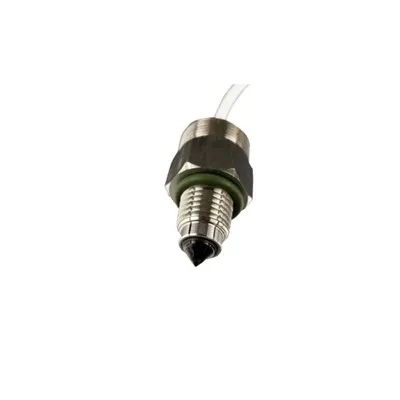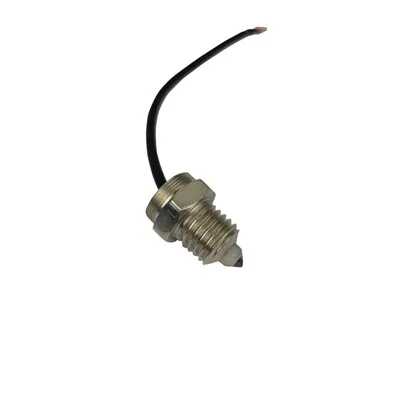
Point Level Sensors vs Continuous Sensors
Choosing the right level measurement technology is a practical decision with major consequences for safety, uptime, inventory accuracy, and process control. In many industrial environments, the choice comes down to two broad categories: point level sensors and continuous level sensors.
Both are types of level sensors, but they answer different questions. A point level device confirms whether material has reached a specific height. A continuous level device measures how much material is present across a range. Understanding the difference helps engineers, maintenance teams, and plant managers select the right industrial sensors for tanks, silos, hoppers, sumps, vessels, and process lines.
What Are Point Level Sensors?
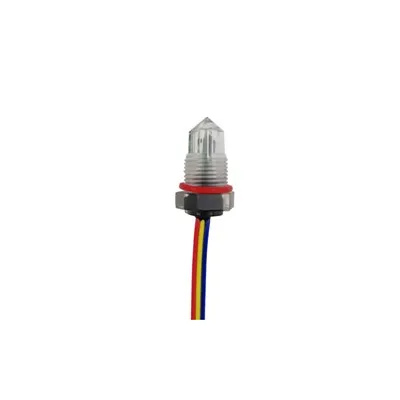
Point level sensors detect the presence or absence of a liquid, powder, granule, slurry, or bulk solid at a defined level. They are typically installed at a specific height inside or outside a vessel and trigger an output when the material reaches that point.
In simple terms, point level sensing answers questions like:
Is the tank full?
Is the hopper empty?
Has the liquid reached a high-level alarm point?
Has material dropped below a refill threshold?
Point level sensors are commonly used for switching, alarms, pump protection, overflow prevention, and dry-run protection. They are often connected to a PLC, alarm panel, pump controller, or safety system.
Common point level technologies include:
Capacitive sensors
Conductive probes
Vibrating fork sensors
Float switches
Rotary paddle sensors
Optical level switches
Ultrasonic point switches
The best technology depends on the material, vessel design, process conditions, and required reliability.
What Are Continuous Level Sensors?
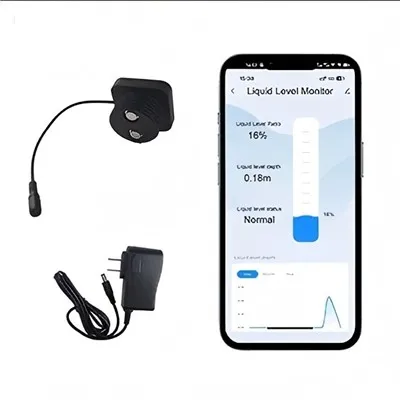
Continuous level sensors measure level across a full range rather than at one fixed point. Instead of simply telling you whether material is present at a certain height, they provide an ongoing measurement of the level in a vessel.
Continuous level sensing answers questions like:
How full is the tank right now?
What percentage of capacity remains?
How quickly is the level changing?
How much inventory is available?
Is the process level stable or fluctuating?
These sensors usually send an analog or digital signal to a control system, display, SCADA platform, or inventory management system. Common outputs may include 4–20 mA, relay, HART, IO-Link, Modbus, or other industrial communication methods depending on the device and application.
Common continuous level technologies include:
Ultrasonic level sensors
Radar level sensors
Guided wave radar sensors
Hydrostatic pressure sensors
Laser level sensors
Magnetostrictive sensors
Continuous float-based transmitters
Load cells for weight-based level estimation
Continuous measurement is valuable when the process needs visibility, control, trending, or accurate inventory data.
The Core Difference: Switch vs Measurement
The simplest distinction is this:
Point level sensors act like switches. They indicate when material reaches a defined level.
Continuous sensors act like measuring instruments. They provide a live level value across a range.
A point level sensor might tell you, "The tank has reached the high-level limit." A continuous sensor might tell you, "The tank is 72% full and rising."
This difference affects cost, installation, integration, maintenance, and how the sensor supports the overall process.
Typical Use Cases for Point Level Sensors
Point level sensors are ideal when a process only needs to know whether material has reached a specific condition. They are widely used because they are often simple, rugged, and cost-effective.
High-Level and Low-Level Alarms
A point level sensor can provide a dedicated alarm when material reaches a high or low threshold. For example, a high-level switch may prevent tank overfill, while a low-level switch may alert operators before a vessel runs empty.
Pump Protection
In liquid applications, a low-level sensor can help prevent pumps from running dry. This can reduce equipment damage, overheating, seal failure, and unplanned downtime.
Hopper and Silo Monitoring
For powders, pellets, grains, and other bulk solids, point level devices are often used to detect full, empty, or refill conditions in hoppers and silos.
Simple Automation
When a process requires basic on/off control, point level sensors can be enough. For example, a sensor may start a refill cycle when level drops below a certain point or stop filling when material reaches a maximum height.
Typical Use Cases for Continuous Level Sensors
Continuous level sensors are preferred when operators need more than a simple high or low signal.
Inventory Management
Continuous measurement allows teams to estimate remaining volume, schedule replenishment, and reduce the risk of stockouts. This is especially useful for chemicals, water, fuels, raw materials, and bulk solids.
Process Control
Some processes require level to remain within a target range. Continuous data enables control systems to adjust pumps, valves, feeds, or discharge rates based on real-time conditions.
Trend Monitoring
Continuous level data helps operators see how quickly material is being consumed or added. This can support production planning, leak detection, batching, and troubleshooting.
Remote Monitoring
For remote tanks, wastewater lift stations, chemical storage, or distributed facilities, continuous sensors can provide visibility without requiring frequent manual checks.
Pros and Cons of Point Level Sensors
Point level sensors are popular because they are straightforward and effective for many applications.
Advantages
Often lower cost than continuous measurement devices
Simple to understand, install, and integrate
Useful for alarms and safety-related switching
Available in rugged designs for harsh industrial environments
Good fit for full, empty, high-level, and low-level detection
Can be highly reliable when matched correctly to the material
Limitations
Do not show the actual level between switch points
May require multiple devices for multiple thresholds
Less useful for inventory tracking or process optimization
Some technologies can be affected by buildup, foam, coating, turbulence, or material properties
Provide limited diagnostic or trend information compared with continuous systems
Point level sensing works best when the process decision is binary: material is either present or not present at a specific locati0n.
Pros and Cons of Continuous Level Sensors
Continuous level sensors provide richer data, but they may require more careful selection and setup.
Advantages
Provide real-time level measurement across a range
Support inventory control, automation, and process optimization
Reduce the need for manual level checks
Enable trending, diagnostics, and remote monitoring
Can replace multiple point sensors in some applications
Useful for variable processes where level changes frequently
Limitations
Typically higher initial cost than simple point switches
May require more configuration and calibration
Accuracy can depend on vessel geometry, material behavior, foam, vapor, dust, pressure, temperature, or agitation
Installation locati0n is often critical
Some technologies require clear line of sight or stable process conditions
Continuous sensing is usually the better choice when level information must be visible, measurable, and actionable over time.
Key Selection Criteria
Selecting between point and continuous level sensors starts with the process goal. The right choice is not always the most advanced device; it is the sensor that provides the right information reliably.
1. What Decision Does the Sensor Need to Support?
If the system only needs to trigger an alarm or stop a fill cycle, point level sensing may be enough. If operators need to know the actual level, rate of change, or available inventory, continuous measurement is usually more appropriate.
2. What Material Is Being Measured?
Liquids, slurries, powders, pellets, granules, and foams behave differently. Consider whether the material is conductive, corrosive, sticky, abrasive, dusty, aerated, viscous, or prone to buildup.
3. What Are the Process Conditions?
Temperature, pressure, vibration, turbulence, vapors, condensation, and washdown requirements can all affect sensor performance. Harsh conditions may require specialized industrial sensors with suitable housings, wetted materials, and approvals.
4. What Accuracy Is Required?
A high-level alarm does not need the same accuracy as custody transfer, batching, or inventory management. Define whether the application needs simple detection, approximate level, or precise measurement.
5. How Will the Sensor Be Installed?
Some sensors mount from the top, others from the side, and some externally. Vessel access, nozzle availability, tank shape, internal obstructions, agitators, and maintenance access should influence the decision.
6. What Signal Does the Control System Need?
Point level sensors often provide relay or switching outputs. Continuous sensors often provide analog or digital measurement signals. Make sure the device output matches the PLC, controller, display, or monitoring system.
7. What Maintenance Is Acceptable?
Applications with sticky materials, coating, dust, or solids buildup may require sensors that resist fouling or are easy to inspect and clean. A low-maintenance option can be more cost-effective over the life of the equipment.
When to Use Both Technologies Together
In many facilities, point level and continuous level sensing are used together. This is especially common when safety, redundancy, or independent alarm verification is important.
For example, a tank may use a continuous radar sensor for inventory and process control, plus a separate high-level point switch for overfill protection. A sump may use continuous measurement for monitoring trends, plus a low-level point sensor to protect a pump.
Using both can provide:
Independent high-level or low-level alarms
Backup protection if one device fails
More robust process control
Better safety and compliance support
Clear separation between measurement and emergency switching
Concise Decision Framework
Use this quick framework when comparing point level sensors and continuous level sensors:
Choose point level sensors if:
You only need full, empty, high, or low detection.
The application requires a simple alarm or switching function.
Budget and simplicity are top priorities.
The process does not require live inventory data.
A discrete signal is enough for the control system.
Choose continuous level sensors if:
You need to know the actual level at all times.
Inventory, batching, or process control depends on level data.
Operators need trend visibility or remote monitoring.
Multiple switch points would be less practical than one measuring device.
The control system benefits from analog or digital level output.
Use both if:
Overfill or dry-run protection is critical.
You want independent backup alarms.
The process requires continuous measurement plus dedicated safety switching.
Downtime, spills, or equipment damage would be costly.
Final Thoughts
Point level sensors and continuous level sensors are not competing solutions as much as complementary tools. Point level devices provide clear, reliable detection at specific thresholds. Continuous sensors provide real-time visibility across the full measurement range.
The best choice depends on the application's control needs, material characteristics, process conditions, installation constraints, and risk tolerance. By focusing first on the decision the sensor must support, you can select level sensors that improve reliability, protect equipment, and give operators the right information at the right time.