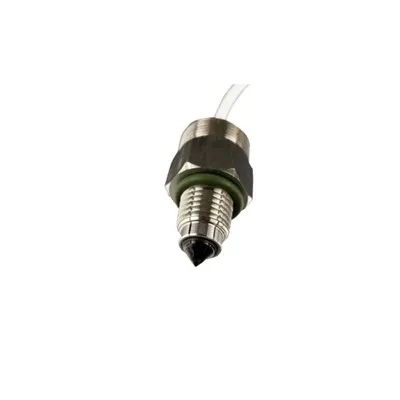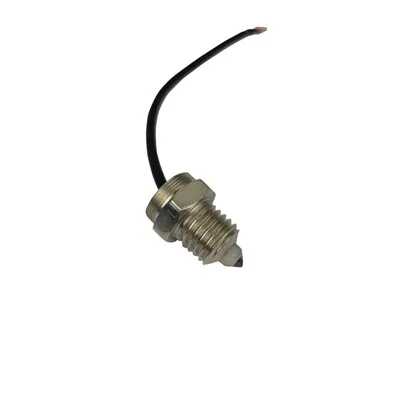
Sensing Principle of Oxygen Sensors - The Five Ways to Measure O₂
A complete guide to the sensing principles of oxygen sensors: why oxygen is uniquely measurable by five different physics (electrochemical/galvanic, zirconia Nernst, wideband amperometric, paramagnetic, and optical luminescence quenching), how each principle works with its governing equation, the full comparison table (range, response, life, consumables, cost, application), how to choose the right principle, the major applications (automotive, medical, industrial combustion, confined space, biotech), the FAQ, and the bottom line.
Sensing Principle of Oxygen Sensors - Quick Answer
Oxygen sensors measure O₂ concentration using five main sensing principles: electrochemical (galvanic/Clark cell - O₂ generates a current), zirconia (Nernst voltage across a heated solid electrolyte - the automotive lambda sensor), wideband amperometric zirconia (pump current proportional to O₂ - modern car air/fuel control), paramagnetic (oxygen's unique magnetic susceptibility - the industrial % standard), and optical (luminescence quenching - Stern-Volmer, for biotech and trace applications). No single principle wins - they trade range (trace ppb vs percent vs air/fuel ratio), response time (100 ms for engines vs seconds for industrial), consumables (galvanic cells die in 1–2 years; paramagnetic and optical do not consume), and cost. Oxygen is chemically special - electroactive, paramagnetic, and a powerful luminescence quencher - which is why five completely different physics can all measure it. (The same "one quantity, many principles" logic as level sensing: Guide to Liquid Level Sensors; signal chain: Basic Components of a Temperature Sensor.)
Why Oxygen Is Special
Three Properties, Five Principles
What makes O₂ measurable five ways:
| Property | What It Enables |
|---|---|
| Electroactive | Electrochemical / galvanic cells |
| High-temperature ionic | Zirconia Nernst / wideband |
| Paramagnetic | Magnetic susceptibility sensors |
| Luminescence quencher | Optical Stern-Volmer sensors |
One molecule, many handles: Oxygen is unusual because it has three independent physical handles. It is electroactive - it accepts electrons readily at a cathode, which is the basis of electrochemical and galvanic cells. At high temperature, zirconia becomes an oxygen-ion conductor, which is the basis of the Nernst voltage and the wideband pump sensors in every car. Oxygen is paramagnetic - its unpaired electrons give it a magnetic susceptibility roughly 100× that of nitrogen - the basis of the industrial paramagnetic analyzer. And it is an efficient luminescence quencher, the basis of optical sensors. Most gases have one handle; oxygen has four. That is why the "oxygen sensor" family spans five unrelated physics. (Gas sensing context: Gas & Liquid Sensor Solutions.)
Electrochemical (Galvanic / Clark Cell)
Oxygen Generates a Current
The cell chemistry:
| Element | Role |
|---|---|
| Cathode | O₂ reduced (electron acceptor) |
| Anode | Lead (Pb) oxidized - consumable |
| Electrolyte | KOH / salt bridge |
| Membrane | Gas-permeable, liquid-tight |
Current ∝ O₂ concentration: In a galvanic (fuel-cell) oxygen sensor, oxygen diffuses through a gas-permeable membrane to a cathode where it is reduced, while a lead anode is oxidized. The resulting current is directly proportional to the oxygen partial pressure - no applied voltage is needed (the cell is self-powered, like a battery). The Clark cell is the polarographic variant that applies a small bias voltage. These sensors read 0–25% (or 0–100%) oxygen with about 10–30 s T90 response, need no power, and are the workhorse of confined-space and personal safety monitors - but the lead anode is consumed, so the cell typically lasts 1–2 years and must be replaced, not recharged. (Signal chain reuse: the cell is sense + transduce in one: What Is a Liquid Level Sensor?)
Zirconia (Nernst / Lambda Sensor)
Voltage Across a Hot Ceramic
The Nernst equation:
| Term | Meaning |
|---|---|
| E = (RT/4F) · ln(P_ref/P_meas) | Nernst voltage |
| T | ~600–800 °C operating temp |
| P_ref | Reference air (21% O₂) |
| Behavior | Voltage jumps at λ = 1 |
The automotive classic: A zirconia (ZrO₂) lambda sensor is a solid-electrolyte electrochemical cell: a thimble of yttria-stabilized zirconia separates exhaust gas from reference air, and at 600–800 °C (maintained by an internal heater) the zirconia conducts oxygen ions, developing a Nernst voltage proportional to the ratio of oxygen partial pressures. The result is a step-like response: lean exhaust reads ~0.1 V, rich exhaust ~0.9 V, with a sharp jump through ~0.45 V at stoichiometric (λ = 1, 14.7:1 air/fuel). The engine computer dithers the fuel trim around that step - the classic on/off feedback of the "oxygen sensor" in every car. It measures which side of stoichiometric, not how far. (Output logic analogy - a point switch, not a transmitter: Continuous vs Point Level Sensors.)
Wideband (Amperometric Zirconia / UEGO)
Pump Current, Linear O₂
How it differs from the narrowband:
| Aspect | Narrowband (Nernst) | Wideband (UEGO) |
|---|---|---|
| Output | Voltage step at λ=1 | Pump current, linear |
| Range | Rich/lean side only | ~λ 0.7–1.4+ (AFR ~10–20) |
| Response | ~100 ms | ~100 ms |
| Use | Fuel trim feedback | Continuous AFR control |
One extra pump cell makes it linear: A wideband (UEGO - universal exhaust gas oxygen) sensor adds a second zirconia cell that pumps oxygen ions in or out to hold the sensing cell at a fixed reference point. The pump current required to maintain that balance is proportional to the exhaust oxygen concentration over a wide range - roughly λ 0.7 to 1.4+, i.e., air/fuel ratios from about 10 to 20. That linear signal lets the engine computer command a specific AFR instead of just dithering around stoichiometric - essential for modern lean-burn and turbo engines, and the reason wideband sensors cost more and need smarter controllers. Same zirconia physics, different circuit: a voltage step becomes a pump current. (The same "point vs continuous" distinction as level sensors: Continuous vs Point Level Sensors.)
Paramagnetic
The Magnetic Susceptibility Method
The physics:
| Term | Meaning |
|---|---|
| O₂ magnetic susceptibility | ~1.9 × 10⁻⁶ (paramagnetic) |
| N₂ susceptibility | ~100× weaker (diamagnetic) |
| Measurement | Force / thermal effect of O₂ in a field |
| Range | 0–21% / 0–100% oxygen |
The industrial standard, no consumables: Oxygen's unpaired electrons make it paramagnetic - attracted into a magnetic field - while most other gases (nitrogen, CO₂, methane) are diamagnetic and weakly repelled. Paramagnetic oxygen analyzers exploit this with designs like the "dumbbell" (a quartz dumbbell displaced by O₂'s attraction) or the "magnetic wind" (O₂ drawn into a field, creating a measurable flow/thermal effect). These instruments read 0–21% or 0–100% oxygen with no consumables, no chemical cells, and no O₂ consumption - which is why they are the standard in industrial combustion, boiler, and process oxygen measurement despite being larger, slower (seconds), and pricier than electrochemical cells. The trade is maintenance-free life versus cost and response. (Selection trade logic: Liquid Level Sensors with No Moving Parts.)
Optical (Luminescence Quenching)
Stern-Volmer, No Consumption
The Stern-Volmer equation:
| Term | Meaning |
|---|---|
| I₀ / I = 1 + K_SV · [O₂] | Quenching law |
| I₀, I | Luminescence without/with O₂ |
| K_SV | Stern-Volmer constant |
| Range | ppb to 100% possible |
Light dims in proportion to O₂: An optical oxygen sensor coats a probe with a luminescent dye - typically a ruthenium complex - and excites it with a light pulse. Oxygen molecules collide with the excited dye and quench the luminescence; the ratio of unquenched to quenched intensity follows the Stern-Volmer equation, I₀/I = 1 + K_SV·[O₂], so the measured intensity (or lifetime) maps directly to oxygen concentration. Because the dye is only quenched, not consumed, the sensor measures without consuming O₂ - no drift from depletion, no lead anode to replace. That makes optical sensors the choice for biotech, medical, and harsh or sterile environments, spanning ppb to 100% with fast response, at higher cost. (The same "radiation in, signal out" idea as remote sensing and IR thermometers: What Are the Types of Thermometers?)
Full Comparison Table
Five Principles at a Glance
The whole family:
| Principle | Range | Response | Consumables | Cost | Best For |
|---|---|---|---|---|---|
| Electrochemical | 0–25% | ~10–30 s | Cell (1–2 yr) | Low | Safety, portable |
| Zirconia Nernst | λ step | ~100 ms | None (heated) | Low | Auto fuel trim |
| Wideband UEGO | λ 0.7–1.4+ | ~100 ms | None (heated) | Mid | AFR control |
| Paramagnetic | 0–100% | Seconds | None | High | Industrial % |
| Optical | ppb–100% | <1 s–s | None | High | Biotech, medical |
One table, every trade: The electrochemical cell is cheap, portable, and safety-rated - but it dies in 1–2 years. Zirconia is cheap and instant - but only answers "rich or lean" (wideband adds linear range). Paramagnetic reads the full percent scale with zero consumables - but costs and weighs like lab equipment. Optical covers ppb to 100% without consuming oxygen - but at the highest price. No principle dominates; the application picks the physics. (Datasheet reading for any of them: Sensor Data Sheet: How to Read and Use One.)
How to Choose
Range, Speed, Life, Cost
The decision path:
| Requirement | Principle |
|---|---|
| Portable safety monitor | Electrochemical |
| Car exhaust fuel trim | Zirconia Nernst |
| Continuous AFR control | Wideband UEGO |
| Industrial % analyzer | Paramagnetic |
| Trace/biotech, no consumption | Optical |
Five needs, five answers: A confined-space personal monitor needs small, cheap, low-power - electrochemical. A catalytic converter needs the 100 ms Nernst step - zirconia. A modern engine needs linear AFR - wideband. A boiler or process plant needs a maintenance-free percent analyzer - paramagnetic. A bioreactor or medical device needs ppb-to-100% without consuming the sample - optical. The four questions that decide it: what range (trace, percent, or air/fuel ratio), how fast, can it consume the cell, and what budget. Answer those four and the principle selects itself. (The same needs-driven selection as level sensing: Guide to Liquid Level Sensors.)
Applications
Where Each Principle Lives
The real jobs:
| Sector | Principle | Why |
|---|---|---|
| Automotive | Zirconia / UEGO | 100 ms, exhaust harshness |
| Confined space safety | Electrochemical | Small, low-power, cheap |
| Industrial combustion | Paramagnetic | %, no consumables |
| Medical / biotech | Optical | No consumption, sterile |
| Lab / research | Paramagnetic / optical | Accuracy, trace range |
Five sectors, one molecule: Automotive uses zirconia narrowband and wideband sensors in the exhaust - hot, fast, and vibration-hardened. Confined-space and personal gas detectors use electrochemical cells - compact, battery-friendly, and cheap enough to replace. Industrial boilers and process plants use paramagnetic analyzers - accurate percent readings with no consumables. Medical devices and bioreactors use optical sensors - sterile probes, no oxygen consumption, trace capability. Laboratories pick paramagnetic for percent accuracy or optical for trace studies. Every application maps to one principle, and every principle maps to one application family. (Application thinking: Gas & Liquid Sensor Solutions.)
FAQ
Q1: What are the sensing principles of oxygen sensors?
The five main principles are electrochemical (galvanic/Clark cell - O₂ generates a current proportional to concentration), zirconia Nernst (a heated solid electrolyte develops a voltage step at stoichiometric - the automotive lambda sensor), wideband amperometric zirconia (a pump current proportional to O₂ over a wide air/fuel range), paramagnetic (oxygen's unique magnetic susceptibility - the industrial % standard), and optical luminescence quenching (Stern-Volmer - light dims in proportion to O₂). They trade range, response, consumables, and cost.
Q2: How does a zirconia oxygen sensor work?
A zirconia (ZrO₂) sensor is a solid-electrolyte cell that separates exhaust gas from reference air. At 600–800 °C - held by an internal heater - the zirconia conducts oxygen ions and develops a Nernst voltage proportional to the oxygen partial-pressure ratio. Lean exhaust reads about 0.1 V, rich about 0.9 V, with a sharp jump through ~0.45 V at stoichiometric (λ = 1). The engine computer dithers fuel trim around that step. Wideband (UEGO) versions add a pump cell to read oxygen linearly over a wide range.
Q3: How long do oxygen sensor cells last?
Electrochemical (galvanic) cells consume their lead anode and typically last 1–2 years in service, then must be replaced - the anode is the consumable. Zirconia and wideband sensors have no consumable (the ceramic is not consumed) and typically last years, but their heaters and exposure to poisons (silicone, oil) limit service life. Paramagnetic and optical sensors consume nothing at all - no cell to replace - which is part of their higher cost.
Q4: Why is oxygen measured by so many different principles?
Because oxygen has multiple independent physical properties: it is electroactive (electrochemical cells), an oxygen-ion conductor at high temperature (zirconia), paramagnetic due to unpaired electrons (magnetic sensors), and an efficient luminescence quencher (optical sensors). Most gases offer one handle; oxygen offers four, so each application can pick the physics that best fits its range, speed, maintenance, and budget.
Q5: Which oxygen sensor principle is best?
There is no universal best - it depends on the job. For portable safety monitors: electrochemical (small, cheap, low-power). For car exhaust: zirconia narrowband or wideband (fast, harsh-environment). For industrial percent analysis: paramagnetic (no consumables, accurate). For trace or sterile applications: optical (no oxygen consumption, ppb–100%). Match range, response, maintenance, and budget to the principle - the same needs-driven logic as any sensor selection.
The Bottom Line
Oxygen sensors measure one molecule through five different physics, because oxygen is uniquely electroactive, a high-temperature ion conductor, paramagnetic, and a luminescence quencher. Electrochemical (galvanic/Clark) cells generate a current proportional to O₂ - cheap, portable, safety-standard, but the lead anode is a 1–2-year consumable. Zirconia Nernst sensors put a 600–800 °C solid electrolyte between exhaust and air and read a voltage step at stoichiometric - the 100 ms automotive lambda sensor. Wideband UEGO sensors add a pump cell for linear air/fuel control. Paramagnetic analyzers exploit oxygen's ~100× magnetic susceptibility advantage over nitrogen - the maintenance-free industrial percent standard. Optical sensors use Stern-Volmer luminescence quenching - no consumption, ppb to 100%, for biotech and medical. No principle wins outright: range (trace, percent, or AFR), response (100 ms to seconds), consumables (cells die, ceramics don't), and cost pick the physics. Read the application, then the principle - and the specific sensor is just packaging and a data sheet. (Component and signal-chain context: Basic Components of a Temperature Sensor; Sensor Data Sheet Guide.)
Last updated: August 2026
Disclaimer: This article is an educational guide to the sensing principles of oxygen sensors for general reference. The governing physics and typical values (galvanic/Clark electrochemical cells: 0–25% range, ~10–30 s T90, lead anode consumable with ~1–2-year life; zirconia Nernst: 600–800 °C operating temperature, ~0.1 V lean / ~0.9 V rich with ~0.45 V step at λ=1; wideband UEGO: linear over ~λ 0.7–1.4+ with ~100 ms response; paramagnetic: oxygen susceptibility ~1.9×10⁻⁶, ~100× nitrogen's; optical: Stern-Volmer I₀/I = 1 + K_SV·[O₂], ppb–100% capability) are established scientific and engineering knowledge; specific values, ranges, response times, and lifetimes vary by manufacturer and model and must be confirmed on the official data sheet. This guide is not affiliated with any sensor manufacturer.