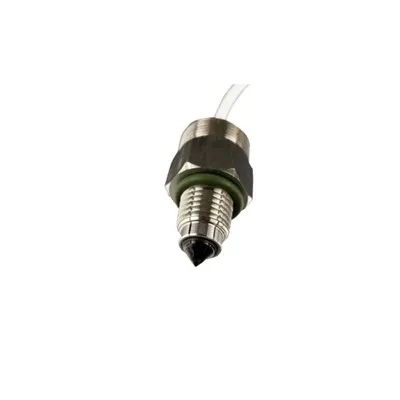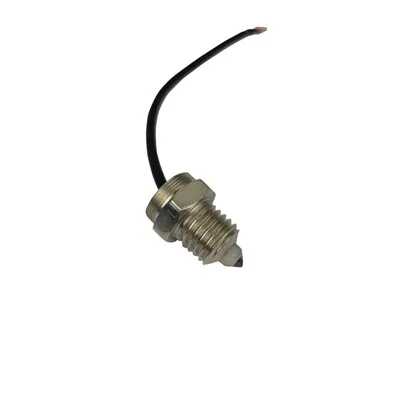
SmartValve Pilot Project 2016
If you ever worked around municipal water systems, you know the "simple" valve isn't really simple at all. It's a critical control point-and when it's hard to locate, hard to turn, or impossible to verify remotely, everything downstream gets harder: pressure management, leak response, service restoration, and even customer trust. That's why the SmartValve Pilot Project 2016 became such a useful reference for utilities exploring automation without committing to a full network overhaul.
Below is a practical, plain-English SmartValve pilot project overview-what it aimed to prove, how it was typically set up, what "good" metrics looked like, and what teams learned the hard way.
What the SmartValve Pilot Project 2016 set out to prove
At its core, the smartvalve pilot project wasn't about buying shiny gadgets. It was about answering a few operational questions:
Can we reliably do remote valve monitoring and control in real field conditions?
Will automation reduce time-to-isolate during breaks and complaints?
Do we get measurable gains in pressure stability, leakage response, and crew safety?
Is the business case strong enough to scale (a real ROI analysis for valve automation)?
A pilot is successful when it creates decision-grade evidence-not just a demo.
Smart valve technology explained (without the jargon)
Here's the basic idea of smart valve technology explained: you take a traditional isolation or control valve and add sensing + actuation + communications so the valve's position and behavior can be measured and, in many cases, commanded remotely.
Most pilots in that era focused on:
Valve position feedback (confirm open/closed/partial)
Pressure and sometimes flow sensing near the valve
Event logs (moves, alarms, attempts)
Remote actuation (motorized or hydraulic assist)
Communications backhaul (cellular/radio) to a dashboard or SCADA
The practical outcome is fewer unknowns. Instead of "we think it's closed," you can verify.
SmartValve vs traditional valve systems: what changes operationally
In SmartValve vs traditional valve systems, the difference isn't only speed-it's certainty and coordination.
Traditional approach often means:
Dispatch crew → locate box → dewater/mud out → turn valve → hope it holds
Radio updates with uncertainty until someone confirms isolation worked
SmartValve approach aims for:
Confirm locati0n, status, and downstream response remotely
Coordinate crews and reduce unnecessary rolls
Log every action for after-action review and compliance
That's where the real valve automation benefits water networks show up: improved response time, reduced water loss, and better pressure management.
Planning the pilot: best practices for pilot implementation
If you're wondering how to evaluate smart valve pilots, start with a tight scope and clean success criteria. The best best practices for pilot implementation typically included:
Pick representative sites: a mix of high-complaint zones, critical customers, and "normal" neighborhoods
Define baseline performance: isolation time, average pressures, historical breaks, night-flow trends
Decide control boundaries: who can operate remotely, approval workflows, and safety lockouts
Create a comms plan: notify operations, field crews, and customer service on what "remote" means
Train on day one: don't wait until the first emergency to learn the interface
SmartValve deployment case study: a realistic pilot setup
A typical SmartValve deployment case study style pilot (like what many utilities attempted around 2016) might include 10–30 valves across 1–3 pressure zones, prioritized around:
Known leakage corridors
Pressure-reducing boundaries
Isolation points near hospitals/industrial users
Areas with hard-to-access valve boxes
The project team usually blended operations, engineering, and IT/SCADA so decisions didn't bottleneck in one department.
SCADA integration for smart valves (and why it matters)
Even if a vendor dashboard looks great, operators live in their control room tools. SCADA integration for smart valves is what turns a pilot from "interesting" to operational.
In a strong setup, SCADA (or an equivalent platform) received:
Valve position status (with confidence/health flags)
Local pressure readings and alarms
Battery/power and comms health
Command acknowledgments and interlocks
The key is avoiding "two sources of truth." Operators shouldn't have to check three screens to trust a valve state.
SmartValve installation guide steps: what field teams actually do
A practical SmartValve installation guide steps checklist looks like this:
Site verification: confirm valve type/size, turns-to-close, box condition, access and traffic control
Asset data cleanup: correct GIS ID, naming conventions, and zone mapping
Mechanical prep: service the box, confirm operability, repair caps/lids, address standing water
Actuator + sensor install: mount actuator, position feedback, pressure sensor (if included)
Commissioning tests: open/close cycles, torque checks, stall protection, manual override verification
Connectivity check: signal strength, failover behavior, latency expectations
SCADA tagging: alarms, trends, permissions, and command workflows
Operator handoff: documentation + quick-reference procedures + escalation contacts
Skipping steps 2 and 7 is how pilots end up with "working hardware" but unusable operations.
Pilot project results and metrics: what to measure (and how)
The most convincing pilot project results and metrics were tied to operational outcomes:
Isolation time: pre- vs post-pilot minutes to confirm shutdown and stabilize pressure
Truck rolls avoided: how many "check status" or "verify closure" dispatches disappeared
Pressure stability: reduced transients or fewer pressure-related complaints
Leak response: faster pinpointing and isolation, especially for night events
Reliability: command success rate, comms uptime, actuator fault frequency
Safety improvements: less time in traffic lanes, fewer confined-space style exposures at boxes
A pilot doesn't need perfect numbers. It needs credible measurement and honest limits.
Leak detection using smart valves: where it helps (and where it doesn't)
Leak detection using smart valves works best when valves provide pressure trending and events that correlate with bursts or abnormal demand. Common wins include:
Spotting sudden pressure drops that match break reports
Confirming isolation boundaries during leak investigations
Supporting district metered area (DMA) strategies when paired with flow data
But smart valves aren't magic. If you lack zone metering, asset mapping, or consistent pressure logging, the leak insights will be limited.
SmartValve troubleshooting common issues (the stuff that derails pilots)
Every pilot hits snags. The most frequent SmartValve troubleshooting common issues looked like:
Valve box condition: flooded, buried, or damaged boxes blocking installation and maintenance
Power constraints: batteries not matching duty cycle; frequent commands drain faster than expected
Connectivity gaps: dead cellular pockets; antenna placement issues; radio interference
Mechanical mismatch: worn valves needing rehab before automation
Human workflow issues: unclear authority to operate remotely; operators hesitant to trust status feedback
A solid fix is to document each issue, assign an owner (ops, IT, vendor, contractor), and track closeout dates-treat it like a reliability program, not a gadget rollout.
Smart valve alternatives comparison: what else could you pilot?
A smart valve alternatives comparison helps avoid "one solution bias." Depending on your goal, alternatives include:
Pressure loggers + analytics (good for insights, not isolation control)
Advanced PRVs with controllers (strong for pressure management)
Smart hydrants / acoustic sensors (strong for leak noise, not boundary control)
Full DMA buildouts (powerful, but more civil work and metering)
If your main pain is emergency isolation and verification, SmartValve-style automation can be a direct fit.
ROI analysis for valve automation: keeping the business case honest
A credible ROI analysis for valve automation usually blended hard and soft benefits:
Hard savings:
Reduced overtime during breaks
Less non-revenue water from faster isolation
Fewer repeat site visits
Soft (but real) benefits:
Better customer communications ("we've isolated the block")
Safer crew exposure and less traffic time
Better compliance documentation via action logs
The honest takeaway from the SmartValve Pilot Project 2016 mindset: ROI improves dramatically when you choose the right valves (criticality + accessibility + history) and integrate with operations from day one.
Key takeaway
The lasting lesson of the SmartValve Pilot Project 2016 is that smart valves succeed when they're treated as an operational capability-supported by clean asset data, SCADA-ready workflows, measurable metrics, and a plan for maintenance. Run the pilot to learn fast, measure carefully, and scale only when the evidence is clear.
Estimated article body word count: ~990 words.