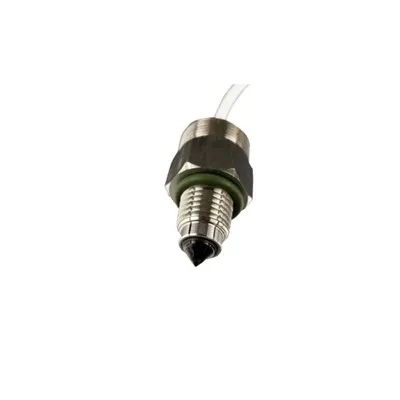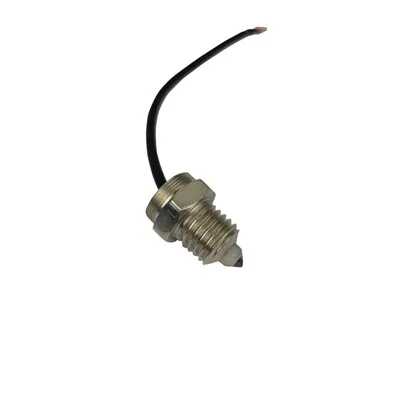
What is a hydrostatic level sensor
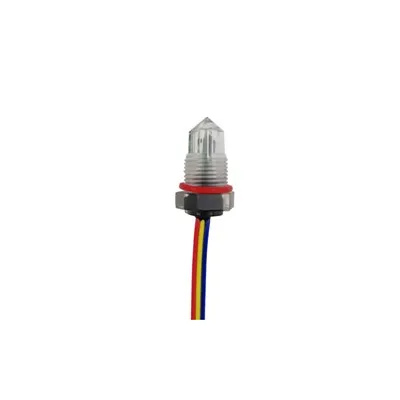
A hydrostatic level sensor is a device used for liquid level measurement in open tanks (and closed vessels) by measuring hydrostatic pressure at a known depth. Instead of "looking" at the surface like radar or ultrasonic instruments, it "feels" the weight of the liquid above it. If you're searching "What is a hydrostatic level sensor?" because you need a reliable water level sensor for a tank, wet well, or reservoir, hydrostatic measurement is often one of the most practical and cost-effective options.
What is a hydrostatic level sensor? (Simple definition)
In plain terms: a hydrostatic level sensor (often sold as a submersible level transmitter) measures the pressure created by a column of liquid and converts it into a level reading (height). This method is also called hydrostatic pressure level measurement.
The sensor output is typically:
Analog (common in industry): 4-20 mA level transmitter wiring
Digital (varies by manufacturer): Modbus/RS-485, SDI-12, etc.
Hydrostatic level sensor principle: why pressure equals level
The hydrostatic level sensor principle is based on the relationship:
Pressure = density × gravity × height (P = ρgh)
That means:
The deeper the sensor sits below the liquid surface, the higher the pressure.
With known density (ρ), the instrument can compute level (height).
Density effect on level measurement (important in the real world)
The density effect on level measurement is the biggest "gotcha" with hydrostatic systems:
If the liquid density changes (e.g., chemicals, brine, oils, process fluids, wastewater with varying solids), the same level can produce a different pressure.
For clean water, density is stable enough that readings are usually excellent.
For variable fluids, you may need compensation, a different technology, or to accept some error.
How hydrostatic level sensors work (step-by-step)
To understand how hydrostatic level sensors work, picture a sensor installed near the tank bottom:
Liquid pushes on the sensor diaphragm, creating pressure.
The pressure sensor converts that force into an electrical signal.
A transmitter scales the signal into level units (inches, feet, meters, % full).
Your PLC/SCADA reads it as a level value (often via 4–20 mA).
Hydrostatic sensors are popular because they work even with:
Foam, steam, condensation
Turbulence and splashing
Dark or dirty liquids (where optical methods struggle)
Vented vs sealed pressure sensor: which should you choose?
When selecting a hydrostatic sensor, the venting style matters. The vented vs sealed pressure sensor decision affects accuracy and maintenance.
Vented (gauge) sensors
A vented cable equalizes to atmospheric pressure, so the sensor measures only liquid head pressure.
Best for:
Most best level sensor for water tank applications
Open tanks, reservoirs, rivers, wells
Watch-outs:
The vent tube must stay dry and clean (desiccant or vent filters).
Poor venting can cause drifting readings.
Sealed (absolute) sensors
A sealed sensor measures absolute pressure (liquid head + atmospheric). You compensate using a barometric reading (built-in or external).
Best for:
Humid environments where vent tubes fail
Long cable runs or harsh outdoor conditions
Ultrasonic vs hydrostatic level sensor: a practical comparison
People often compare ultrasonic vs hydrostatic level sensor because both are common.
Choose ultrasonic when:
You can mount above the liquid
The surface is calm and not too foamy
You want non-contact measurement
Choose hydrostatic when:
Foam, vapors, steam, or condensation are present
The tank is narrow or has internals that confuse echoes
You want stable readings in turbulence
You need a dependable water level sensor for wet wells/wastewater
Choose submersible level transmitter: selection checklist
If you're trying to choose submersible level transmitter hardware, prioritize these specs:
Range: Select the smallest pressure range that covers max level (better resolution).
Material compatibility: Stainless steels (e.g., 316) are common; confirm for chemicals.
Cable type: Vented or sealed; jacket rated for submersion and chemicals.
Accuracy & stability: Look at %FS and long-term drift specs.
Temperature limits: Consider temperature compensation for pressure sensors if liquid temperature swings.
Output: 4–20 mA, voltage, or digital-match your control system.
Ingress rating: True submersible rating (IP68) and appropriate depth rating.
Hydrostatic level sensor installation guide (quick, field-friendly)
A strong hydrostatic level sensor installation guide focuses on protecting the sensor tip and getting repeatable placement:
Mounting: Suspend the sensor slightly above the bottom to avoid sludge buildup.
Stilling well / calming tube: Use one if turbulence causes noise.
Strain relief: Never let the cable carry all the weight-use a hanger or bracket.
Vented cable care: Keep desiccant fresh; route cable to avoid water wicking into junction boxes.
Lightning/surge protection: Especially for outdoor tanks and long runs.
Avoid dead zones: Don't place the sensor where inflow jets hit directly.
4-20 mA level transmitter wiring (essentials)
For 4-20 mA level transmitter wiring, you'll typically have a 2-wire loop-powered transmitter:
Verify power supply (commonly 12–30 VDC).
Confirm loop resistance is within limits (cable length + input burden).
Use shielded cable where electrical noise is high; ground shield properly (usually one end).
Hydrostatic level sensor calibration steps (fast and reliable)
Good hydrostatic level sensor calibration steps reduce surprises:
Zero check: With the sensor in air (or at known zero head), confirm output is near 4.00 mA (or your configured zero).
Span check: Submerge to a known depth (or fill tank to a known level) and confirm near 20.00 mA at full-scale.
Scaling: Set engineering units in the transmitter/PLC (e.g., 4 mA = 0 ft, 20 mA = 25 ft).
Density verification: If not water, confirm density assumptions (the key to avoiding level error).
Temperature review: Apply temperature compensation for pressure sensors if the process varies widely.
Troubleshooting: drifting readings, clogging, and wastewater issues
If you need to troubleshoot drifting level readings, focus on these common causes:
Venting problems (vented sensors): Moisture in vent tube, saturated desiccant, blocked vent filter.
Cable damage: Tiny jacket cuts can wick moisture and destabilize signal.
Electrical noise/grounding: Poor shield termination or shared grounds.
Temperature swings: Uncompensated sensor or rapidly changing liquid temperature.
Fix sensor clogging in wastewater
To fix sensor clogging in wastewater, address the environment, not just the sensor:
Hang the sensor off-bottom and away from rags/solids accumulation zones.
Use a protective nose cap or guard (without blocking the diaphragm).
Add routine lift-and-rinse maintenance.
Consider a stilling pipe with perforations sized to reduce snagging but allow pressure equalization.
Where hydrostatic pressure level measurement fits best
Hydrostatic measurement is a strong choice for:
Tanks, sumps, and wet wells
Reservoirs and canals
Process vessels where non-contact sensors struggle
Most straightforward best level sensor for water tank use cases
Takeaway
A hydrostatic level sensor measures hydrostatic pressure and converts it to level using a proven, practical method. When installed carefully, wired correctly (including 4-20 mA level transmitter wiring), and calibrated with attention to density and temperature, it delivers dependable hydrostatic pressure level measurement-especially in applications where non-contact technologies can be unreliable.
Estimated word count (article body): ~980 words.