Understanding Capacitive Technology and Its Applications
What Is Capacitive Technology?
Capacitive technology refers to systems that detect, store, transfer, or measure electrical charge using capacitance. In simple terms, capacitance is the ability of two conductive surfaces to hold an electrical charge when they are separated by an insulating material, such as air, glass, plastic, or ceramic.
When people ask, "What is capacitive technology?" they are often referring to devices that respond to touch, proximity, liquid levels, pressure, or material changes without needing a traditional mechanical switch. This is possible because the human body, objects, and many materials can affect an electric field. A capacitive system detects those changes and converts them into useful signals.
Capacitive technology is widely used in everyday products, industrial equipment, medical devices, automotive controls, and consumer electronics. From smartphone touchscreens to elevator buttons, from fuel level sensors to modern appliance panels, capacitive systems help create interfaces and measurements that are responsive, durable, and often sealed from dust or moisture.
The Basic Idea Behind Capacitance
To understand capacitive technology, it helps to start with a capacitor. A capacitor is an electrical component made of two conductive plates separated by a non-conductive material called a dielectric. When voltage is applied, electrical charge builds up on the plates. The amount of charge the system can store is its capacitance.
Capacitance changes when certain conditions change, such as:
The distance between conductive surfaces
The size or area of the conductive surfaces
The type of insulating material between them
The presence of a nearby object, hand, liquid, or other material
Capacitive technology uses these changes as information. Instead of simply storing charge, a capacitive system monitors how capacitance varies and interprets that variation as an input, measurement, or event.
For example, when your finger approaches a touchscreen, it changes the local electric field. The device senses this change and determines where your finger is located. No physical button has to move; the system is responding to a change in capacitance.
What Is Capacitive Sensing?
Capacitive sensing is the process of detecting changes in capacitance to identify touch, proximity, position, level, pressure, or material presence. It is one of the most common uses of capacitive technology.
A capacitive sensor typically includes an electrode, a control circuit, and software or firmware that interprets the signal. The electrode creates an electric field. When a conductive or dielectric object enters that field, the capacitance changes. The circuit measures the change, and the system decides what it means.
Depending on the design, capacitive sensing can detect:
A finger touching a surface
A hand approaching a control panel
The amount of liquid in a container
The presence of an object on a surface
The position of a slider or dial
Changes in humidity, pressure, or material thickness
Capacitive sensing is especially useful when designers want an input method with no exposed moving parts. Because the sensing electrode can sit behind glass, plastic, or another protective layer, the final product can be easier to clean, more resistant to wear, and better protected from environmental conditions.
How Capacitive Coupling Works
Capacitive coupling occurs when an electrical signal is transferred between two conductive elements through an electric field rather than through direct physical contact. The conductors are separated by an insulating material, but changing voltage on one side can influence the other side.
In capacitive technology, capacitive coupling can be useful or unwanted, depending on the application.
In a useful sense, capacitive coupling allows a device to sense touch or proximity through a surface. Your finger does not need to directly contact the internal electrode. The electric field extends through the cover material, and the system detects the resulting change.
In electronics, capacitive coupling is also used to pass alternating signals while blocking direct current. This can help separate parts of a circuit while still allowing certain signal changes to move from one stage to another.
However, capacitive coupling can also introduce interference. Nearby wires, conductive objects, moisture, or electrical noise may affect the sensor if the system is not designed carefully. For this reason, capacitive devices often require good circuit layout, shielding, calibration, and signal processing.
Types of Capacitive Sensing
Capacitive sensing can be designed in several ways. The two most common categories are self-capacitance and mutual capacitance.
Self-Capacitance
Self-capacitance measures the capacitance between a single electrode and a reference point, often ground. When a finger or object approaches the electrode, the measured capacitance changes.
This approach is common in simple touch buttons, proximity sensors, and some slider controls. It can be sensitive and relatively straightforward to implement, but it may be less precise in applications that require tracking multiple touch points at the same time.
Mutual Capacitance
Mutual capacitance measures the capacitance between two electrodes, usually arranged as transmit and receive elements. When a finger comes near the intersection of these electrodes, it changes the coupling between them.
This method is widely used in projected capacitive touchscreens, such as those found in smartphones, tablets, kiosks, and control displays. Mutual capacitance can support multi-touch input, making it possible to detect gestures such as pinch, zoom, swipe, and rotate.
Common Applications of Capacitive Technology
Capacitive technology is used across many industries because it can detect interaction or material changes without relying on mechanical movement. Its applications range from simple touch controls to advanced measurement systems.
Touchscreens and Touch Panels
One of the most familiar applications is the capacitive touchscreen. These displays detect finger position through changes in capacitance across a transparent sensor layer. Capacitive touchscreens are known for fast response, high sensitivity, and support for multi-touch gestures.
They are commonly used in:
Smartphones
Tablets
Laptops
Payment terminals
Automotive infotainment systems
Industrial human-machine interfaces
Public kiosks
Touch Buttons and Controls
Capacitive touch buttons are often used in appliances, lighting controls, security systems, and consumer electronics. Because the sensing element can be placed behind a smooth surface, the product can have a clean design with fewer gaps or openings.
Examples include:
Appliance control panels
Elevator buttons
Smart thermostats
Audio equipment controls
Bathroom mirrors with touch lighting
Access control keypads
Proximity Detection
Capacitive proximity sensors can detect an object before it makes contact. This is useful for wake-up functions, gesture controls, safety features, and presence detection.
For example, a device may brighten its display when a hand approaches, or a control panel may activate only when a user is nearby. In industrial settings, capacitive proximity sensing can detect objects made from metal, plastic, glass, liquid, powder, or other materials, depending on the sensor design.
Liquid Level Sensing
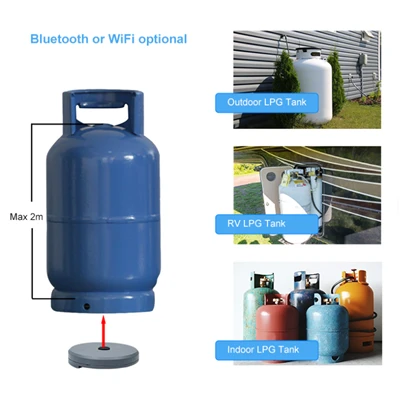
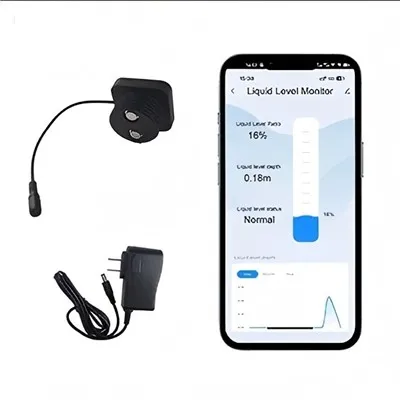
Capacitive sensing can measure the level of liquid in a container by detecting changes in the dielectric properties around the sensor. The sensor may be mounted inside or outside the container, depending on the material and application.
This can be useful for:
Water tanks
Fuel systems
Medical fluid containers
Industrial process tanks
Soap or sanitizer dispensers
Coffee machines and beverage equipment
Because some capacitive level sensors can work through non-metallic walls, they may reduce the need for direct contact with the liquid.
Automotive Systems
Modern vehicles use capacitive technology in several areas. Capacitive controls can replace or supplement mechanical switches, while capacitive sensors can support safety, comfort, and convenience features.
Typical uses include:
Touch-sensitive infotainment displays
Door handle sensors
Seat occupancy detection
Steering wheel touch detection
Interior lighting controls
Climate control panels
Automotive applications often require careful design because the system must perform reliably despite temperature changes, vibration, moisture, electrical noise, and varied user behavior.
Medical and Healthcare Devices
Capacitive technology can support hygienic, sealed, and easy-to-clean interfaces, which makes it valuable in medical and healthcare settings. Touch controls behind smooth surfaces can reduce crevices where contaminants might collect.
Capacitive sensors may appear in diagnostic equipment, monitoring devices, wearable health products, fluid measurement systems, and patient interface panels. In these applications, reliability and safety are especially important, so sensors must be designed with appropriate validation and protection.
Industrial Automation
In industrial environments, capacitive sensors are used to detect materials, monitor levels, confirm object presence, and support automation processes. Unlike some sensor types that are mainly suited to metal detection, capacitive sensors can often detect a wider range of materials.
They may be used for:
Packaging lines
Material handling
Powder and granule detection
Fill-level monitoring
Object counting
Machine control interfaces
Advantages of Capacitive Technology
Capacitive technology offers several practical benefits:
No mechanical wear: Since many capacitive controls have no moving parts, they can last longer than traditional switches in certain applications.
Sealed designs: Sensors can work through protective surfaces, helping improve resistance to dust, moisture, and cleaning chemicals.
Modern appearance: Smooth touch panels support sleek product designs.
High sensitivity: Capacitive systems can detect light touch or close proximity.
Multi-touch capability: In touchscreen applications, capacitive technology can support advanced gestures.
Versatile detection: Capacitive sensors can respond to many conductive and dielectric materials.
Limitations and Design Considerations
Although capacitive technology is powerful, it is not ideal for every situation. Performance can be affected by environmental and design factors.
Common considerations include:
Moisture, water droplets, or condensation may cause false touches if not managed properly.
Gloves can reduce touch sensitivity unless the system is designed to support them.
Electrical noise may interfere with accurate readings.
Thick cover materials can reduce sensitivity.
Nearby conductive objects can affect calibration.
Sensor layout and grounding are important for reliable performance.
Good capacitive design often involves balancing sensitivity, durability, cost, power consumption, and user experience. In many products, software filtering and automatic calibration help the sensor adapt to changing conditions.
Capacitive vs. Resistive Technology
Capacitive technology is often compared with resistive touch technology. A resistive touchscreen responds to physical pressure that brings layers into contact. A capacitive touchscreen responds to changes in an electric field.
In general, capacitive touch interfaces feel more responsive and support multi-touch more naturally. Resistive interfaces may work better with any object that applies pressure, including a stylus or gloved hand, depending on the design.
Neither technology is universally better. The right choice depends on the application, environment, cost target, and user needs.
Why Capacitive Technology Matters
Capacitive technology has become important because it enables intuitive, durable, and flexible interaction. It allows products to sense human input and material changes in ways that feel simple to the user but are highly capable behind the scenes.
Whether used in a smartphone screen, a smart appliance, a vehicle control panel, or an industrial sensor, capacitive sensing helps bridge the physical and digital worlds. By measuring small changes in electric fields, capacitive systems can detect touch, proximity, position, and presence with speed and precision.
As devices continue to become more connected, compact, and sealed, capacitive technology will remain a valuable tool for designers and engineers. Understanding what capacitive technology is, how capacitive coupling works, and where capacitive sensing is used provides a strong foundation for evaluating modern electronic interfaces and sensor-based systems.