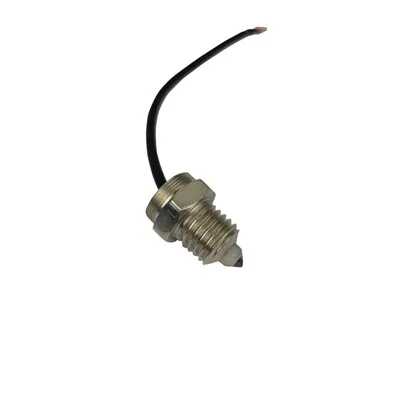
Advantages of Capacitive Point Sensors in Industry
Reliable Detection for Modern Industrial Processes
In demanding production environments, every detection point matters. Whether you need to confirm the presence of a liquid, detect bulk solids in a vessel, monitor product position, or automate a packaging line, capacitive point sensors provide a flexible, non-contact sensing solution for a wide range of industrial applications.
Designed to detect both conductive and non-conductive materials, capacitive technology gives plant teams a practical way to improve process visibility, reduce manual checks, and support consistent automation. Unlike many mechanical switches, capacitive sensors can detect materials through certain container walls and are not dependent on moving parts, making them a dependable choice for harsh, repetitive, or space-limited installations.
If your operation needs accurate point-level or presence detection, capacitive point sensing offers a compact, cost-effective, and highly adaptable solution.
Why Choose Capacitive Point Sensors?
Capacitive point sensors are widely used because they can detect changes in capacitance caused by the presence or absence of a target material. This makes them suitable for many industrial materials, including powders, granules, liquids, pastes, pellets, and finished products.
Key advantages include:
Non-contact detection that helps reduce wear and maintenance
Detection of many material types, including solids and liquids
Reliable performance in automated systems where repeatability is essential
Compact sensor formats for tight machinery spaces
Fast response times for production and process control
Flexible mounting options for tanks, hoppers, conveyors, and equipment
Compatibility with industrial control systems through common output options
For facilities looking to improve efficiency and reduce downtime, capacitive sensors deliver dependable detection without the complexity of more advanced measurement systems.
Built for Industrial Applications
Capacitive point sensors are used across many industries because they solve common detection challenges with simple, robust technology. They are especially useful when operators need to know whether a material has reached a defined point, whether a container is full or empty, or whether an object is present in a production sequence.
Common applications include:
Point-level detection in tanks and reservoirs
High-level and low-level detection in hoppers
Presence detection on conveyors
Product counting and positioning
Packaging line automation
Detection of plastic, glass, paper, wood, metal-coated, or liquid-filled targets
Monitoring powders, grains, pellets, and granular materials
Non-contact sensing through suitable non-metallic container walls
Because capacitive point sensors are versatile, they can often replace multiple sensor types in mixed-material environments. This helps simplify inventory, maintenance, and machine design.
Detect Liquids, Solids, and Non-Metallic Materials
One of the biggest advantages of capacitive sensing is material flexibility. While many proximity sensors are designed primarily for metal targets, capacitive sensors can detect a broader range of substances. This makes them ideal for facilities handling plastics, chemicals, food ingredients, packaging materials, adhesives, oils, water-based liquids, and dry bulk materials.
Capacitive point sensors can be applied where inductive sensors may not be suitable, especially when the target is non-metallic or when detection through a container wall is required. For example, a sensor can be mounted outside a plastic tank to detect whether liquid is present inside, depending on the material, wall thickness, and application conditions.
This flexibility can reduce the need for direct material contact and help protect the sensor from contamination, abrasion, or cleaning processes.
Reduce Downtime with Non-Mechanical Sensing
Mechanical switches and float devices can be effective in some applications, but they may be vulnerable to sticking, buildup, mechanical fatigue, or contact wear. Capacitive point sensors help minimize these concerns by using electronic detection instead of moving components.
Benefits for maintenance teams include:
Fewer wear-related failures
Less frequent manual adjustment
Reduced exposure to process materials
Lower risk of mechanical blockage
Easier installation in compact systems
Long service life when properly selected and installed
For high-cycle automation, this can translate into more consistent operation and fewer unplanned stops. In applications where cleanliness, repeatability, or access is a concern, non-contact sensing can be a strong advantage.
Improve Process Control and Product Flow
Point detection plays a critical role in industrial process control. A single missed detection signal can lead to overfilling, empty runs, production delays, material waste, or equipment damage. Capacitive point sensors help operators and control systems make timely decisions based on real-time material presence.
Use them to:
Prevent overfill conditions
Signal low material levels before a process interruption
Confirm product arrival at a workstation
Control filling and dispensing cycles
Support automated batching sequences
Trigger alarms or machine actions
Improve repeatability in production lines
When integrated with a PLC or machine controller, capacitive sensors provide a simple input signal that helps keep processes moving smoothly.
Designed for Easy Integration
Industrial sensor installations need to be practical. Capacitive point sensors are available in a range of body styles, sensing distances, mounting configurations, and output types, making them easy to integrate into new systems or retrofit into existing equipment.
Typical configuration options may include:
Cylindrical or compact housings
Flush or non-flush mounting styles
Adjustable sensitivity settings
DC or AC supply options, depending on model
PNP, NPN, relay, or other output options, depending on application needs
Threaded housings for secure installation
Cable or connector versions
Industrial housing materials suitable for demanding environments
Exact specifications vary by model, so selecting the right sensor should be based on the target material, sensing distance, installation conditions, electrical requirements, and environmental exposure.
A Practical Alternative to More Complex Measurement Systems
Not every application requires continuous level measurement or advanced instrumentation. In many cases, operators simply need to know whether material is present at a specific point. Capacitive point sensors provide this information clearly and efficiently.
This makes them a smart choice for applications where the goal is to detect:
Full or empty conditions
Minimum or maximum material level
Product presence or absence
Blockage or flow interruption
Position confirmation
By focusing on point detection rather than continuous measurement, these sensors can help control project cost, reduce setup complexity, and simplify maintenance.
Product Benefits at a Glance
Capacitive point sensors offer a strong combination of performance, flexibility, and value for industrial users.
Key product benefits include:
Versatile detection: Suitable for many liquids, powders, granules, and non-metallic targets
Non-contact operation: Helps reduce mechanical wear and contamination risk
Automation-ready output: Designed for integration with industrial control systems
Compact installation: Works well in machinery, tanks, hoppers, and production lines
Adjustable sensitivity: Allows tuning for specific materials and mounting conditions on applicable models
Reliable point detection: Supports efficient process control and machine safety logic
Cost-effective operation: Provides essential detection without unnecessary complexity
Selection Support for Your Application
Choosing the right capacitive point sensor depends on more than the material being detected. To ensure reliable performance, review the complete application environment before selecting a model.
Important considerations include:
Material type and dielectric properties
Required sensing distance
Container wall material and thickness, if sensing through a wall
Temperature, moisture, dust, and washdown exposure
Mounting locati0n and available space
Electrical supply and output requirements
Potential buildup on the sensor face
Need for sensitivity adjustment
Control system compatibility
If you are unsure which sensor is right for your equipment, application review and product selection support can help prevent underperformance and unnecessary replacements.
Pricing and Availability
Pricing for capacitive point sensors depends on the sensor design, housing material, electrical output, sensing range, connection type, and any application-specific requirements. Standard models may be suitable for many general automation needs, while specialized versions may be required for harsher industrial environments or more challenging materials.
For current pricing, lead times, and model availability, request a quote with your application details. Providing information about the target material, mounting method, and control system requirements will help ensure the recommended sensor is a good fit.
Get the Right Capacitive Sensor for Your Process
Capacitive point sensors are a proven choice for industrial detection because they combine versatility, reliability, and simple integration. From level detection in tanks and hoppers to presence sensing on automated machinery, they give operators the information needed to keep production moving.
If you are comparing proximity sensors, upgrading from mechanical switches, or searching for dependable capacitive sensors for a specific industrial process, our team can help you identify the right solution.
Request a quote today or contact us with your application details to find the right capacitive point sensor for your operation.