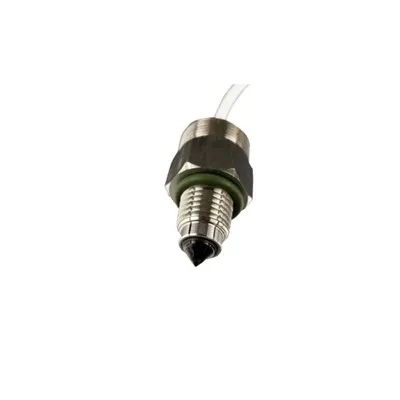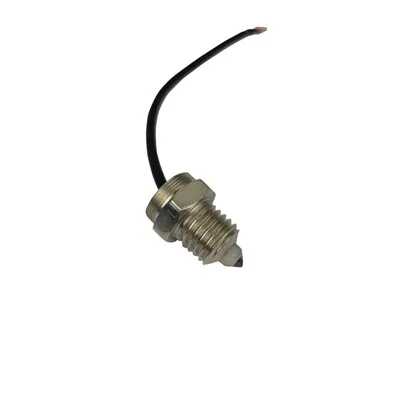
What are Capacitive Liquid Level Sensors?
Capacitive liquid level sensors are a widely used class of level sensors for detecting and monitoring how much liquid is in a container-anything from small reagent bottles to large process vessels. If you've ever asked, "What are Capacitive Liquid Level Sensors?", the simplest answer is: they measure level by detecting changes in capacitance caused by the liquid's presence and its dielectric constant and level sensing behavior. This makes them practical for continuous measurement, point-level detection, and even non-contact capacitive level measurement through non-metal tank walls.
What are Capacitive Liquid Level Sensors?
Capacitive sensors used for level are typically built around one of these configurations:
Probe-style (contact): a rod, cable, or coax probe sits in the tank and forms a capacitor with the tank wall or a reference electrode.
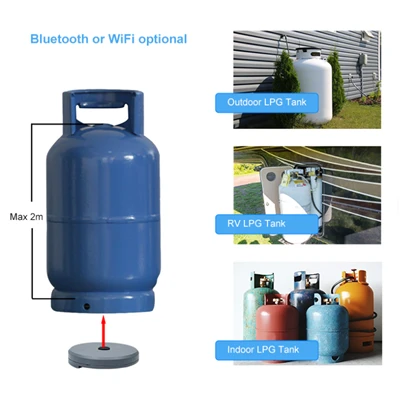
External (non-contact): a sensor is mounted outside a non-metallic wall (often plastic) and senses liquid level through the wall.
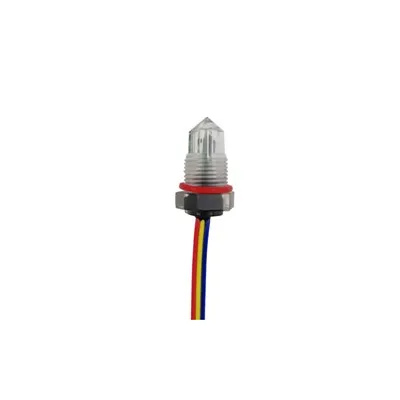
Point-level switch: a small electrode detects when liquid reaches a specific height.
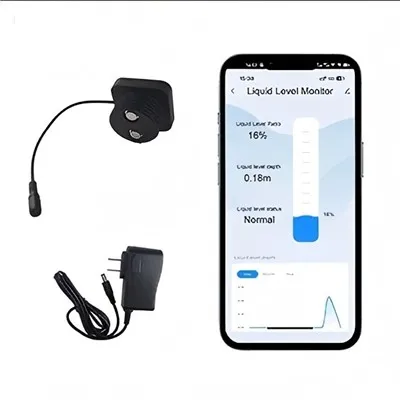
In all cases, capacitive liquid level sensors translate a capacitance change into a usable output (switching, 4–20 mA, voltage, IO-Link, etc.) for alarms or continuous level monitoring in industrial tanks.
Capacitive level sensor working principle (the "why it works")
At the core of the capacitive level sensor working principle is a basic capacitor relationship:
Capacitance increases when the space between electrodes is filled with a material with a higher dielectric constant than air.
Most liquids have a higher dielectric constant than air, so the measured capacitance rises as liquid replaces air along the sensing region.
Capacitance measurement circuit basics
Inside the instrument, a capacitance measurement circuit typically uses an oscillator, charge/discharge timing, or frequency shift measurement:
More capacitance → oscillator frequency changes or timing increases
Electronics convert that change into a stable level signal
Filtering helps reject noise from pumps, motors, and cable effects
This is the foundation of how capacitive level sensors work-the sensor isn't "seeing" liquid; it's measuring an electrical property that correlates strongly with level.
Conductive vs non-conductive liquids sensing
A common question is whether capacitive level works for all liquids. In practice, conductive vs non-conductive liquids sensing affects probe style and setup:
Conductive liquids (water-based, acids/alkalis): often provide strong signals, but can also create coating and leakage paths if the probe insulation or installation is poor.
Non-conductive liquids (oils, fuels, solvents): can still be measured, but the signal depends heavily on dielectric constant and sensor sensitivity.
Actionable tip: If your liquid has a low dielectric constant (some hydrocarbons), choose a sensor designed for low-ε fluids and keep installation consistent to avoid drift.
Contact vs non-contact capacitive level measurement
Non-contact capacitive level measurement (through the wall)
External sensors can be the best level sensor for plastic tanks when:
You can't contaminate the fluid (pharma, food ingredients)
You want easy retrofit without opening the vessel
The tank is non-metal (HDPE, PP, acrylic)
Limits to watch:
Metal tanks block the electric field (non-contact won't work)
Wall thickness and ribbing reduce sensitivity
Adhesives, air gaps, and mounting pressure matter
Probe (in-tank) measurement
Probe sensors are common for industrial tanks because they:
Support longer ranges (including cable probes)
Handle higher pressure/temperature options
Offer better stability when mounting outside isn't possible
Capacitive probe installation guide (practical setup rules)
A solid capacitive probe installation guide prevents 80% of real-world issues:
Keep distance from tank wall and internals (agitators, ladders, baffles) to reduce stray capacitance.
Avoid mounting directly in fill streams to reduce turbulence and splashing.
Use stilling wells when surface movement is severe.
Grounding matters: poor ground/reference can cause unstable readings.
Cable routing: keep sensor cables away from VFDs and high-current wiring; use shielded cable where specified.
For continuous measurement, confirm the probe length matches the required measuring span and that the "dead zones" at the top/bottom are acceptable.
Capacitive liquid level sensor calibration (getting accurate output)
Capacitive liquid level sensor calibration typically involves:
Empty/low-point calibration (air or known minimum level)
Full/high-point calibration (known full level)
Optional medium calibration for nonlinear behavior or difficult fluids
Best practices:
Calibrate under normal process temperature and pressure when possible.
If the tank is plastic, calibrate with the sensor mounted exactly as it will be used-position changes can shift baseline capacitance.
Document fluid type, concentration, and temperature, because dielectric constant can vary with composition.
Temperature effects on capacitance sensors (and how to manage them)
Temperature effects on capacitance sensors show up in two places:
Fluid dielectric constant changes with temperature (level signal slope can shift)
Electronics and insulation materials may drift slightly
Mitigations:
Choose sensors with temperature compensation if your process swings widely.
Recalibrate after significant process changes (new product, concentration shift, warmer/cooler operating range).
In hygienic environments, ensure CIP/SIP cycles won't exceed sensor ratings.
Common capacitive sensor troubleshooting (and the big causes of false alarms)
When readings look "wrong," use this common capacitive sensor troubleshooting checklist:
Check for coating: sticky product on probes can mimic a higher level.
Inspect grounding and shielding: floating references create noisy or drifting output.
Verify installation clearance: tank internals too close can create offset errors.
Confirm fluid change: switching products can change dielectric constant dramatically.
Look for condensation inside conduit or on connectors.
False readings from foam buildup
False readings from foam buildup are especially common in mixing, fermentation, and CIP return lines. Foam can have a different dielectric behavior than liquid and may cling to probes. Options include:
Using a stilling well or shielded probe design
Adjusting damping/filter settings
Selecting an alternative technology if foam is persistent
Capacitive vs ultrasonic level sensor: which to choose?
A capacitive vs ultrasonic level sensor comparison usually comes down to environment and tank type:
Capacitive: great for plastic tanks, can be compact, can work through walls, strong for point-level and continuous measurements when installed correctly.
Ultrasonic: non-contact in open/vented tanks, but can struggle with foam, vapors, turbulence, and angled surfaces.
If you need through-wall sensing or have space constraints, capacitive often wins. If you have a metal tank and want non-contact top-mounted measurement, ultrasonic may be simpler.
Hygienic applications: food and beverage
For hygienic level sensors for food and beverage tanks, look for:
Sanitary fittings and smooth surfaces
Materials compatible with CIP/SIP and cleaning chemicals
Documented compliance where required (e.g., food-contact materials)
Capacitive sensors can work well here, but coating from dairy, syrups, or mash requires careful selection and cleaning validation.
Takeaway
Capacitive liquid level sensors are versatile level sensors that rely on capacitance changes driven by dielectric constant and level sensing physics. When you understand how capacitive level sensors work, follow a robust capacitive probe installation guide, and perform proper capacitive liquid level sensor calibration, you can achieve reliable switching or continuous level monitoring in industrial tanks-including challenging cases like best level sensor for plastic tanks and certain hygienic processes. Estimated article body word count: ~980.