Liquid Level Sensors with No Moving Parts
In this guide: What "no moving parts" means for level sensing and why it matters, the technologies that qualify (optical, capacitive, conductive, ultrasonic, radar, pressure, thermal), the honest nuance about vibrating-fork and diaphragm sensors, a comparison and selection guide, applications, reliability benefits, limits, and the complete FAQ.
Liquid Level Sensors with No Moving Parts: Quick Answer
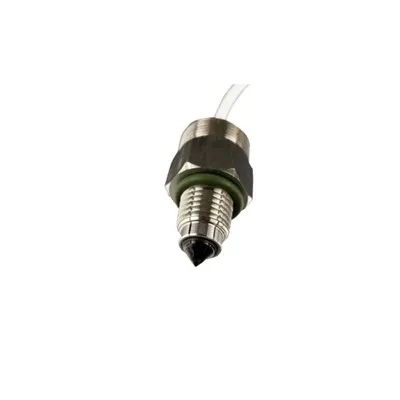
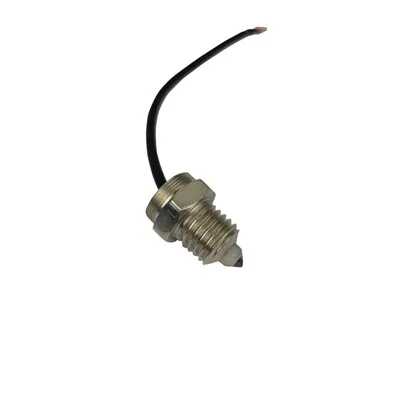
Liquid level sensors with no moving parts are solid-state or non-mechanical detectors that decide level without a float, pivot, reed switch, or any macroscopic mechanical linkage in the fluid: optical (infrared total-internal-reflection at a sealed tip), capacitive (dielectric change at a probe), conductive (electrodes bridged by conductive liquid), ultrasonic (sound echo from the surface), radar (microwave echo), hydrostatic pressure (diaphragm at the base), and thermal-dispersion (heat loss in liquid). The benefit is reliability: no part to stick, wear, jam, or corrode mechanically, so they survive viscous, dirty, coating, or high-cycle duty where a float switch fails. The honest nuance - a vibrating-fork switch does physically vibrate (so it is not strictly "no moving parts"), and a pressure sensor's diaphragm micro-flexes; both differ from a float's obvious mechanical linkage but are not perfectly static. For true no-moving-parts sensing, optical and capacitive are the cleanest examples.
Why "No Moving Parts" Matters
Reliability Over Time
What you avoid:
| Failure Mode | Moving-Part Sensor |
|---|---|
| Sticking | Float jams in viscous fluid |
| Wear | Pivot / reed fatigue |
| Jam | Debris on mechanism |
| Corrosion | Mechanical parts in acid |
| Cycle life | Finite (float) |
No part to fail mechanically: A float switch has a float, a pivot or stem, and a reed/magnet - all mechanical, all subject to sticking in syrup-like fluid, wearing over millions of cycles, jamming on debris, or corroding in acid. A no-moving-parts sensor removes that entire failure class. For a tank that cycles thousands of times, runs sticky fluid, or sits in a corrosive medium, "no moving parts" is the difference between a sensor that lasts and one you replace quarterly. The trade is that no-moving-parts sensors have their own limits (a tip to keep clean, a medium to suit) - but none involve mechanical wear.
Technologies With No Moving Parts
The Solid-State Family
Qualifying sensors:
| Technology | What Moves | Moving Part? |
|---|---|---|
| Optical | Photons only | No |
| Capacitive | Electric field | No |
| Conductive | Electrons (ions) | No |
| Ultrasonic | Sealed transducer | No (in fluid) |
| Radar | Microwave | No |
| Pressure | Diaphragm micro-flex | Near-static |
| Thermal | Heat | No |
Truly static vs. near-static: Optical, capacitive, and conductive are genuinely static - detection is optical, dielectric, or ionic, with nothing physically moving in the fluid. Ultrasonic and radar use a sealed transducer/antenna that emits a wave but has no mechanical linkage in the liquid. Pressure uses a diaphragm that micro-flexes (a sealed sensor element, not a float). Thermal uses a heated element. All avoid the float's mechanical linkage; optical and capacitive are the purest "no moving parts" examples because literally nothing moves.
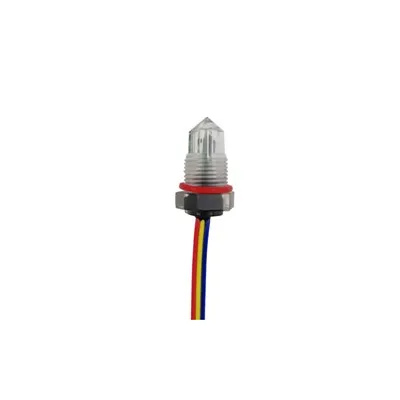
Optical - The Cleanest Example
Photons, Not Parts
How optical avoids movement:
| State | What Happens | Movement |
|---|---|---|
| Dry | IR returns to phototransistor | None |
| Wet | IR escapes tip | None |
| Output | Transistor switches | Solid-state |
The photon is the only thing that moves: An optical level sensor decides level by whether infrared light returns to a phototransistor (dry) or escapes when liquid wets the tip (wet). The only "movement" is light - there is no float, pivot, spring, or reed. That makes optical the textbook no-moving-parts sensor: sealed, any-liquid (oil or water by refractive index), millisecond response, and immune to the sticking and wear that kill floats in difficult fluids. (See Optical Liquid Point Level Sensors.)
Capacitive - Static Field
Dielectric, Not Mechanism
How capacitive avoids movement:
| State | What Happens | Movement |
|---|---|---|
| Empty | Low capacitance (air) | None |
| Liquid | Capacitance rises | None |
| Output | ASIC decides | Solid-state |
The field does the sensing: A capacitive sensor detects the liquid by the change in capacitance at its face (the dielectric constant jumps from air to liquid). Nothing moves - the electric field does the work, and an ASIC decodes the level. Capacitive works for any liquid (oil or water based) and can even read through a non-metal wall without touching the fluid, so there is no wetted mechanical part at all. (See Capacitive Sensors for Point Level Detection.)
Conductive, Ultrasonic, Radar, Pressure, Thermal
The Rest of the Family
| Technology | Principle | Moving Part? |
|---|---|---|
| Conductive | Electrodes bridged by conductive liquid | No |
| Ultrasonic | Sound echo from surface (top) | No (in fluid) |
| Radar | Microwave echo (top) | No |
| Pressure | Hydrostatic P = ρgh at base | Diaphragm micro-flex |
| Thermal | Heat loss changes in liquid | No |
Each skips the mechanism: Conductive uses two electrodes and the liquid's conductivity - no movement. Ultrasonic and radar send a wave down from the top and time the echo - the transducer is sealed, no linkage in the fluid. Pressure reads hydrostatic head at the base via a diaphragm - micro-flex only, no float. Thermal heats an element and detects the change in heat loss when liquid surrounds it - no movement. All are "no moving parts" in the float sense; pressure is the only one with a flexing element, and even that is a sealed sensor, not a mechanical switch.
The Honest Nuance
What Is NOT "No Moving Parts"
Be precise:
| Sensor | Has Motion? | Verdict |
|---|---|---|
| Float | Float + pivot + reed | Moving parts (yes) |
| Vibrating fork | Fork physically vibrates | Not "no moving parts" |
| Pressure | Diaphragm micro-flexes | Near-static |
| Optical / capacitive | Nothing | Truly static |
Don't call a fork "static": A vibrating-fork (tuning-fork) level switch is piezo-driven and the fork physically vibrates - that is real motion, so it is not strictly "no moving parts" even though it has no float or pivot. Pressure sensors have a diaphragm that flexes microscopically. Both are far more robust than a float (no sticking pivot, no reed wear), so they are often grouped under "no moving parts" in sales literature - but if your specification literally demands zero motion, optical and capacitive are the only true answers. State the nuance so the choice is honest.
Comparison
No-Moving-Parts Sensors at a Glance
| Technology | Truly Static | Conductive Liquid | Oil / Any | Best For |
|---|---|---|---|---|
| Optical | Yes | Yes | Yes | Sealed point, any liquid |
| Capacitive | Yes | Yes | Yes | Through-wall, any liquid |
| Conductive | Yes | Yes only | No | Water / emulsion |
| Ultrasonic | Yes (top) | Yes | Yes | Non-contact, foam-prone |
| Radar | Yes (top) | Yes | Yes | Foam / vapor / dust |
| Pressure | Near (diaphragm) | Yes | Yes | Vented tank, volume |
| Thermal | Yes | Yes | Yes | Interface / difficult |
Selection Guide
Match to the Fluid
| If the fluid is… | Pick |
|---|---|
| Viscous / sticky | Optical, capacitive (no stick) |
| Dirty / debris | Optical, capacitive, ultrasonic |
| Foamy / vapor | Radar (ultrasonic fooled) |
| Conductive only | Conductive, optical, capacitive |
| Oil / non-conductive | Optical, capacitive |
| Through wall | Capacitive (through-wall) |
| Volume / inventory | Pressure, ultrasonic, radar |
Applications
Where No-Moving-Parts Wins
| Application | Why No-Moving-Parts |
|---|---|
| Food & beverage | No crevice to harbor bacteria |
| Pharma / clean | Sealed, cleanable |
| Chemical / acid | No mechanical part to corrode |
| Wastewater | Dirty, debris-laden |
| Viscous process | Float would stick |
| High-cycle tank | No wear over millions of cycles |
Reliability & Maintenance
The Real Payoff
| Benefit | Why |
|---|---|
| No sticking | No float in fluid |
| No wear | No pivot / reed |
| Long life | Millions of cycles |
| Low maintenance | Clean tip only |
| Sealed | No leak path |
Less to maintain: A no-moving-parts sensor's only routine care is keeping the sensing face clean (optical tip, capacitive probe, ultrasonic face). There is no pivot to lubricate, no reed to fatigue, no float to replace. In high-cycle or harsh-fluid service, that translates directly into fewer unplanned replacements and less downtime - the practical reason engineers specify no-moving-parts sensing.
Limits to Know
No-Free-Lunch
| Sensor | Limit |
|---|---|
| Optical | Tip must stay clean |
| Capacitive | Needs dielectric contrast; coating shifts |
| Conductive | Conductive liquid only |
| Ultrasonic | Foam / vapor disturb echo |
| Radar | Higher cost |
| Pressure | Needs known density, vented ref |
Each has its own constraint: No-moving-parts does not mean problem-free. Optical needs a clean tip; capacitive needs a dielectric contrast and can be shifted by coating; conductive works only on conductive liquid; ultrasonic is fooled by foam and vapor (use radar there); radar costs more; pressure needs known density and a vented reference. Pick the no-moving-parts technology that fits the fluid and the environment - the "no moving parts" label is a reliability win, not a universal fit.
Frequently Asked Questions
Q1: What are liquid level sensors with no moving parts?
They are level sensors that detect liquid without a float, pivot, reed switch, or any macroscopic mechanical linkage in the fluid. The main families are optical (infrared total-internal-reflection at a sealed tip), capacitive (dielectric change at a probe), conductive (two electrodes bridged by conductive liquid), ultrasonic (sound echo from the surface), radar (microwave echo), hydrostatic pressure (diaphragm at the base), and thermal-dispersion (heat loss in liquid). The benefit is reliability: nothing mechanical to stick, wear, jam, or corrode, so they outlast float switches in viscous, dirty, coating, corrosive, or high-cycle service. Optical and capacitive are the purest examples because literally nothing moves.
Q2: Why are no-moving-parts level sensors more reliable than float switches?
Because they remove the entire class of mechanical failures. A float switch has a float that rides the surface, a pivot or stem, and a reed/magnet contact - all of which can stick in viscous fluid, wear over millions of cycles, jam on debris, or corrode in acid. A no-moving-parts sensor has none of that: optical decides by light, capacitive by an electric field, conductive by ions, ultrasonic/radar by a wave, pressure by a sealed diaphragm. There is no part to seize or fatigue, so the sensor survives harsh fluids and high cycle counts where a float would be replaced repeatedly. The only routine care is keeping the sensing face clean.
Q3: Is a vibrating-fork level switch a "no moving parts" sensor?
Strictly, no. A vibrating-fork (tuning-fork) switch is piezo-driven and the fork physically vibrates - that is real motion, even though there is no float or pivot. It is far more robust than a float (no sticking pivot, no reed wear) and is often marketed under "no moving parts," but if your specification literally demands zero motion, a vibrating fork does not qualify. The truly static no-moving-parts sensors are optical and capacitive (nothing moves) and, in the fluid, conductive, ultrasonic, and radar (sealed transducers, no linkage). Pressure uses a micro-flexing diaphragm - near-static, but not perfectly motionless. State the nuance when the requirement is strict.
Q4: Which no-moving-parts level sensor works for oil (non-conductive) liquid?
Optical, capacitive, ultrasonic, radar, pressure, and thermal all detect oil or any non-conductive liquid; conductive does not (it needs a conductive fluid). Optical detects oil by refractive index at a sealed tip - no moving parts, any liquid. Capacitive detects the dielectric change and can even read through a non-metal wall without touching the oil. Ultrasonic and radar are non-contact from the top. Pressure reads hydrostatic head at the base. For a sealed, no-moving-parts, any-liquid point switch on oil, optical or capacitive are the cleanest choices; for continuous oil level, ultrasonic, radar, or pressure fit.
Q5: Are no-moving-parts level sensors maintenance-free?
Not maintenance-free, but far lower maintenance than float switches. The main care is keeping the sensing face clean: an optical tip fouled by film gives a wrong reading, a capacitive probe coated by process fluid shifts its trip, and an ultrasonic face blocked by buildup loses the echo. There is no pivot to lubricate, no reed to replace, no float to swap - so routine maintenance is a wipe, not a teardown. In dirty or coating service, schedule a tip clean and the no-moving-parts sensor will outlast a float by a wide margin. The "no moving parts" label means no mechanical wear, not zero care.
The Bottom Line
Liquid level sensors with no moving parts detect level without a float, pivot, reed, or macroscopic mechanical linkage in the fluid - optical (infrared TIR at a sealed tip), capacitive (dielectric change), conductive (electrodes bridged by conductive liquid), ultrasonic (sound echo), radar (microwave echo), hydrostatic pressure (diaphragm at base), and thermal-dispersion (heat loss). The payoff is reliability: no part to stick in viscous fluid, wear over cycles, jam on debris, or corrode in acid, so they outlast float switches in harsh or high-cycle service; the only routine care is keeping the sensing face clean. Be precise about the nuance - a vibrating-fork switch physically vibrates (not strictly no-moving-parts), and a pressure diaphragm micro-flexes, while optical and capacitive are truly static (only photons or an electric field move). Choose by fluid: viscous/dirty → optical or capacitive; foamy/vapor → radar; conductive only → conductive/optical/capacitive; oil/non-conductive → optical/capacitive; volume → pressure/ultrasonic/radar. "No moving parts" is a reliability win, not a universal fit - each technology keeps its own constraint (clean tip, dielectric contrast, density, cost), so match the sensor to the medium and the environment.
Last updated: August 2026
Disclaimer: This guide explains liquid level sensors with no moving parts as a category, for educational and specification-reference purposes. "No moving parts" is used in the sense of no float, pivot, reed, or macroscopic mechanical linkage in the fluid; optical and capacitive are truly static, while pressure uses a micro-flexing diaphragm and vibrating-fork switches physically vibrate (not strictly no-moving-parts). Technology limits (tip cleaning, dielectric contrast, conductive-only, foam/vapor, density, cost) vary by sensor and fluid; confirm the exact device's specifications and the liquid's properties against the official datasheet before selection. This guide is not affiliated with, endorsed by, or sponsored by any sensor manufacturer.