Continuous vs Point Level Sensors: Key Differences
In this guide: What point-level and continuous-level sensing are, the key differences across output, purpose, technology, cost, and maintenance, which technologies fit each, when to use which (or both), hybrid cases, applications, and the complete FAQ.
Continuous vs Point Level Sensors: Quick Answer
A point level sensor detects liquid at one or more specific heights and gives a discrete on/off signal - it answers "is the liquid at this point?" A continuous level sensor measures the level across the full tank height and gives a value - it answers "how full is it?" (0–100%, volume, or weight). The key differences: point outputs a digital contact (HIGH/LOW, alarm, pump trip) and is cheap, simple, and calibration-free; continuous outputs an analog or digital signal (4–20 mA, 0–10 V, HART, Modbus) and reports the actual level for inventory and dosing. Point tech = float, optical, conductive, capacitive (point), vibrating fork; continuous tech = ultrasonic, radar, capacitive (rod/coaxial), hydrostatic pressure, magnetostrictive, guided-wave radar. Most tanks use both: point switches for safety trips, a continuous transmitter for the number.
What Is Point Level Sensing?
On/Off at a Set Height
Point level basics:
| Property | Value |
|---|---|
| Output | Digital on/off (contact) |
| Answers | "At this height?" |
| Set points | 1, 2, or a few |
| Calibration | None (just mount height) |
| Cost | Low |
A trip, not a tape: A point level sensor reports presence or absence of liquid at a fixed height - typically a low alarm, a high alarm, or a pump on/off point. It needs no ADC, no span calibration, and no 4–20 mA loop. You mount it at the height you care about and it fires when the liquid arrives. Multiple point sensors (or a multi-reed float stem) give several discrete levels, but never a smooth 0–100% curve.
What Is Continuous Level Sensing?
The Whole Range, as a Number
Continuous level basics:
| Property | Value |
|---|---|
| Output | 4–20 mA / 0–10 V / HART / Modbus |
| Answers | "How full (0–100%)?" |
| Range | Full tank height |
| Calibration | Empty / full span |
| Cost | Higher |
A number, not a trip: A continuous level sensor measures level anywhere along the tank and reports it as a value - 4–20 mA (20 mA = full, 4 mA = empty, with 4 mA as the live zero), 0–10 V, or a digital protocol like HART or Modbus. It needs a span calibration (empty and full) and an ADC or loop receiver. You use it for inventory, dosing by percentage, closed-loop control, and volume tracking. It tells you not just "low" but "37% full, 412 liters remaining."
Key Differences
The Comparison
Point vs. continuous at a glance:
| Dimension | Point Level | Continuous Level |
|---|---|---|
| Question | At this point? | How full? |
| Output | Digital on/off | 4–20 mA / 0–10 V / HART |
| Information | Binary (present/absent) | 0–100% (value) |
| Set points | Fixed height(s) | Whole range |
| Calibration | None | Empty/full span |
| ADC needed | No | Yes |
| Wiring | 2–3 wires + pull | 2-wire loop / bus |
| Cost | Low | Higher |
| Best for | Alarm, pump, valve | Inventory, dosing, control |
| Failure mode | Stuck contact | Drift / offset |
The core split: Point is binary and cheap; continuous is analog and informative. Point answers a yes/no at a height; continuous answers "what number." The trade is cost and complexity: point needs no calibration and no loop; continuous needs a span, an ADC, and usually a more expensive instrument. Pick by the question you must answer.
Technologies: Point
Who Does Point
| Technology | Moving Parts | Notes |
|---|---|---|
| Float | Yes | Cheap, proven |
| Optical | No | Sealed, any liquid |
| Conductive | No | Conductive liquid only |
| Capacitive (point) | No | Any liquid, through-wall |
| Vibrating fork | Fork vibrates | Foam/viscous immune |
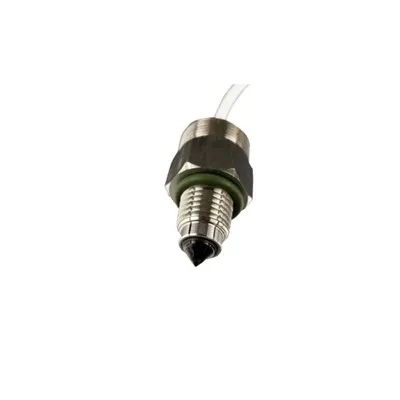
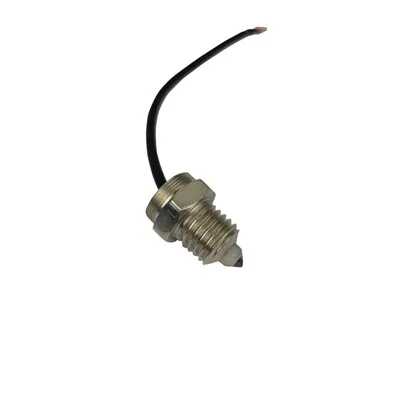
Point tech is mostly switches: Float (buoyancy + reed), optical (infrared TIR at a sealed tip), conductive (electrodes bridged by conductive liquid), capacitive (dielectric at a point), and vibrating fork (piezo-driven, foam/viscous immune) all report on/off at a height. They are the workhorses of alarm and pump control. (See Liquid Level Switches.)
Technologies: Continuous
Who Does Continuous
| Technology | Principle | Notes |
|---|---|---|
| Ultrasonic | Sound echo (top) | Non-contact; foam issue |
| Radar | Microwave echo | Foam/vapor/dust immune |
| Capacitive (rod) | Dielectric vs length | Point or continuous |
| Pressure | Hydrostatic P = ρgh | Vented tank, known density |
| Magnetostrictive | Time-of-flight in probe | High accuracy |
| Guided-wave radar | Microwave along probe | Good for difficult fluids |
Continuous tech measures the range: Ultrasonic and radar time a wave to the surface; capacitive on a rod/coaxial probe reads capacitance vs immersion length; hydrostatic pressure reads head at the base; magnetostrictive times a pulse along a probe for high accuracy; guided-wave radar sends microwave down a probe. All output a continuous value. (See Level Measurement Operating Principle and Technology.)
When to Use Which
The Decision
| Need | Use |
|---|---|
| Alarm at a point | Point |
| Pump on/off | Point |
| Valve open/close | Point |
| Inventory / volume | Continuous |
| Dosing by % | Continuous |
| Closed-loop control | Continuous |
| Both safety + number | Point + continuous |
Match the question: If all you need is "pump on when low" or "alarm when high," a point switch is simpler and cheaper. If you need to know how much is left, dose by percentage, or run level-based control, you need continuous. For most real tanks, the answer is both - point switches guard the safe limits, a continuous transmitter tracks the inventory.
Can One Sensor Do Both?
Hybrids and Limits
| Sensor | Point? | Continuous? |
|---|---|---|
| Capacitive (rod) | Yes (threshold) | Yes (length) |
| Multi-reed float | Several points | No (not smooth) |
| Ultrasonic / radar | Can flag levels | Yes (primary) |
| Optical / conductive | Yes | No |
Some blur the line: A capacitive probe on a rod can act as a point switch (single threshold) or a continuous transmitter (length vs capacitance) - the same sensor serves both roles by configuration. A multi-reed float gives several discrete points but not a smooth curve. Ultrasonic/radar are continuous primary but can also flag set levels in software. Optical and conductive are point-only. So "both" is possible with a configurable capacitive rod, but a true smooth 0–100% always needs a continuous method.
Cost & Complexity
What You Pay For
| Factor | Point | Continuous |
|---|---|---|
| Instrument | $10–100s | $100–1000s |
| Loop / ADC | None | Needed |
| Calibration | None | Empty/full |
| Install | Simple | More setup |
| Maintenance | Clean tip | Span check |
Point is cheaper end-to-end: A point switch is a few dollars to low hundreds and needs no loop. A continuous transmitter costs more and needs an ADC or 4–20 mA receiver, a span calibration, and periodic span checks. The total cost of ownership favors point for simple trips and continuous for applications that genuinely need the number.
Combined Systems
Point + Continuous, Together
| Role | Device |
|---|---|
| Safety high/low | Point switches |
| Inventory | Continuous transmitter |
| Pump control | Point (or continuous + logic) |
| Dosing | Continuous |
The Typical Tank: A well-instrumented tank uses point switches for the high and low safety trips (so a transmitter failure cannot cause an overflow or dry run) and a continuous transmitter for inventory and dosing. The point switches are the independent safety net; the transmitter is the brain for the number. Designing both in is standard practice, not redundancy waste.
Applications
Where Each Lives
| Application | Point | Continuous |
|---|---|---|
| Sump pump | Yes | Sometimes |
| Overflow alarm | Yes | No |
| Chemical inventory | Yes (guard) | Yes (stock) |
| Dosing tank | Guard | Yes (dose) |
| Fuel storage | Guard | Yes (stock) |
| Process control | Trip | Yes (loop) |
Frequently Asked Questions
Q1: What is the difference between a point level sensor and a continuous level sensor?
A point level sensor detects liquid at one or more specific heights and outputs a discrete on/off signal - it answers "is the liquid at this point?" - used for alarms, pump on/off, and valve control. A continuous level sensor measures the level across the full tank height and outputs a value (4–20 mA, 0–10 V, HART, Modbus) - it answers "how full is it?" (0–100%, volume). Point is binary, cheap, calibration-free, and needs no ADC; continuous reports a number, costs more, and needs a span calibration and a loop receiver. Most tanks use both: point switches for safety trips, a continuous transmitter for inventory.
Q2: Which is better, point or continuous level sensing?
Neither is "better" - it depends on the question. If you only need an action at a set level (pump on when low, alarm when high), a point switch is simpler, cheaper, and needs no calibration. If you need the actual level or volume (inventory, dosing by percentage, closed-loop control), you need continuous. For a real tank, the usual answer is both: point switches guard the safe limits independently, and a continuous transmitter tracks the number. Pick point for trips, continuous for the value, and combine them when safety and inventory both matter.
Q3: Can a single sensor provide both point and continuous level?
Sometimes. A capacitive probe on a rod or coaxial element can act as a point switch (single threshold) or a continuous transmitter (capacitance vs immersion length) by configuration - the same sensor serves both. A multi-reed float gives several discrete points but not a smooth curve. Ultrasonic and radar are continuous primary but can also flag set levels in software. Optical and conductive switches are point-only. So a configurable capacitive rod can do "both," but a true smooth 0–100% always requires a continuous method; point-only sensors cannot invent a continuous curve.
Q4: Why does a continuous level sensor need calibration but a point sensor does not?
Because they report different things. A point sensor only needs to know "is the liquid at this physical height?" - you mount it at that height and it fires; there is no scale to set. A continuous sensor must convert a physical measurement (echo time, capacitance, pressure) into a level value across the whole tank, so it needs a span: you teach it "empty = 4 mA" and "full = 20 mA" (or the equivalent) so the output maps to real level. Without that empty/full calibration, a continuous sensor's number is meaningless. Point has no scale; continuous lives by its scale.
Q5: Is a continuous level sensor more expensive than a point level sensor?
Yes, end-to-end. A point switch costs from a few dollars to low hundreds and needs no loop, ADC, or calibration. A continuous transmitter costs more (hundreds to low thousands) and requires a 4–20 mA receiver or ADC, an empty/full span calibration, and periodic span checks to stay accurate. The total cost of ownership favors point for simple trips and continuous for applications that genuinely need the number. Many systems accept both costs because the point switches provide independent safety and the transmitter provides inventory - each earns its place.
The Bottom Line
A point level sensor detects liquid at a set height and outputs a discrete on/off signal ("is the liquid at this point?"); a continuous level sensor measures level across the full tank and outputs a value ("how full is it?", 0–100%). The key differences are output (digital contact vs 4–20 mA / 0–10 V / HART / Modbus), information (binary vs a number), calibration (none vs empty/full span), and cost (low vs higher, with a loop and ADC). Point tech is float, optical, conductive, capacitive (point), and vibrating fork; continuous tech is ultrasonic, radar, capacitive (rod/coaxial), hydrostatic pressure, magnetostrictive, and guided-wave radar. Use point for alarms, pump/valve trips, and guard limits; use continuous for inventory, dosing, and closed-loop control; use both on a real tank - point switches as the independent safety net, a continuous transmitter as the inventory brain. A capacitive rod can serve both roles by configuration, but a true smooth 0–100% always needs a continuous method. Match the sensor to the question: point for the trip, continuous for the number.
Last updated: August 2026
Disclaimer: This guide compares point-level and continuous-level sensing as fundamental categories, for educational and specification-reference purposes. Technology lists, output types (4–20 mA, 0–10 V, HART, Modbus), principles (ultrasonic time-of-flight, radar, capacitive C = ε₀εᵣA/d, hydrostatic P = ρgh, magnetostrictive, guided-wave radar), and cost ranges are general; exact capabilities, accuracy, calibration, and pricing vary widely by manufacturer and model. Confirm the specific device's specifications against the official datasheet before selection or system design. This guide is not affiliated with, endorsed by, or sponsored by any sensor manufacturer.