Streamlined Liquid Level Sensing Using Fiber Optics
In this guide: What fiber-optic liquid level sensing is and how it works, point and distributed/multiplexed variants, why it is "streamlined" (remote electronics, intrinsically safe, EMI-immune), how it compares to conventional optical and other sensors, applications, limits, installation, and the complete FAQ.
Streamlined Liquid Level Sensing Using Fiber Optics: Quick Answer
Fiber-optic liquid level sensing sends light through a glass or plastic fiber to a tip inside the tank; when liquid contacts the tip, the light's behavior changes (reflection/refraction or return level shifts) and a remote detector registers the level - there is no electronics, no power, and no metal at the sensing point. It is "streamlined" because the only thing at the tank is a thin, inert, spark-free fiber: the light source and photodetector live far away in a safe area, so the probe is intrinsically safe, immune to EMI/RFI, survives high temperatures, and needs no hazardous-area certification at the point. Fiber-optic level sensing comes as a point sensor (single tip, on/off) or multiplexed/distributed (several points or a length of fiber on one cable). It fits explosive, high-EMI, high-temperature, medical (MRI), and corrosive duties where a conventional sensor with local electronics cannot go.
How Fiber-Optic Level Sensing Works
Light in a Thread, Decision Far Away
The signal path:
| Step | What Happens |
|---|---|
| 1. Light launched | Source → fiber (remote) |
| 2. Light travels | Through glass/plastic fiber |
| 3. At tip (dry) | Light reflects / couples back |
| 4. At tip (wet) | Light escapes / couples changes |
| 5. Return | Changed light → remote detector |
| 6. Decision | Detector flags level |
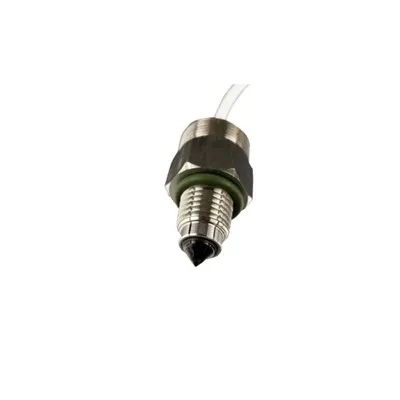
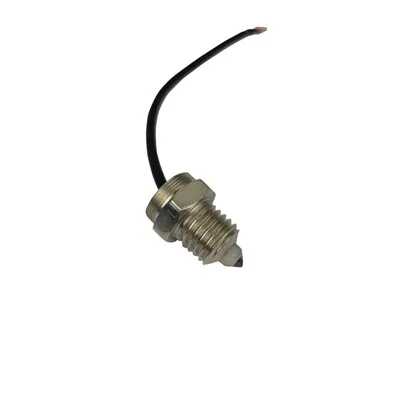
Only light touches the liquid: A light source (LED or laser) and a photodetector sit in a safe, convenient location. Light travels down the fiber to the tip at the tank. In air the light reflects or couples back in a known way; when liquid wets the tip, the refractive-index change makes the light escape or the return level shift. The detector, far from the tank, sees the change and reports the level. The probe itself is just glass and polymer - no current, no spark, no circuit.
Point Fiber-Optic Sensors
A Tip on a Fiber
Point configuration:
| Element | Role |
|---|---|
| Fiber (or bifurcated bundle) | Delivers / returns light |
| Tip | Where liquid changes coupling |
| Remote unit | Source + detector + output |
One fiber, one decision: The simplest fiber-optic level sensor is a point device: a single fiber (or a Y-bundle that sends and receives) ends at a tip in the tank. The remote unit launches light, reads the return, and outputs a digital on/off (or analog) level signal. Because the tip is the only wetted part and it is glass/polymer, it is chemically inert and can be made tiny - ideal where space and corrosion matter. Multiplex several tips onto one cable and you get multiple point levels from a single remote unit.
Distributed & Multiplexed Fiber
Many Points, One Cable
Scaling the fiber:
| Approach | How |
|---|---|
| Multiplexed points | Several tips, one fiber/cable |
| Distributed (DTS) | Temperature along fiber flags submersion |
| Quasi-distributed | Sensor spots along one fiber |
Beyond one tip: Fiber's real scaling trick is multiplexing - several sensing tips share one cable back to one remote unit, giving low/mid/high points without running separate sensor wires. A more advanced approach uses distributed temperature sensing (DTS): a fiber runs the tank height and the point where liquid submerges shows a temperature shift, revealing the level continuously. Quasi-distributed versions place discrete sensor spots along one fiber. The "streamlined" payoff is fewer cables and one brain for many points.
Why It Is "Streamlined"
The Remote-Electronics Advantage
What you remove at the tank:
| Issue | Conventional Sensor | Fiber-Optic |
|---|---|---|
| Power at tank | Yes (8–30 V) | None |
| Spark risk | Needs Ex cert | Intrinsically safe |
| EMI/RFI | Susceptible | Immune |
| Hot spot | Electronics limited | Fiber survives |
| Ground loops | Possible | None (no metal loop) |
| Cabling | Per sensor | Multiplex one cable |
Less at the point, more in the cabinet: A conventional optical level sensor puts an LED, phototransistor, and ASIC right at the tank - so it needs power there, is susceptible to EMI, is limited by the electronics' temperature rating, and (in explosive areas) needs hazardous-area certification. A fiber-optic sensor moves all that to a remote unit; only a passive fiber reaches the tank. No power, no spark, no EMI path, no ground loop, and one multiplexed cable for many points - that is what makes it streamlined.
Fiber-Optic vs Conventional Optical
Same Physics, Different Footprint
| Factor | Conventional Optical | Fiber-Optic |
|---|---|---|
| Electronics | At tip | Remote |
| Power at tank | Yes | No |
| Intrinsically safe | Needs cert | By design |
| EMI immune | No | Yes |
| Temp limit | Electronics-rated | Fiber-rated (higher) |
| Tip | Sealed plastic/glass | Glass/polymer fiber |
| Cost | Low | Higher (remote unit) |
Same idea, safer placement: Conventional optical and fiber-optic level sensing share the core physics - light couples differently in air vs. liquid by refraction. The difference is where the electronics sit. Conventional optical is cheaper and fine for ordinary duty; fiber-optic pays a premium for putting the brains far away so the probe can enter explosive, EMI-heavy, hot, or MRI environments untouched by electricity. (See Optical Liquid Point Level Sensors for the conventional version.)
Applications
Where Fiber Optics Wins
| Application | Why Fiber |
|---|---|
| Explosive / fuel | Intrinsically safe, no spark |
| High EMI (motors, RF) | Immune |
| High temperature | Fiber survives |
| MRI / medical | No metal, no EMI |
| Corrosive chemical | Inert glass |
| Subsea / underwater | Passive, sealed |
The hostile-environment sensor: Fiber-optic level sensing is the default where a powered sensor is unwelcome - fuel and solvent tanks (no ignition source), areas near large motors or RF (no EMI false trips), ovens or process heat (fiber out-rates electronics temperature), MRI suites (no metal, no interference), aggressive chemicals (inert glass resists corrosion), and subsea or underwater (passive, sealed). These are exactly the duties that defeat conventional sensors.
Limitations
Honest Constraints
| Limit | Note |
|---|---|
| Remote unit cost | Source + detector needed |
| Bending loss | Don't kink the fiber |
| Tip clean | Like all optics |
| Not universal | Point or quasi; true distributed is niche |
| Connector care | Keep clean, dry |
It is not free: Fiber-optic sensing needs a remote source/detector unit, so the system costs more than a simple local sensor. The fiber must not be kinked (bending loses light), the tip must stay clean (like any optical), and connectors must be kept clean and dry. True distributed level (DTS) is powerful but more complex and less common than point/multiplexed fiber. For ordinary, benign-duty tanks, a conventional optical or other sensor is simpler and cheaper - fiber earns its cost in hostile environments.
Installation Notes
Keep the Light Clean
| Factor | Note |
|---|---|
| Tip position | At trip height |
| Fiber route | No tight bends / kinks |
| Remote unit | Safe, accessible area |
| Connector | Clean, dry, seated |
| Tip clean | Optical needs clean tip |
| Multiplex map | Label each point |
Route, don't kink: Mount the fiber tip exactly at the level you act on, route the fiber with generous bend radius (no kinks that bleed light), and place the remote unit in a safe, accessible area. Keep connectors clean and seated, label each multiplexed point, and maintain a clean tip. With those basics, a fiber-optic level system runs for years in places a powered sensor would not survive.
Frequently Asked Questions
Q1: What is fiber-optic liquid level sensing and how does it work?
It is a level sensing method that delivers light through a glass or plastic fiber to a tip inside the tank; the light source and detector are remote. In air the light reflects or couples back in a known way; when liquid wets the tip, the refractive-index change makes the light escape or the return level shift, and the remote detector registers the level. There is no electronics, power, or metal at the sensing point - only the fiber touches the liquid. It works as a point sensor (single tip, on/off) or multiplexed/distributed (several points or a length of fiber on one cable), and is valued because the probe is intrinsically safe, EMI-immune, and survives high temperatures.
Q2: How is fiber-optic level sensing different from a normal optical level sensor?
They share the core physics - light couples differently in air vs. liquid by refraction - but differ in where the electronics sit. A normal optical level sensor puts the LED, phototransistor, and ASIC right at the tank, so it needs 8–30 V power there, is susceptible to EMI, is limited by the electronics' temperature rating, and needs hazardous-area certification in explosive zones. A fiber-optic sensor moves all electronics to a remote unit; only a passive fiber reaches the tank. That removes power, spark risk, EMI paths, and ground loops at the point, and lets the probe enter explosive, EMI-heavy, hot, or MRI environments. Fiber-optic costs more (remote unit) but wins in hostile duties.
Q3: Why is fiber-optic level sensing called "streamlined"?
Because the sensing point is reduced to a thin, inert, spark-free fiber - all the bulk (source, detector, processing, output) lives remotely in a safe cabinet. That streamlines the installation: no power wiring to the tank, no hazardous-area certification at the probe, no per-sensor EMI shielding, no ground-loop fixes, and (with multiplexing) one cable carrying many points back to one unit. The point itself is small, passive, and chemically inert. "Streamlined" describes the simpler, safer footprint at the tank compared with a conventional powered sensor.
Q4: Where is fiber-optic liquid level sensing used?
In hostile environments where a powered sensor is unwelcome: explosive or fuel/solvent tanks (no ignition source - intrinsically safe by design), areas near large motors or RF equipment (EMI/RFI immune), high-temperature process or oven duty (fiber out-rates electronics temperature limits), MRI and medical suites (no metal, no interference), aggressive chemical tanks (inert glass resists corrosion), and subsea or underwater service (passive, sealed). These are exactly the conditions that defeat conventional sensors, which is why fiber optics is the default there despite the higher system cost.
Q5: What are the limitations of fiber-optic level sensing?
It needs a remote light source and detector unit, so the system costs more than a simple local sensor. The fiber must not be kinked (a tight bend loses light), the tip must stay clean like any optical sensor, and connectors must be kept clean and dry. True distributed level sensing (using temperature along the fiber) is powerful but more complex and less common than point or multiplexed fiber. And for ordinary, benign-duty tanks, a conventional optical or other sensor is simpler and cheaper - fiber-optic sensing earns its premium mainly in explosive, EMI-heavy, hot, medical, or corrosive service.
The Bottom Line
Fiber-optic liquid level sensing sends light through a glass or plastic fiber to a tip in the tank; liquid at the tip changes the light's reflection/refraction, and a remote detector flags the level - with no electronics, power, or metal at the sensing point. It is streamlined because only a thin, inert, spark-free fiber reaches the tank while the source, detector, and output live remotely: no power wiring, no hazardous-area certification at the probe, no EMI/RFI susceptibility, no ground loops, and (with multiplexing) one cable for many points. It comes as a point sensor (single tip, on/off) or multiplexed/distributed (several points or a length of fiber on one cable, the latter using temperature shift to flag submersion). It shares the refraction physics of conventional optical sensors but moves the brains away, so it wins in explosive, high-EMI, high-temperature, MRI/medical, corrosive, and subsea duties where a powered sensor cannot go. The trade is a higher system cost (remote unit), bending-loss care, and a clean tip - fair payment for sensing level where electricity should not.
Last updated: August 2026
Disclaimer: This guide explains fiber-optic liquid level sensing as a category, for educational and specification-reference purposes. The core principle (light delivered by fiber; refractive-index change at a liquid-wetted tip alters return light; remote source/detector) is general; specific implementations (single fiber vs. bifurcated bundle, point vs. multiplexed vs. distributed temperature sensing, glass vs. polymer fiber, temperature and pressure ratings) vary widely by manufacturer and model. Claims of intrinsic safety, EMI immunity, and high-temperature survival describe the passive-fiber probe and depend on the actual fiber, tip, and remote-unit certification - confirm against the official datasheet and applicable hazardous-area standards (e.g., ATEX/IECEx) before use in explosive or safety-critical service. This guide is not affiliated with, endorsed by, or sponsored by any sensor manufacturer.