Development of Liquid Level Measurement Technology
In this guide: How liquid level measurement evolved from sight-glass and dipstick methods to float switches, electrical probes, solid-state optical, non-contact ultrasonic and radar, precision continuous techniques, and the smart/IoT era - the drivers behind each step, a development timeline, and the complete FAQ.
Development of Liquid Level Measurement Technology: Quick Answer
Liquid level measurement developed in five waves: (1) direct/mechanical methods - sight glasses, dipsticks, and float gauges that you read by eye; (2) the float-and-switch era - buoyancy driving a magnet/reed or mechanical contact for the first automated alarms; (3) the electrical era - conductive and capacitive probes that sense level without moving parts; (4) the solid-state and non-contact wave era - optical (infrared total-internal-reflection) point switches plus ultrasonic and radar time-of-flight for sealed, no-touch measurement; and (5) the smart era - HART, IO-Link, digital outputs, self-diagnostics, and wireless IIoT. Each step was driven by the same forces: safer operation, less manual labor, higher accuracy, tolerance of harsh/closed vessels, and lower lifecycle cost. The trend is clear - from "a person looks" to "a sensor decides and reports," then to "the sensor diagnoses itself and talks to the network."
1. Direct and Mechanical Methods
Read It With Your Eyes
Early approaches:
| Method | How |
|---|---|
| Sight glass | Visible column on tank |
| Dipstick / gauge rod | Manual insert, read |
| Float gauge | Float + local pointer |
| Sight tube | Open standpipe |
The starting point: The earliest level measurement was direct - a sight glass or standpipe let an operator see the column, a dipstick gave a manual reading, and a float geared to a local dial showed level at the tank. These needed a person, worked only on accessible/open vessels, and gave no remote alarm. They are still used (sight glasses on boilers, dipsticks on engines) but represent the "look and read" origin of the field. The limitation - no automation, no remote signal - pushed the next wave.
2. The Float-and-Switch Era
Buoyancy Meets Electricity
The first automation:
| Element | Role |
|---|---|
| Float | Rides surface (buoyancy) |
| Magnet | Moves with float |
| Reed / contact | Closes circuit at set point |
Mechanical level becomes a signal: The float switch was the first automated level device - buoyancy lifts a float, a magnet in it actuates a reed switch (or mechanical contact) at the set point, and a wire carries the alarm or pump signal away from the tank. This removed the operator from the loop and enabled pumps, alarms, and valves to act on level. Float switches dominated the mid-industrial era and remain common for their simplicity, but their moving parts stick in viscous fluid and wear over cycles - which drove the search for contactless detection.
3. The Electrical Era
Sensing Without Movement
Probes appear:
| Technology | Principle |
|---|---|
| Conductive | Electrodes bridged by conductive liquid |
| Capacitive | Dielectric change at probe |
| Magnetic float | Reed via external magnet |
Electricity replaces mechanics: As industrial electronics matured, conductive probes (two electrodes closed by conductive liquid) and capacitive probes (dielectric change at a probe, any liquid) let level be sensed with no macroscopic moving part in the fluid. Magnetic floats with reed switches extended float reliability. These methods survived harsh and closed vessels better than sight glasses and enabled continuous capacitive rods. The electrical era is where "no moving parts" level sensing was born - a theme that defines modern sensors.
4. Solid-State Optical and Non-Contact Waves
Light and Sound, No Touch
Two leaps:
| Technology | Principle | Era Driver |
|---|---|---|
| Optical (IR TIR) | Light escape at wet tip | Sealed, any liquid |
| Ultrasonic | Sound echo, time-of-flight | Non-contact top |
| Radar | Microwave echo | Foam/vapor/dust immune |
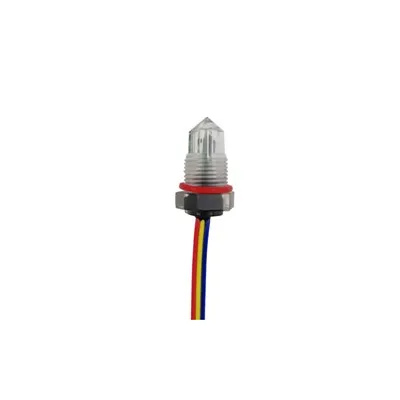
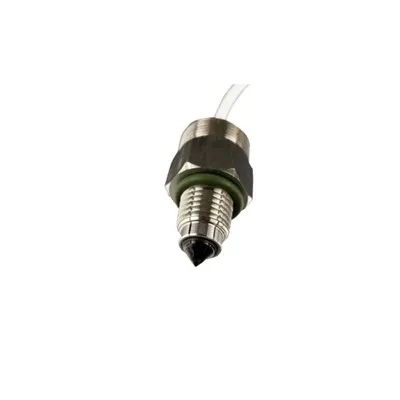
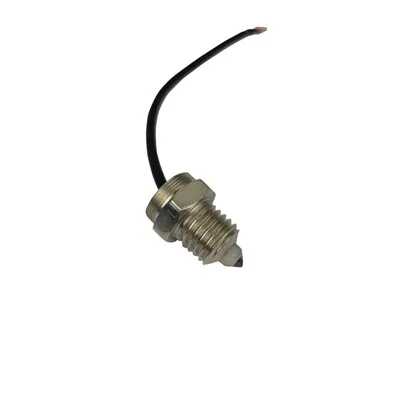
Sealed and remote: Optical liquid level switches used an infrared LED and phototransistor coupled through a sealed tip - in air the light returns, in liquid it escapes, and a transistor reports the state with no moving parts and no fluid contact beyond the tip. Around the same period, ultrasonic sensors measured level from the top by timing a sound echo (non-contact, but fooled by foam), and radar (microwave) followed, immune to foam, vapor, and dust. These removed both the moving part and the need to touch the liquid - a major reliability leap for difficult fluids.
5. Precision Continuous Techniques
The Number Gets Accurate
Continuous refined:
| Technology | Principle | Edge |
|---|---|---|
| Magnetostrictive | Pulse time-of-flight on probe | High accuracy |
| Guided-wave radar | Microwave along probe | Difficult fluids |
| Hydrostatic (electronic) | P = ρgh, digitized | Vented tank volume |
From trip to precision: Continuous measurement matured beyond basic ultrasonic/radar with magnetostrictive probes (a time-of-flight pulse on a waveguide gives sub-millimeter accuracy), guided-wave radar (microwave down a probe, good for turbulent or low-dielectric fluids), and electronic hydrostatic transmitters (digitized pressure at the base). These turned "roughly how full" into "precisely how full," enabling tight inventory and dosing. Accuracy and stability - not just detection - became the differentiator.
6. The Smart / IoT Era
Sensors That Talk and Diagnose
Digital and connected:
| Feature | What It Adds |
|---|---|
| Digital output | Clean logic bit (NPN/PNP) |
| HART | Value + diagnostics on 4–20 mA |
| IO-Link | Remote param + status |
| Wireless / IIoT | No cable, cloud data |
| Self-diagnosis | Tip fouling flag, etc. |
From signal to system: The latest wave adds intelligence. Digital outputs (NPN/PNP) give clean logic; HART layers diagnostics on the 4–20 mA loop; IO-Link lets a sensor be configured and read remotely; wireless and IIoT push level data to the cloud for trending and predictive maintenance. Modern sensors (like the Optomax-family optical switches with a smarter ASIC) flag a fouled tip instead of failing silently. The development arc - see, act, decide, diagnose, connect - is now complete in a single device class.
Development Timeline
The Five Waves
Era overview:
| Era | Dominant Tech | Step Change |
|---|---|---|
| Pre-industrial | Sight glass, dipstick | Manual read |
| Early industrial | Float gauge, standpipe | Local view |
| Mid industrial | Float switch (reed) | Automated trip |
| Electronic | Conductive, capacitive | No moving parts |
| Late 20th c. | Optical, ultrasonic, radar | Sealed, non-contact |
| Precision | Magnetostrictive, GWR, electronic pressure | Accurate number |
| 21st c. (smart) | Digital, HART, IO-Link, IIoT | Diagnose + connect |
Drivers of Development
Why Each Step Happened
| Driver | Pushed Toward |
|---|---|
| Safety | Remote alarm, sealed sensors |
| Labor cost | Automated trips |
| Accuracy | Continuous, precise |
| Harsh media | No-moving-parts, non-contact |
| Lifecycle cost | Self-diagnosis, less downtime |
| Connectivity | IIoT, cloud data |
The forces are constant: Every wave answered a recurring need - keep people away from hazardous tanks (safety), remove manual checks (labor), know the exact amount (accuracy), survive acid/foam/viscous fluid (harsh media), cut downtime (lifecycle cost), and feed data to control systems (connectivity). The technology changed; the drivers did not.
Where It Is Heading
Current Trends
| Trend | Example |
|---|---|
| Miniaturization | Tiny optical / MEMS probes |
| Wireless | Battery sensing, no cable |
| Self-diagnostics | Fouling / health flags |
| Multi-parameter | Level + temperature + more |
| IIoT analytics | Predictive maintenance |
Smaller, smarter, connected: The frontier is miniaturized solid-state probes, wireless battery-powered sensors, built-in health diagnostics, multi-parameter sensing (level plus temperature, density, or interface), and IIoT analytics that predict failure before it happens. The direction set by the five waves - less human, more reliable, more connected - continues.
Frequently Asked Questions
Q1: How did liquid level measurement technology develop over time?
It developed in five waves. First, direct/mechanical methods - sight glasses, dipsticks, float gauges - that a person read by eye. Second, the float-and-switch era, where buoyancy drove a magnet/reed or mechanical contact to give the first automated alarm. Third, the electrical era, with conductive and capacitive probes that sensed level without moving parts. Fourth, the solid-state and non-contact wave - optical (infrared) point switches plus ultrasonic and radar time-of-flight for sealed, no-touch measurement. Fifth, the smart era - digital outputs, HART, IO-Link, self-diagnostics, and wireless IIoT. Each step removed a limitation of the last: manual reading, moving parts, fluid contact, low accuracy, or silence on fault.
Q2: What was the first automated liquid level sensor?
The float switch was the first widely used automated level sensor. It used buoyancy - a float riding the liquid surface moved a magnet past a reed switch (or a mechanical contact) at the set point, sending an electrical signal away from the tank to trigger an alarm, pump, or valve without an operator present. Before that, level was read manually (sight glass, dipstick) or shown locally (float gauge). The float switch's contribution was turning a visual reading into an automated action, which is why it dominated the mid-industrial era and remains common today.
Q3: When did non-contact level sensors like ultrasonic and radar appear?
Non-contact level sensing became practical in the late 20th century. Ultrasonic sensors - measuring level by timing a sound echo from the top of the tank - emerged as industrial electronics and signal processing matured, offering no-touch measurement (though foam and vapor can disturb the echo). Radar (microwave) followed, with the key advantage of immunity to foam, vapor, and dust, making it suitable for difficult process conditions. Both built on the same time-of-flight principle used earlier in other ranging fields, adapted to liquid level. Their arrival removed the need to touch or penetrate the liquid for continuous measurement.
Q4: What is the latest development in liquid level measurement?
The smart / IoT era. Modern level sensors add digital outputs (clean NPN/PNP logic), HART diagnostics layered on the 4–20 mA loop, IO-Link for remote configuration and status, wireless and IIoT connectivity to push data to the cloud, and self-diagnosis that flags a fouled tip or fault instead of failing silently. Miniaturized solid-state probes, battery-powered wireless sensors, multi-parameter sensing (level plus temperature or density), and predictive-maintenance analytics are the current frontier. The arc has gone from "a person looks" to "a sensor decides and reports" to "the sensor diagnoses itself and connects to the network."
Q5: Why did level sensors move from moving parts to solid-state?
Because moving parts fail in the conditions where level matters most. A float switch's float, pivot, and reed stick in viscous fluid, wear over millions of cycles, jam on debris, and corrode in acid - causing exactly the failures that level sensing is meant to prevent. Solid-state methods (optical by light, capacitive by electric field, conductive by ions, ultrasonic/radar by wave, pressure by a sealed diaphragm) remove the mechanical linkage, surviving harsh and high-cycle service with far less maintenance. The move to solid-state was driven by reliability and lifecycle cost, not novelty - and it is why modern specification so often demands "no moving parts."
The Bottom Line
Liquid level measurement developed through five waves: direct/mechanical (sight glass, dipstick, float gauge - read by eye), float-and-switch (buoyancy driving a magnet/reed for the first automated trip), electrical (conductive and capacitive probes - no moving parts), solid-state and non-contact (optical infrared point switches plus ultrasonic and radar time-of-flight - sealed, no-touch), and smart (digital outputs, HART, IO-Link, self-diagnostics, wireless IIoT). Each step removed a limitation of the last - manual reading, moving parts, fluid contact, low accuracy, or silence on fault - driven by constant forces: safety, labor savings, accuracy, harsh-media survival, lifecycle cost, and connectivity. Precision continuous techniques (magnetostrictive, guided-wave radar, electronic hydrostatic) turned "roughly full" into "precisely full," and the smart era turned a signal into a self-diagnosing, networked device. The direction - less human, more reliable, more connected - continues with miniaturization, wireless, multi-parameter, and predictive IIoT analytics. The arc from "a person looks" to "a sensor decides, diagnoses, and connects" defines the whole development of liquid level measurement technology.
Last updated: August 2026
Disclaimer: This guide summarizes the historical development of liquid level measurement technology as an educational overview. Era framing (direct/mechanical, float-and-switch, electrical, solid-state/non-contact, smart/IoT) is a general industry narrative; specific invention dates and commercial milestones vary by source and manufacturer and are not cited as precise historical fact here. Technologies described (sight glass, float/reed, conductive, capacitive, optical IR TIR, ultrasonic, radar, magnetostrictive, guided-wave radar, hydrostatic, HART, IO-Link, IIoT) are general sensing categories; confirm specific product capabilities and history against manufacturer documentation. This guide is not affiliated with, endorsed by, or sponsored by any sensor manufacturer.