Innovative Techniques for Accurate Water Level Measurement
Accurate water level data is essential wherever liquid storage, pumping, treatment, irrigation, flood monitoring, or industrial automation is involved. A small measurement error can lead to pump damage, overflow, poor process control, wasted energy, inaccurate billing, or unsafe operating conditions. That is why modern water systems increasingly rely on advanced measurement methods rather than simple visual checks or basic float switches alone.
Today's best approach is not just choosing a device and installing it. Effective Water Level Measurement combines the right sensing technology, proper placement, calibration, environmental compensation, data connectivity, and reliable water level control logic. The result is a system that provides dependable readings in real time and supports better decisions across operations.
Why Accurate Water Level Measurement Matters
Water level monitoring supports both safety and efficiency. In a storage tank, it helps prevent overflow and dry-run pump conditions. In wastewater facilities, it supports pump sequencing, wet well management, and alarm triggering. In reservoirs and canals, it helps operators understand supply, demand, and risk. In manufacturing, it keeps process water available at the right level for consistent production.
Accurate measurement also improves automation. When water level sensors provide stable, reliable signals, control systems can start and stop pumps at the right time, open valves correctly, and reduce unnecessary equipment cycling. This can lower maintenance needs and support more consistent system performance.
In short, accurate level measurement is the foundation for effective water level control. Without trustworthy data, even the most advanced control panel or software platform will make decisions based on incomplete or misleading information.
Common Challenges in Measuring Water Level
Water may seem simple to measure, but real-world conditions often make it difficult. The best technique depends on the application, tank geometry, liquid condition, and surrounding environment.
Common challenges include:
Foam, vapor, turbulence, or waves on the water surface
Sediment, sludge, or buildup inside tanks and wet wells
Temperature changes that affect sensor performance
Pressure variation in closed vessels
Corrosive or contaminated water
Limited access for maintenance
Electrical noise from pumps and motors
Condensation, humidity, or outdoor exposure
Irregular tank shapes that require volume conversion
Innovative measurement strategies are designed to reduce these problems and produce a more stable signal under changing conditions.
Non-Contact Radar Level Measurement
Radar is one of the most effective modern techniques for accurate water level measurement, especially in demanding environments. A radar sensor sends electromagnetic signals toward the water surface and measures the return signal to calculate distance. Because it does not need to touch the water, it is well suited for wastewater, chemical exposure, remote tanks, and applications where contamination or buildup is a concern.
Radar performs well when there is vapor, mist, or temperature variation. It can also handle many outdoor conditions better than some traditional non-contact options. For applications where foam, turbulence, or obstacles may interfere with readings, proper mounting angle and configuration are important.
Radar-based water level sensors are often used in:
Wastewater lift stations
Stormwater monitoring
Industrial process tanks
Reservoirs and raw water storage
Chemical dosing and treatment systems
For high-accuracy applications, guided wave radar may also be used. This method sends the signal along a probe, which can improve reliability in certain enclosed or complex vessels.
Ultrasonic Sensors With Smart Compensation
Ultrasonic sensors measure water level by sending sound pulses toward the surface and timing the echo. They are widely used because they are non-contact, relatively easy to install, and suitable for many tanks, sumps, and basins.
However, ultrasonic measurement can be affected by foam, vapor, wind, temperature, and surface turbulence. Innovative ultrasonic systems address these issues with temperature compensation, signal filtering, echo mapping, and improved transducer design. These features help distinguish the true water surface from false echoes caused by tank walls, ladders, pipes, or internal structures.
Ultrasonic technology is often a strong choice for clean water, rainwater harvesting systems, irrigation tanks, and general-purpose level monitoring. It is especially useful when direct contact with the water is not preferred but the environment is not too harsh.
Hydrostatic Pressure Measurement
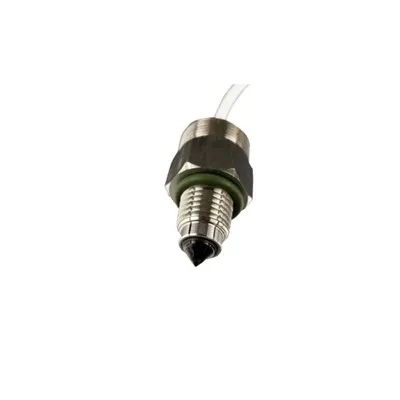
Hydrostatic level measurement uses pressure to determine water depth. A pressure sensor is installed at or near the bottom of a tank, well, or basin. As the water level rises, pressure increases. The sensor converts that pressure into a level reading.
This technique is reliable, straightforward, and commonly used in wells, boreholes, reservoirs, and submerged applications. Because the sensor is in contact with the water, material compatibility and protection from fouling are important. In applications with sediment, sludge, or debris, the sensor should be installed in a way that minimizes clogging or damage.
More advanced hydrostatic systems can compensate for atmospheric pressure and, in some cases, liquid density changes. This improves accuracy in outdoor or variable conditions. Vented cable designs and digital pressure transmitters are common choices for continuous monitoring.
Capacitance and Conductivity-Based Measurement
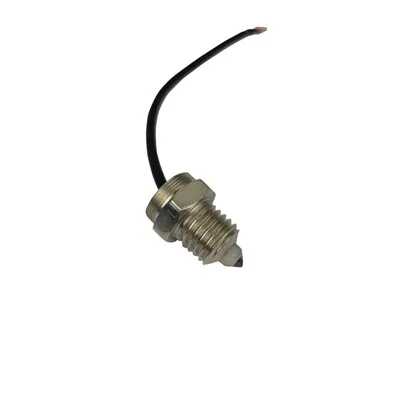
Capacitance sensors detect changes in electrical properties as the water level changes around a probe. Conductivity-based sensors use the ability of water to conduct electricity to detect specific level points. These methods are often used for point-level detection, such as high-level alarms, low-level cutoffs, or pump protection.
They are useful in applications where simple, durable water level control is more important than continuous level trending. For example, conductivity probes can trigger a pump when water reaches a certain height or shut down equipment when the level becomes too low.
The limitation is that water quality can affect performance. Conductivity, mineral content, coating, and buildup should be considered before choosing this type of sensor.
Optical, Laser, and LiDAR Techniques
Optical and laser-based level measurement technologies are becoming more common in specialized applications. These systems use light to determine distance or detect a liquid interface. LiDAR and laser distance sensors can deliver fast, precise readings in certain controlled environments.
They are useful where high resolution is required and where the measurement path is relatively clear. However, water reflectivity, condensation, dirt, fog, and surface disturbance can influence performance. For this reason, optical methods are typically selected after careful evaluation of the installation environment.
In open-channel or remote monitoring applications, optical systems may be combined with cameras, telemetry, and analytics to provide richer situational awareness.
IoT-Enabled Water Level Sensors
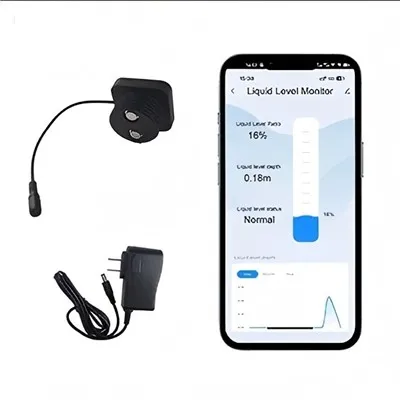
One of the biggest innovations in water level monitoring is connectivity. IoT-enabled water level sensors can transmit readings to cloud platforms, dashboards, mobile apps, or SCADA systems. This makes it easier to monitor remote tanks, wells, reservoirs, and pumping stations without requiring frequent site visits.
Connected sensors can support:
Real-time level visibility
Historical trend analysis
Automated alerts for high or low water conditions
Predictive maintenance planning
Pump runtime monitoring
Remote diagnostics
Multi-site reporting
For distributed water infrastructure, wireless and battery-powered systems can be especially valuable. When paired with solar power, low-power networks, or edge computing, these systems can operate in locations where wired power and communications are difficult.
Sensor Fusion for More Reliable Readings
In critical applications, one sensor may not be enough. Sensor fusion combines readings from multiple measurement technologies to improve reliability. For example, a water treatment facility may use radar for continuous level measurement, pressure sensing as a secondary reference, and float switches for independent high-level alarms.
This layered approach helps reduce the risk of failure. If one measurement is affected by foam, debris, or electrical interference, the system can compare it against another signal. Advanced controllers can flag inconsistent readings, trigger maintenance alerts, or switch to a backup sensor.
Sensor fusion is especially useful in:
Flood protection systems
Municipal water and wastewater facilities
Industrial plants
Critical storage tanks
Pump stations with high overflow risk
Digital Calibration and Signal Processing
Modern Water Level Measurement is increasingly software-driven. Digital transmitters and smart controllers can filter noise, compensate for environmental changes, linearize tank volume, and detect abnormal sensor behavior.
For example, a cylindrical or irregularly shaped tank may not have a simple relationship between water height and volume. Digital systems can apply a tank profile to convert level into usable volume data. This helps operators understand how much water is actually available, not just how high it is.
Signal processing can also smooth readings in turbulent tanks while still responding quickly to real level changes. The key is to avoid over-filtering, which can delay alarms or control actions.
Best Practices for Reliable Water Level Control
Accurate sensors are only one part of a successful system. Installation and control strategy matter just as much.
Important best practices include:
Select water level sensors based on the liquid, environment, accuracy needs, and maintenance access
Avoid mounting sensors above inlets, mixers, or turbulent zones when possible
Use stilling wells or baffles where surface movement causes unstable readings
Protect submerged sensors from sediment, debris, and physical damage
Provide independent high-level and low-level alarms for critical systems
Calibrate sensors at realistic operating levels, not only at empty and full conditions
Use proper cable shielding and grounding near motors or variable frequency drives
Set control deadbands to prevent pumps from short cycling
Review trend data regularly to identify drift, fouling, or abnormal behavior
A well-designed water level control system should be stable, responsive, and fail-safe. It should also be easy for operators to understand and maintain.
Choosing the Right Water Level Measurement Technique
There is no single best sensor for every application. The right choice depends on the operating conditions and the consequences of inaccurate measurement.
Consider these questions before selecting a technology:
Is continuous level measurement required, or only point-level detection?
Is the water clean, dirty, aerated, or chemically treated?
Will the sensor contact the water or remain non-contact?
Are foam, vapor, turbulence, or condensation expected?
Is the locati0n indoors, outdoors, underground, or remote?
What accuracy and response time are needed?
Will the sensor connect to a PLC, SCADA system, local controller, or cloud platform?
How often can maintenance or calibration be performed?
For clean storage tanks, ultrasonic or pressure sensors may be sufficient. For wastewater or harsh environments, radar may offer better long-term reliability. For pump protection, simple float, conductivity, or point-level devices may still be appropriate as backup safeguards.
Maintenance and Long-Term Accuracy
Even advanced sensors need routine attention. Over time, buildup, corrosion, cable damage, calibration drift, or changing site conditions can reduce accuracy. A preventive maintenance plan helps keep measurements dependable.
Recommended maintenance steps include:
Inspect sensors, cables, seals, and mounting hardware
Clean probes or transducers when buildup is present
Verify readings against a known reference level
Check alarm setpoints and control logic
Review historical data for unusual trends
Replace worn or damaged components before failure occurs
Document calibration dates and adjustments
Reliable water level management is not a one-time installation. It is an ongoing process of measurement, verification, and optimization.
The Future of Water Level Monitoring
Water systems are becoming more intelligent, connected, and automated. Future-ready measurement solutions will likely combine smart sensors, remote access, machine learning, and predictive analytics. Instead of only showing the current level, systems will help predict when a tank may run dry, when a pump may fail, or when stormwater capacity may be exceeded.
As infrastructure becomes more data-driven, accurate Water Level Measurement will play an even larger role in conservation, safety, and operational efficiency.
Final Thoughts
Innovative water level measurement techniques make it possible to monitor water more accurately, automate control more effectively, and respond to problems before they become costly failures. Whether the application involves a small storage tank, a municipal pump station, or a large industrial process, the best results come from matching the sensor technology to the environment and designing the full system around reliability.
By combining high-quality water level sensors, thoughtful installation, smart data processing, and dependable water level control strategies, operators can improve safety, reduce downtime, and make better use of every drop.