What Is a Water Level Sensor amp How Does It Work
A water level sensor is a device that detects how much water is present in a tank, container, reservoir, pipe, or open body of water. It can tell you whether water is present, how high the water is, or whether the level has reached a specific point. In many systems, the sensor sends that information to a controller, display, pump, alarm, or automation platform.
Water level sensing is used anywhere water needs to be monitored, protected, or controlled. Homes use sensors in tanks, sumps, wells, appliances, and irrigation systems. Industrial facilities use them for process control, wastewater management, boiler systems, and storage tanks. Farms, commercial buildings, laboratories, and municipal systems rely on them to prevent overflow, avoid dry-running pumps, and maintain consistent supply.
Although the concept is simple, different sensor technologies work in very different ways. Choosing the right water level sensor depends on the environment, the required accuracy, the type of liquid, the tank material, and whether you need continuous measurement or a simple on/off signal.
What a Water Level Sensor Does
A water level sensor measures or detects the height of water relative to a defined point. Depending on the design, it may provide:
Point-level detection: The sensor confirms whether water has reached a particular level, such as "full," "empty," "low," or "high."
Continuous level measurement: The sensor measures the actual level across a range, often as a percentage, distance, depth, or volume estimate.
Alarm triggering: The sensor activates an alert when water rises too high or falls too low.
Pump control: The sensor turns pumps on or off to fill, drain, or maintain a tank.
System feedback: The sensor sends data to a controller, building management system, or monitoring dashboard.
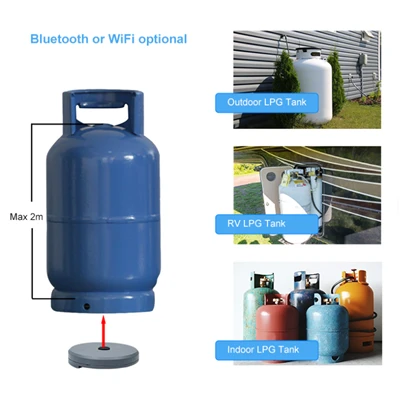
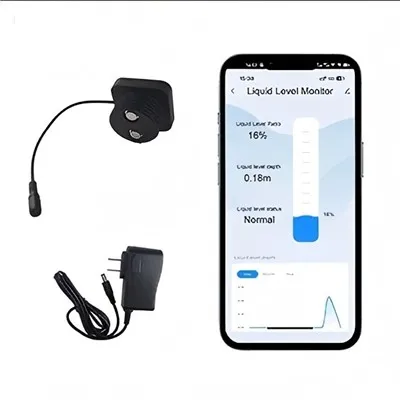
A water tank level sensor is a common example. In a storage tank, it can show how much water remains, trigger a pump when the level drops, or shut off filling equipment before the tank overflows.
How a Water Level Sensor Works
Most water level sensors work by detecting a physical change caused by the presence, pressure, distance, buoyancy, conductivity, or dielectric properties of water. The sensor converts that change into an electrical signal that a control system can read.
The general process looks like this:
The sensor interacts with the water or measures a condition related to the water level.
The sensing element produces a signal based on what it detects.
Electronics inside the sensor convert the signal into a usable output.
A controller, display, relay, or monitoring device interprets the output.
The system takes action, such as sounding an alarm, displaying the level, or controlling a pump.
Some sensors touch the water directly. Others measure from outside the tank or from above the liquid surface. Contact sensors are often simple and cost-effective, while non-contact sensors can be better for corrosive, dirty, foamy, or hard-to-access liquids.
Common Types of Water Level Sensors
Float Sensors
A float sensor uses a buoyant float that rises and falls with the water. As the float moves, it activates a switch or changes a signal. Float sensors are widely used because they are simple, dependable, and easy to understand.
They are often used for sump pumps, water tanks, condensate pans, and basic fill or drain control. A float switch is usually best for point-level detection, while more advanced float-based designs can provide continuous level measurement.
Ultrasonic Sensors
An ultrasonic water level sensor measures distance using sound waves. The sensor sends an ultrasonic pulse toward the water surface and measures how long it takes for the echo to return. The system then calculates the distance from the sensor to the water surface.
Because ultrasonic sensors do not need to touch the liquid, they are useful for tanks where contact with water is undesirable. They work well in many clean water applications, but performance can be affected by heavy foam, vapor, turbulence, tank obstructions, or irregular surfaces.
Pressure Sensors
A pressure-based liquid level sensor measures the pressure created by the height of the liquid above it. The deeper the water, the greater the pressure. By measuring hydrostatic pressure, the sensor can estimate water depth or level.
This type is common in wells, reservoirs, wastewater systems, and deep tanks. It is especially useful when the sensor can be placed near the bottom of the tank or submerged in the liquid. Pressure sensors can provide continuous measurement and are often selected for applications where surface conditions make non-contact methods less reliable.
Conductivity Sensors
Conductivity sensors detect water by using the fact that water can conduct electricity, especially when it contains minerals or dissolved ions. These sensors often have probes positioned at specific heights. When water touches the probes, it completes an electrical path and confirms that the level has reached that point.
Conductivity sensors are often used for high-level and low-level detection. They are generally not suitable for liquids that do not conduct electricity well, and they may require maintenance if mineral deposits build up on the probes.
Capacitive Sensors
A capacitive level sensor detects changes in capacitance caused by the presence of liquid. Water has different dielectric properties than air, so the sensor can detect whether water is present near the sensing area.
Capacitive sensors may be used through certain non-metallic tank walls, making them useful when direct contact is not preferred. They can work with a range of liquids, but calibration may be needed because different liquids have different properties.
Optical Sensors
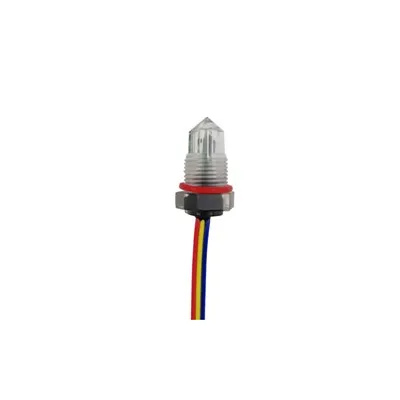
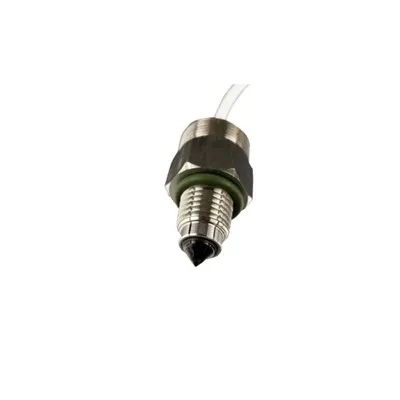
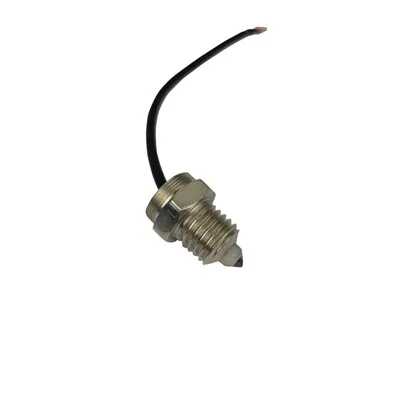
Optical sensors use light to detect whether liquid is present at a specific point. A typical optical sensor contains an emitter and receiver. When the sensor tip is in air, light reflects in a certain way. When water covers the tip, the reflection changes, allowing the sensor to detect the level.
These sensors are compact and useful for precise point detection in small tanks, appliances, medical equipment, and laboratory systems. They are usually best for clean liquids because buildup, bubbles, or residue can interfere with detection.
Water Level Sensor vs. Liquid Level Sensor
A water level sensor is designed or selected specifically for water-based applications. A liquid level sensor is the broader category. It may measure water, oil, chemicals, fuel, beverages, wastewater, or other liquids.
The distinction matters because not every sensor works well with every liquid. Water is usually easier to detect than many other fluids, but real-world conditions still matter. Clean water, saltwater, graywater, wastewater, and chemically treated water can behave differently. Temperature, pressure, contamination, and tank design can also affect sensor performance.
If the application involves anything other than clean water, it is usually better to think in terms of a liquid level sensor and evaluate material compatibility, chemical resistance, and calibration requirements.
Where Water Level Sensors Are Used
Water level sensors appear in many everyday and industrial systems, including:
Residential water storage tanks
Rainwater harvesting systems
Sump pumps and basement flood protection
Wells and boreholes
Irrigation systems
Cooling towers
Boilers and heating systems
Wastewater lift stations
Aquariums and hydroponic systems
Washing machines, dishwashers, and coffee machines
Industrial process tanks
Municipal water and stormwater systems
In each case, the goal is usually the same: keep water at the right level, prevent damage, reduce manual checking, and improve system reliability.
How to Choose the Right Water Tank Level Sensor
The best water tank level sensor depends on the job it needs to do. Before choosing a sensor, consider the following factors.
Measurement Type
Decide whether you need simple point detection or continuous measurement. If you only need to know when a tank is full or empty, a float switch, conductivity probe, or optical sensor may be enough. If you need to display the exact tank level, choose a continuous sensor such as ultrasonic, pressure, or capacitive.
Tank Size and Shape
Tall tanks, narrow tanks, underground tanks, and irregularly shaped tanks may require different sensing methods. For example, ultrasonic sensors need a clear path to the water surface, while pressure sensors are often better for deep or enclosed tanks.
Water Quality
Clean water is easier to measure than dirty, foamy, oily, or debris-filled water. Wastewater and stormwater applications often need rugged sensors that can tolerate buildup and harsh conditions.
Installation Environment
Consider whether the sensor will be indoors, outdoors, submerged, exposed to weather, or installed in a confined space. Outdoor sensors may need weather-resistant housings, stable mounting, and protection from temperature swings.
Output Signal
The sensor output must match the equipment receiving the signal. Common outputs include switch contacts, analog signals, digital communication, or simple relay outputs. For a smart monitoring setup, compatibility with controllers or IoT devices may also matter.
Maintenance Needs
Some sensors require periodic cleaning or inspection. Contact sensors may collect scale, sediment, or biofilm. Non-contact sensors may need a clean sensing path and proper mounting. Choose a sensor that fits the maintenance level your system can support.
Installation Best Practices
Proper installation is just as important as choosing the right sensor. A good sensor can perform poorly if it is mounted in the wrong locati0n or exposed to conditions it was not designed for.
Follow these general best practices:
Mount the sensor securely so vibration or movement does not affect readings.
Avoid placing sensors near inlets where turbulence or splashing is severe.
Keep ultrasonic sensors away from internal obstructions, ladders, pipes, or tank walls that can cause false echoes.
Install pressure sensors at the correct depth and protect cables from damage.
Use materials compatible with the water and any treatment chemicals.
Provide strain relief for wiring and protect connections from moisture.
Calibrate the sensor when required by the manufacturer or application.
Test alarms, pump controls, and shutoff functions after installation.
For critical systems, redundancy may be useful. For example, a tank might use a continuous level sensor for monitoring and a separate high-level float switch as a backup overflow alarm.
Common Problems and Troubleshooting Tips
If a water level sensor gives inconsistent readings, the issue is often related to installation, buildup, wiring, calibration, or environmental conditions.
Common problems include:
False high or low readings: Check for debris, scale, foam, turbulence, or incorrect mounting.
No signal: Inspect power, wiring, connectors, fuses, and controller settings.
Erratic readings: Look for electrical interference, loose wiring, unstable water surfaces, or sensor damage.
Slow response: Clean the sensing element and confirm the sensor is suitable for the application.
Pump cycling too often: Adjust control points, add hysteresis if supported, or review tank sizing.
Routine inspection can prevent many failures. In applications with hard water, sediment, algae, or wastewater, cleaning schedules are especially important.
Why Water Level Sensors Matter
A reliable water level sensor helps protect equipment, conserve water, reduce labor, and improve safety. It can prevent tanks from overflowing, stop pumps from running dry, detect leaks or flooding, and provide real-time visibility into water usage.
For simple applications, a basic float switch may be all that is needed. For advanced monitoring, a continuous liquid level sensor can provide detailed data and integrate with automated controls. The key is matching the sensor technology to the water conditions, tank design, accuracy needs, and control requirements.
When selected and installed correctly, a water level sensor becomes a small but essential part of a dependable water management system.